
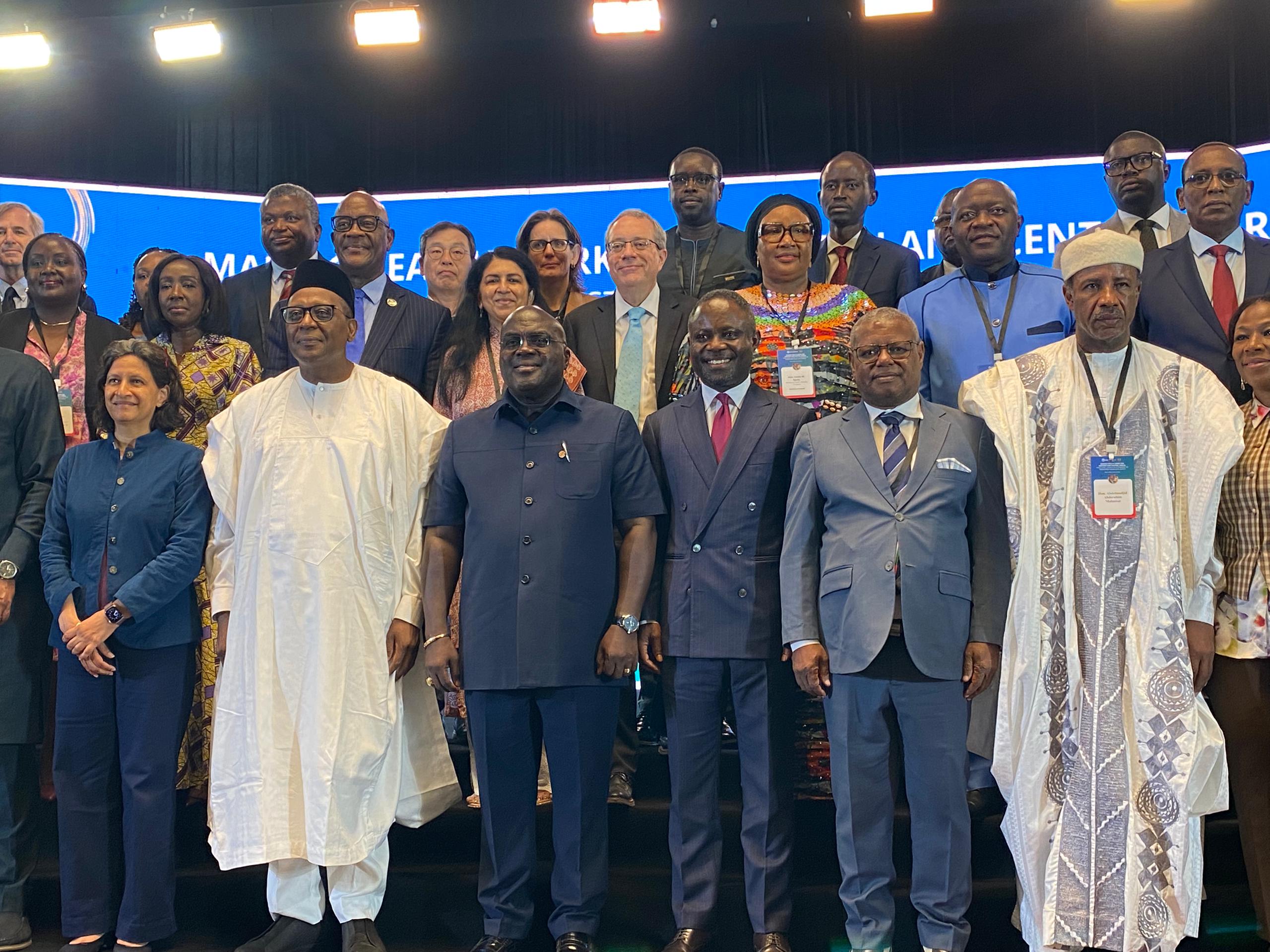

Ghana aligns with $4.4bn World Bank health drive, recasts care as catalyst for growth
Government has endorsed a $4.4bn World Bank backed health strategy for West and Central Africa, positioning investment in healthcare as a central lever for economic transformation rather than a recurrent cost burden.
Delivering remarks at the high-level launch in Accra, the Chief of Staff, Hon. Julius Debrah, said the region’s development trajectory would increasingly depend on investments in human capital, particularly health.
“The future of our economies will not be determined only by what we extract from the ground, but by what we invest in our people,” he said, underlining the event’s theme, “Fit to Prosper.”
The World Bank Group’s regional health portfolio spans over 20 countries, with 24 active operations aimed at strengthening health systems, improving maternal and child health outcomes, and bolstering pandemic preparedness. The programme is supported by more than $4.4bn in financing, alongside $340m in co-financing from partners including the Global Financing Facility, Gavi, the Global Fund, Japan and Canada.
The initiative builds on interventions such as the West and Central African Health Security Programme and ongoing support to the Africa Centres for Disease Control and Prevention (Africa CDC), reflecting what officials described as a coordinated response to shared regional vulnerabilities.
Hon. Julius Debrah highlighted Ghana’s gains from existing World Bank support, citing the $424.6m COVID-19 emergency response project and a $195.5m primary healthcare investment programme as key to strengthening national health resilience.
“These are not just line items in a budget. They are lifelines for our people,” he said.
The government is aligning the regional strategy with domestic reforms aimed at achieving universal health coverage and improving the sustainability of the National Health Insurance Scheme (NHIS). Measures include the uncapping of the National Health Insurance Levy to expand fiscal space for healthcare financing.
Additional interventions include the rollout of the Free Primary Healthcare Initiative to remove point-of-service cost barriers and the establishment of the Ghana Medical Trust Fund, also known as Mahama Cares, to mobilise supplementary resources.
Despite progress, the Chief of Staff acknowledged persistent structural challenges, including uneven coverage, quality concerns and long-term financing constraints.
He stressed the importance of cross-border coordination, particularly in disease surveillance, emergency response systems and local pharmaceutical manufacturing, noting that health risks remain inherently transnational.
“Diseases do not respect borders, and neither should our solutions,” he said.
Hon. Julius Debrah further cautioned that the success of the strategy would hinge on implementation discipline and accountability, urging stakeholders to prioritise delivery outcomes over policy design.
“Health is an economic strategy,” he said. “A healthy population is more productive, more innovative and more resilient.”
The strategy signals a broader shift among policymakers to integrate health outcomes into economic planning, linking improved healthcare access to productivity gains, job creation and long-term growth prospects across West and Central Africa.
Ghana, he added, remains committed to playing a leading role in advancing the regional agenda, with a focus on reducing preventable deaths and ensuring equitable access to quality healthcare services.

