

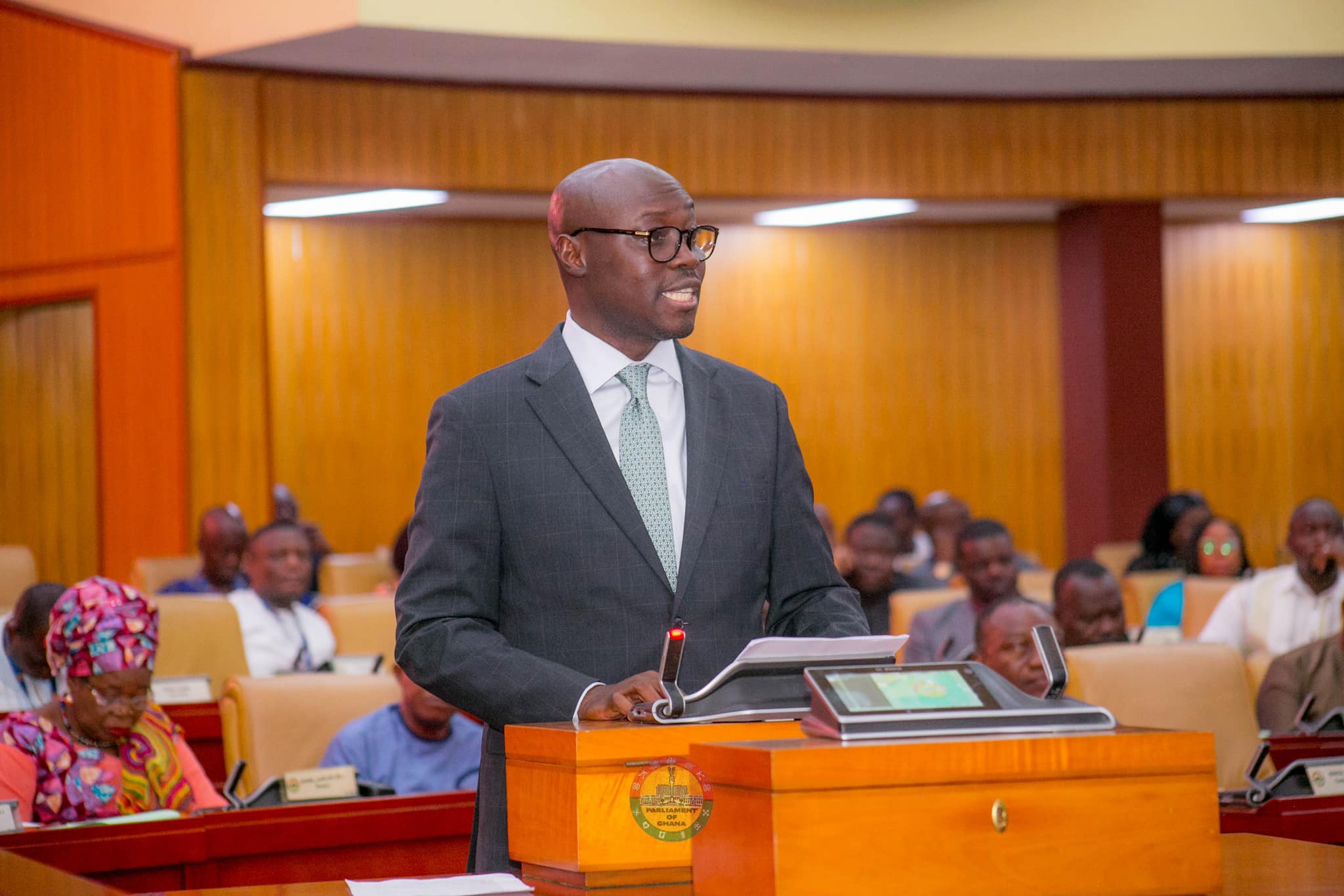

- Mid-Year Budget to Outline Mahama Government’s New Jobs and Growth Agenda
Finance Minister Dr Cassiel Ato Forson is expected to use the 2026 Mid-Year Budget Review to outline the Mahama administration’s new economic strategy, signalling a shift from crisis-era stabilisation towards growth, job creation and long-term structural transformation.
The review is expected to be presented to Parliament this week, subject to parliamentary approval and the availability of the House to receive the statement. Dr Forson is also expected to complete Cabinet briefings on key aspects of the review, including new policy measures, before updating President John Dramani Mahama ahead of the presentation.
The timing is politically and economically significant. Ghana has spent the past 18 months under a strict fiscal consolidation programme designed to restore macroeconomic stability, rebuild confidence and repair the damage caused by debt distress. The mid-year review will therefore provide the clearest indication yet of how government intends to move from stabilisation to expansion without weakening fiscal discipline.
The review is expected to outline what government describes as a new economic agenda aimed at consolidating recent macroeconomic gains and shifting the economy from stabilisation to long-term growth. The framework is expected to focus on sustainable job creation, increased productivity, economic resilience and inclusive growth.
That language is consistent with recent comments by Dr Forson, who said government was preparing to move from what he called “shock therapy” to a new phase in which growth and jobs would drive economic management. He said the country had completed 18 months of a planned fiscal consolidation programme and had about six months left before a gradual transition towards a more growth-focused agenda.
“We are left with six months, and I’m sure after the six months we’ll have to change the course and move from shock therapy to what I call the new economy where growth and jobs would drive the new order,” Dr Forson said earlier this month.
The policy challenge, however, will be sequencing. Government must convince investors, development partners and citizens that the move towards growth will not mean a return to excessive borrowing or fiscal slippages. Dr Forson has already warned against unsustainable borrowing, arguing that short-term spending financed by debt can create temporary relief but leave long-term economic costs.
The mid-year review is also expected to provide an update on Ghana’s recently concluded IMF Extended Credit Facility programme and the country’s transition to a new Policy Coordination Instrument. It will further assess progress on debt restructuring, particularly external debt negotiations, and the impact of the process on the broader economy.
This will be important because Ghana’s post-IMF programme credibility will depend on whether government can sustain discipline without the same degree of external financing support. The review will likely be judged not only by new policy announcements, but by the strength of the fiscal numbers behind them.
On the fiscal side, Dr Forson is expected to provide details on revenue performance for the first half of 2026 and explain how government intends to manage expenditure for the rest of the year while protecting critical sectors. The review is also expected to announce any adjustments to the 2026 Budget in response to prevailing economic conditions.
Petroleum revenues may also feature prominently. Dr Forson disclosed in June that government now expects total petroleum revenue of about US$1.50 billion in 2026, up from the initial US$985.00 million announced in the 2026 Budget, citing higher crude oil prices linked to developments in the Middle East. The revised target represents an increase of about 52.28% over the original projection.
The Finance Minister also said the economy could grow by more than 6.00% in 2026, above the 4.80% growth projection contained in the 2026 Budget, driven partly by developments in the oil and gas sector.
Those numbers could give government room to project confidence. But they also raise expectations. If revenues improve and growth outperforms earlier projections, pressure will mount for government to ease the burden on households, accelerate infrastructure spending and expand programmes linked to jobs and production.
Parliament is already preparing for an intensive debate. Majority Leader Mahama Ayariga has announced that the House will debate the 2026 Mid-Year Budget Review over three days, including a Saturday sitting on July 25, with leadership expected to conclude commentary on Monday, July 27.
The review is a statutory requirement under Section 28 of the Public Financial Management Act, 2016, Act 921, which requires the Finance Minister to update Parliament on the implementation of the national budget and present the fiscal outlook for the remainder of the year.
For markets, the key issue will be whether the new economic agenda is backed by credible financing, clear execution timelines and safeguards against fiscal indiscipline. For businesses, the test will be whether the strategy addresses power reliability, credit access, tax predictability, infrastructure constraints and the cost of doing business. For households, the question will be whether stabilisation begins to translate into jobs, incomes and lower economic pressure.
Government has already signalled that the broader “New Economy” programme will be formally unveiled in the 2027 Budget, with a focus on sustainable job creation, productivity, resilience and inclusive growth. The mid-year review may therefore serve as the bridge between the stabilisation programme and the full growth strategy expected later.
The stakes are high. Ghana’s recovery narrative has improved, but the economy remains vulnerable to revenue underperformance, expenditure pressures, debt-service obligations, global commodity shocks and public expectations for relief.
Dr Forson’s task in the mid-year review will therefore be delicate: present a credible growth agenda without suggesting that fiscal consolidation is over.
If he succeeds, the review could mark the beginning of Ghana’s transition from adjustment to transformation. If the strategy appears underfunded, vague or politically driven, investors may treat it as another ambitious policy statement rather than a serious economic reset.

