

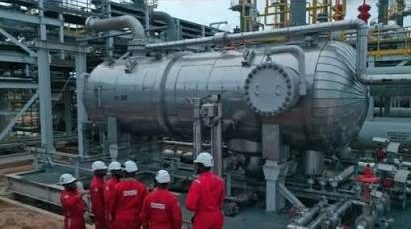

- Gov’t Targets Cheaper Power With 1,200MW Combined-Cycle Gas Plant
Ghana is advancing plans to build a 1,200-megawatt state-owned combined-cycle gas-fired power plant in the Central Region, in what the government says will become a major intervention to lower electricity generation costs, reduce consumer tariffs and strengthen long-term energy security.
Finance Minister Dr Cassiel Ato Forson announced the project during the presentation of the 2026 Mid-Year Fiscal Policy Review to Parliament, describing it as part of the government’s broader effort to modernise the country’s energy infrastructure and reduce the cost burden on households and businesses.
The plant will be located at Kafodzidzi-Abrobeano in the Komenda-Edina-Eguafo-Abrem Municipality, a siting decision that positions the Central Region as a potentially significant node in Ghana’s future thermal power-generation architecture.
“The government is also developing a 1,200-megawatt state-owned combined-cycle gas-fired power plant at Kafodzidzi-Abrobeano in the Komenda-Edina-Eguafo-Abrem Municipality,” Dr Forson told Parliament.
The project, if delivered on schedule, would rank among Ghana’s largest thermal generation investments and could reshape the structure of electricity supply by giving the state a major generation asset designed around natural gas, efficiency and lower unit costs.
According to the Finance Minister, feasibility studies have confirmed the commercial and technical viability of the project, while environmental assessments, engineering designs and regulatory permitting are progressing ahead of construction.
The first 600MW phase of the plant is expected to be commissioned in 2028, with the remaining capacity to be developed in a subsequent phase.
Government’s strategy is to use combined-cycle gas technology, which is generally more efficient than simple-cycle thermal generation because it captures waste heat from gas turbines to produce additional electricity through steam turbines. That efficiency is central to the government’s argument that the plant can lower the cost of generation and eventually translate into cheaper electricity for consumers.
Dr Forson said the government has opted to procure gas turbines directly from GE Vernova, bypassing intermediaries in order to reduce project costs.
The Finance Minister said this direct procurement strategy is expected to generate cost savings of between 35.00% and 45.00% compared with conventional third-party procurement arrangements.
That claim will be closely watched by industry analysts, particularly because procurement costs have historically been a major concern in Ghana’s power-sector investment pipeline. Large generation projects often carry risks around inflated contract values, financing costs, implementation delays and tariff implications.
If the government’s direct procurement model delivers the projected savings, it could provide a new template for how major energy infrastructure is structured, especially at a time when Ghana is trying to restore fiscal discipline while addressing power-sector liabilities.
Government estimates that the project could reduce electricity generation costs sufficiently to lower consumer electricity tariffs by between 10.00% and 20.00%.
That potential tariff impact is politically and economically significant. Electricity costs remain a major concern for households, manufacturers, small businesses and service-sector operators. Lower tariffs could improve disposable incomes, reduce operating costs and strengthen Ghana’s competitiveness as the country seeks to expand industrial production and attract investment.
But the tariff promise will depend on several factors, including the final project cost, financing structure, gas supply arrangements, exchange-rate stability, plant efficiency, grid integration and the financial position of the power sector.
Ghana’s power sector has long faced structural weaknesses, including legacy debts, distribution losses, under-recoveries, high capacity payments and periodic tensions between government and Independent Power Producers. Any new state-owned generation asset must therefore be assessed not only by its installed capacity, but by its ability to deliver affordable, reliable and financially sustainable electricity.
The government’s bet is that a large, efficient, gas-fired plant owned by the state can reduce dependence on costlier generation arrangements while giving policymakers greater control over the future generation mix.
Natural gas is also being positioned as a transitional fuel. As Ghana balances reliability, affordability and climate obligations, gas-fired generation offers a bridge between heavy reliance on thermal power and a longer-term energy transition that may include more renewables and grid modernisation.
For businesses, the project could be an important signal. Reliable and competitively priced power is essential to industrial growth, agro-processing, manufacturing, mining services, cold-chain logistics, digital infrastructure and export competitiveness. Ghana’s ability to lower power costs without undermining sector finances could therefore support broader economic transformation.
The project is also expected to create more than 2,000 direct and indirect jobs during the first phase of development. These jobs are likely to come through construction, engineering, logistics, technical services, supply contracts and local support activities around the project site.
For the Central Region, the KEEA plant could become a major economic anchor if supported by local-content participation, skills development and complementary infrastructure investment. Large power projects can stimulate local economies, but only if procurement, employment and community engagement are deliberately structured to include local businesses and workers.
The broader policy question is whether Ghana needs additional generation capacity or cheaper, more efficient replacement capacity. Installed capacity alone does not solve power-sector problems if demand growth, grid readiness and payment discipline are weak. What matters is whether the new plant will reduce average generation costs and displace more expensive power, rather than add to excess capacity obligations.
This is where government must provide further clarity. The project’s long-term credibility will depend on transparent disclosure of financing terms, gas supply strategy, projected generation cost, expected tariff impact, procurement safeguards and implementation timelines.
The announcement comes at a time when the administration is presenting energy-sector reform as part of its wider economic recovery strategy. The government wants to show that fiscal consolidation will not mean underinvestment in critical infrastructure, and that macroeconomic discipline can coexist with strategic public investment.
If successfully executed, the 1,200MW Kafodzidzi-Abrobeano power project could strengthen energy security, reduce electricity costs and support industrial expansion. If poorly structured, it could add another layer of financial pressure to an already sensitive power sector.

