

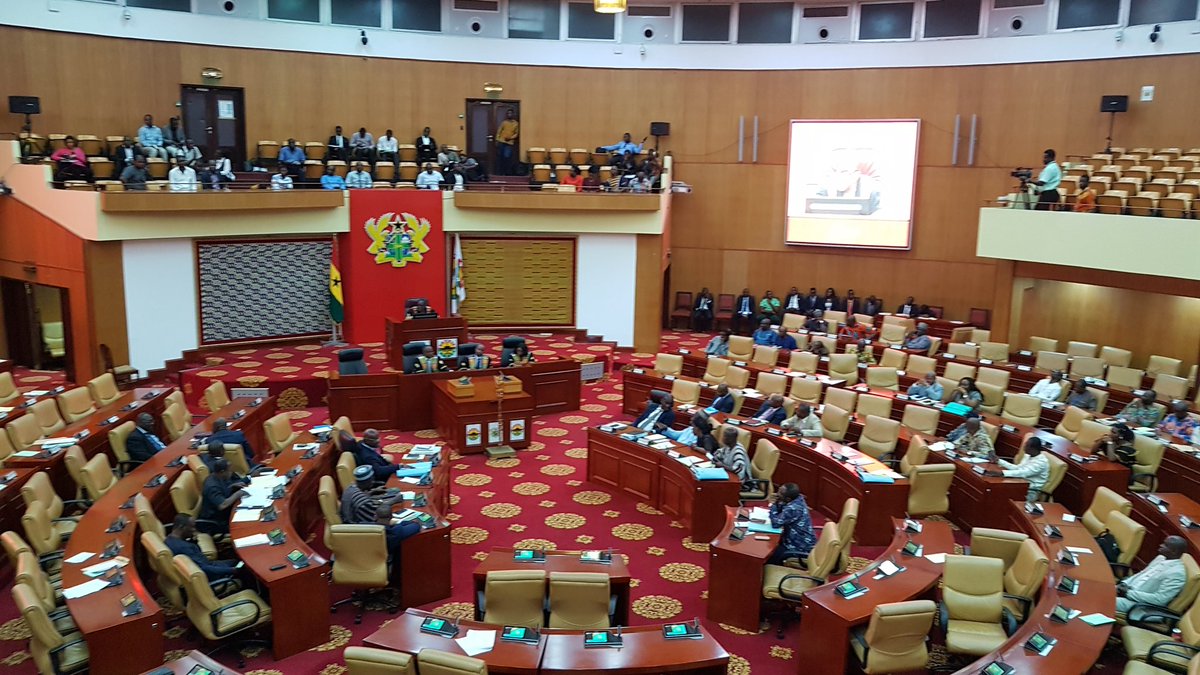

- Parliament Approves US$300 Million World Bank Facility for SHS Expansion
Ghana’s Parliament has approved a US$300 million World Bank financing facility to support the construction and rehabilitation of critical infrastructure in senior high schools, as the government moves to ease the pressure on secondary education facilities after years of rising enrolment under the Free Senior High School policy.
The loan, presented to lawmakers by Finance Minister Dr Cassiel Ato Forson, is expected to finance classrooms, dormitories, laboratories, workshops, libraries and other essential facilities across selected senior high schools nationwide.
Dr Forson told Parliament the investment is intended to address the country’s growing infrastructure deficit in secondary education while supporting human capital development, improving access to quality education and creating a more conducive learning environment for students.
The approval comes at a time when many public senior high schools continue to face severe pressure on facilities, with inadequate classrooms, congested dormitories, limited laboratory space and overstretched teaching and learning resources. The expansion of access under the Free SHS programme has increased enrolment, but the accompanying infrastructure expansion has not kept pace in many institutions.
This has forced authorities over the years to adopt temporary measures, including the double-track system in some schools, to manage student numbers against limited physical capacity. Although such arrangements have helped absorb enrolment pressure, they have also exposed the depth of the infrastructure gap confronting the secondary education sector.
The US$300 million World Bank-backed facility therefore represents one of the more significant external interventions in Ghana’s senior high school infrastructure in recent years. It also signals continued multilateral support for Ghana’s education and human capital development agenda despite the country’s broader fiscal consolidation efforts.
For government, the argument is that education infrastructure cannot be postponed merely because public finances remain tight. Dr Forson maintained that investment in secondary education facilities is essential to building a skilled workforce, improving productivity and supporting long-term economic growth.
The financing, though adding to Ghana’s external borrowing, is being positioned as development-oriented debt targeted at an area with long-term social and economic returns. Modern classrooms, functional laboratories, libraries and workshops are central to improving learning outcomes, particularly in science, technical and vocational education.
The loan approval also raises important implementation questions. The impact of the facility will depend not only on the size of the financing but also on how transparently and efficiently the projects are procured, distributed and delivered.
Attention will now turn to the selection of beneficiary schools, regional balance, value-for-money safeguards, contractor performance and timelines for completion. In a sector where abandoned projects and delayed infrastructure works have historically undermined policy outcomes, the government will be under pressure to ensure that the World Bank funds translate into visible improvements on school campuses.
The facility also presents an opportunity to align school infrastructure expansion with wider education reforms. Laboratories and workshops, in particular, will be critical if Ghana is to strengthen science, technology, engineering, mathematics and technical skills training at the secondary level.
While Free SHS expanded access, the next phase of reform must focus more strongly on quality. That means reducing overcrowding, improving boarding facilities, expanding subject-specific infrastructure, supporting teachers and ensuring students learn in environments that meet modern educational standards.
Parliament’s approval of the loan clears the way for implementation, but the real test will be delivery. If well executed, the US$300 million facility could ease congestion, improve learning conditions and strengthen Ghana’s long-term human capital base.
If poorly managed, however, it risks becoming another expensive intervention whose benefits are diluted by delays, weak supervision and procurement inefficiencies.
For now, the approval marks a major step in the government’s effort to confront the infrastructure consequences of expanded secondary education access. The challenge ahead is to ensure that the money builds not only structures, but better learning outcomes.

