


- Africa Must Move Beyond Connecting Payment Systems to Lowering Transaction Costs — BoG Deputy Governor
The Bank of Ghana has called for a fundamental shift in how Africa measures progress in cross-border payments, arguing that connecting national payment infrastructures will deliver limited economic benefits unless businesses and households experience measurable improvements in transaction costs, speed, transparency and reliability.
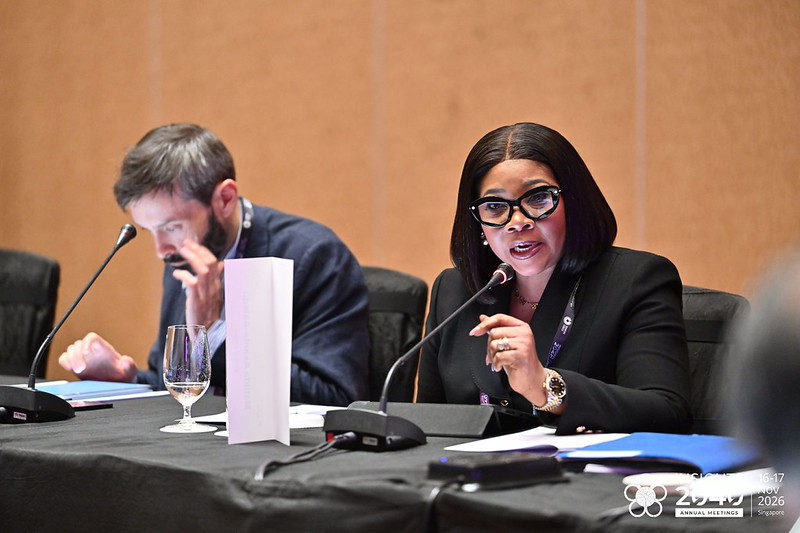
Second Deputy Governor Matilda Asante-Asiedu made the intervention during the Insights2040 Annual Meetings in Singapore, where central bankers, financial regulators and technology executives examined the future of international payments, artificial intelligence, digital assets and financial integration.
Her remarks reflect growing concern that Africa’s progress in developing payment infrastructure has not necessarily eliminated the practical difficulties facing businesses and individuals transferring money between countries.
The Bank of Ghana’s participation also formed part of a wider engagement involving the Singapore FinTech Festival 2026, where discussions explored how emerging technologies could transform financial services while introducing new risks for regulators.
A delegation led by Mrs Asante-Asiedu participated in both events, which took place between November 16 and 20, seeking to strengthen Ghana’s international financial relationships and identify opportunities for cooperation in digital payments and financial innovation.
The Bank’s statement identifies cross-border payment efficiency, regulatory interoperability, tokenisation, stablecoins and artificial intelligence as major areas of engagement.
Bank of Ghana Advances Global Dialogue on Cross-Border Payments and Financial Innovation at the Insights2040 Annual Meetings and Singapore fintech Festival 2026__-Updated .docx
At the Insights2040 meetings, held from November 16 to 17, the Deputy Governor challenged policymakers to assess the actual economic outcomes of payment integration rather than concentrating exclusively on whether financial systems are technically connected.
She advocated measuring performance across individual payment corridors, including transaction costs, transparency, reliability and access to transferred funds.
The approach represents an important distinction in financial infrastructure development.
A payment network may successfully connect participating institutions across national borders, but that achievement does not guarantee that users can transfer funds affordably or receive payments without delays.
Businesses engaging in regional trade may still face multiple charges, foreign exchange conversion costs, lengthy settlement processes and uncertainty about when payments will reach beneficiaries.
For smaller enterprises, these difficulties can increase operating costs and discourage participation in cross-border commerce.
The Bank of Ghana’s proposed emphasis on corridor-level performance would allow regulators to identify where payment improvements are producing measurable benefits and where additional intervention is required.
The central bank explained that more targeted measurement would help policymakers identify successful interventions and address weaknesses in payment systems.
The underlying objective is to ensure that investments in financial infrastructure translate into tangible improvements for businesses and households.
The argument carries considerable significance for Ghana because the country hosts the Secretariat of the African Continental Free Trade Area (AfCFTA), an initiative designed to expand intra-African commerce and economic integration.
Although the continental trade agreement seeks to reduce barriers to commerce, inefficient cross-border payments can undermine its practical benefits.
A Ghanaian exporter selling goods to customers elsewhere in Africa may face additional costs when collecting payments, converting currencies or managing settlement delays.
Similarly, importers can encounter difficulties transferring funds to suppliers operating under different financial and regulatory systems.
Reducing these frictions could support trade competitiveness, improve working-capital management and enable smaller enterprises to participate more effectively in regional markets.
However, achieving these improvements requires coordination beyond the introduction of new technology.
Financial institutions must address regulatory differences, operational standards, settlement arrangements and customer protection requirements.
This makes cooperation among central banks and payment service providers particularly important.
The Bank of Ghana’s international engagements also included discussions aimed at strengthening financial cooperation with Singapore.
Mrs Asante-Asiedu met Singapore’s Minister of State for Foreign Affairs and National Development, Alvin Tan, to explore opportunities involving digital payments, artificial intelligence and cross-border financial transactions.

The meeting acknowledged existing collaboration between the Bank of Ghana and the Monetary Authority of Singapore.
The two sides also discussed plans for a Singaporean delegation to visit Ghana in January 2027 to continue exploring areas of cooperation.
Although the central bank did not announce any binding investment agreement or new payment platform arising from the discussions, the planned visit suggests that engagement could progress beyond the Singapore meetings.
For Ghana, Singapore represents an important potential partner because of its experience in financial technology development, digital payments and regulatory innovation.
Nevertheless, cooperation will need to produce clearly defined projects, technical capabilities or measurable improvements in financial services to deliver lasting economic value.
The Bank of Ghana’s participation extended to discussions on tokenised financial markets.
Owureku Asare, Director of the central bank’s Fintech and Innovation Department, participated in a roundtable examining fragmentation, regulatory differences and interoperability challenges within emerging tokenised markets.
Tokenisation involves representing financial assets or related rights digitally, potentially allowing transactions and ownership records to be managed through new technological infrastructures.
Supporters argue that such systems could improve operational efficiency and facilitate financial settlement.
However, fragmented platforms and incompatible regulatory frameworks can reduce these potential benefits.
The discussions therefore emphasised the need to integrate emerging digital asset platforms with existing financial infrastructure.
Another important area of engagement involved stablecoins.
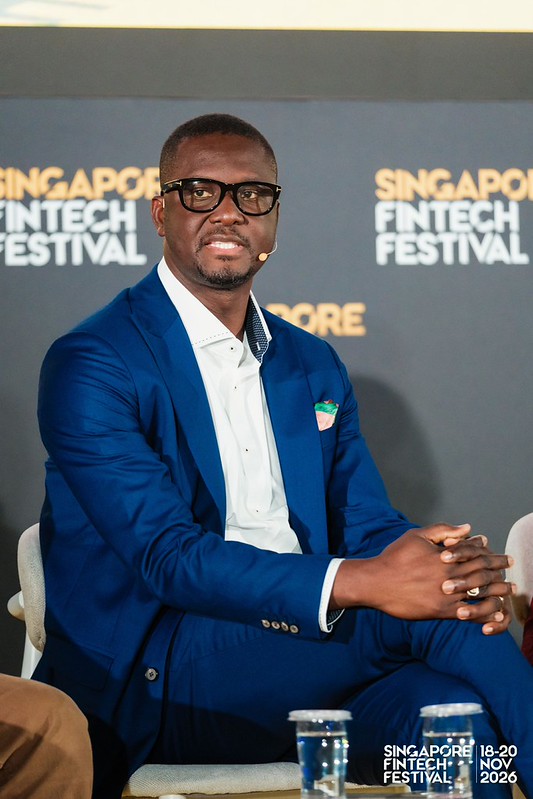
Philip Kwaw Sebuabe, Head of Virtual Assets at the Bank of Ghana, participated in discussions examining the potential of stablecoins as international payment and settlement instruments.
Stablecoins are digital assets generally designed to maintain a relatively stable value by reference to another asset or currency.
Their potential use in cross-border payments has attracted interest because certain arrangements may reduce transaction frictions and improve settlement efficiency.
However, stablecoins also introduce regulatory challenges involving reserve backing, redemption arrangements, financial integrity, consumer protection and the reliability of the systems supporting transactions.
The Bank of Ghana’s participation in the discussion does not constitute an announcement that stablecoins have been approved for unrestricted domestic payment use.
Rather, the engagement reflects the central bank’s interest in understanding their opportunities and implications for financial regulation.
Bank of Ghana Advances Global Dialogue on Cross-Border Payments and Financial Innovation at the Insights2040 Annual Meetings and Singapore fintech Festival 2026
Artificial intelligence was another major focus of the Singapore FinTech Festival, under the theme The Coming Rewiring of the Financial System: New Risks. New Rules. New Growth.
The festival examined how technology, geoeconomics, capital, talent and policy are reshaping global finance.
Of particular interest was the emergence of agentic AI, a category of artificial intelligence systems capable of executing tasks, making certain decisions and initiating actions with varying degrees of autonomy.
Unlike conventional systems primarily designed to analyse information or respond to instructions, agentic AI can undertake sequences of activities with reduced human intervention.
In financial services, this could support automated customer processes, risk assessments and transaction management.
Yet increasing automation creates difficult questions about accountability when systems make mistakes or perform unintended actions.
Financial regulators must determine how institutions should manage cybersecurity, data protection, consumer safeguards and operational resilience when increasingly autonomous systems participate in financial processes.
For Ghana, these considerations are becoming more relevant as financial institutions expand digital services and incorporate emerging technologies into their operations.
The central bank’s statement emphasised that innovation must be accompanied by effective oversight capable of protecting customers and maintaining confidence in the financial system.
It also identified potential labour-market implications, including the need to develop skills as artificial intelligence changes the nature of financial-sector employment.
These challenges suggest that technological adoption cannot be treated exclusively as an infrastructure investment.
It also requires stronger human capital, institutional capacity and supervisory expertise.
The central significance of Ghana’s participation in the Singapore discussions is the emphasis on measuring financial innovation by its economic outcomes rather than the sophistication of the technology deployed.
For cross-border payments, the relevant test is whether businesses and households can transfer funds more affordably, reliably and transparently.
For tokenisation and stablecoins, it is whether emerging systems can provide genuine efficiency gains without creating unacceptable financial risks.
For artificial intelligence, the challenge is improving productivity and service delivery while ensuring that institutions remain accountable for decisions made through automated systems.
The Bank of Ghana’s engagements have positioned these issues within a broader international policy discussion, but the practical benefits will depend on subsequent implementation.
The planned Singaporean delegation visit in January 2027 could provide an opportunity to translate the discussions into more concrete areas of cooperation.
For Ghana and the wider African financial system, however, the ultimate objective is clear: improved financial connectivity must deliver lower transaction costs, stronger confidence and more efficient movement of funds across borders.
Without those outcomes, technological progress risks remaining disconnected from the everyday financial challenges facing businesses and households.

