

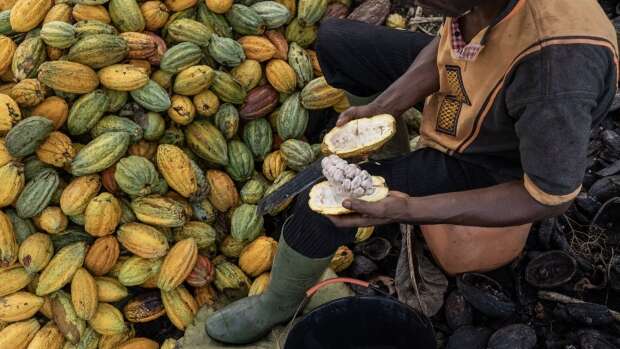

COCOBOD Records Losses Despite Global Cocoa Price Rally
Despite cocoa prices hitting record highs on the global market over the past 18 months, Ghanaian cocoa farmers and the Ghana Cocoa Board (COCOBOD) failed to reap the anticipated financial gains, with the Board now reporting losses following a sharp market correction.
According to COCOBOD, the price rally – which pushed cocoa to historic highs internationally – did not translate into improved earnings for the sector, largely due to supply shortfalls and deferred contract deliveries during the 2023/2024 crop season.
Ghana exports between 850,000 and one million metric tonnes of cocoa annually, with more than 70 percent shipped to European markets.
However, in the 2023/2024 season, approximately 330,000 tonnes of cocoa contracts were not supplied, resulting in rollovers for delivery and payment in subsequent years.
Chief Executive Officer of COCOBOD, Randy Abbey, described the outcome as deeply unfortunate, stressing that both farmers and the Board were adversely affected despite the favourable global price environment.
“It is unfortunate that Ghanaian farmers and COCOBOD did not benefit from the high cocoa prices on the global commodity market over the past 18 months. Instead, the situation resulted in losses,” he said.
Mr Abbey noted that the global cocoa market has since reversed sharply, raising concerns about revenue sustainability for the sector. He explained that prices have declined steeply from highs of about US$12,000 per tonne to around US$5,000 per tonne.
Cocoa, a major foreign exchange earner for Ghana, closed at US$5,845 per tonne on the international market on Friday, December 19, 2025.
COCOBOD has warned that the sustained downturn could have implications for cocoa pricing in the next crop year.
Mr Abbey disclosed that the declared Free on Board (FOB) price for the current season stands at 72 percent of the international price but cautioned that this may not be maintained if global prices continue to weaken.
“This year, the declared Free on Board (FOB) price was 72 percent. If prices do not recover, there is likely to be a reduction in the FOB price next year, as global market prices continue to trend downward,” he stated.
The development underscores the mounting challenges confronting Ghana’s cocoa sector as it navigates heightened price volatility, production constraints and pressures to protect farmer incomes while maintaining industry stability.

