

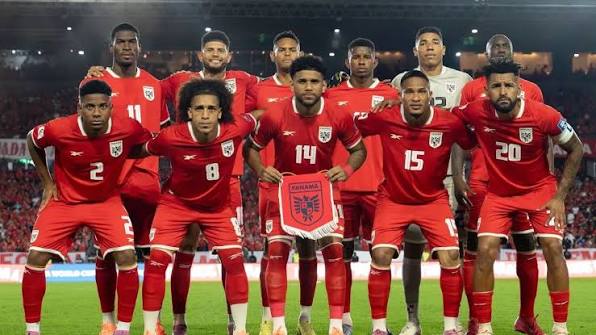

- Veterans take centre stage as Panama, Iran and Colombia name oldest World Cup squads
Panama and Iran have emerged as the oldest squads at the ongoing 2026 FIFA World Cup, according to new research by football predictions platform The Daily Punt, highlighting how several national teams are leaning heavily on experience at football’s biggest tournament.
The study, released in July 2026, examined all 48 national teams competing at the expanded World Cup and ranked them from oldest to youngest based on the mean age of players selected for the tournament.
Using Transfermarkt as its main data source, the research assessed each squad’s average age, youngest and oldest players, previous World Cup appearances, number of players based abroad, and total and average market value.
Panama topped the ranking with an average squad age of 30.50 years, making it the oldest team at the tournament. Iran followed closely with a mean age of 30.40 years, while Colombia placed third with an average squad age of 30.10 years.
Cape Verde, Qatar, Brazil, Scotland, Argentina, DR Congo and Paraguay completed the top 10 oldest squads.
For Panama, the data points to a team built almost entirely around mature players. Every member of the squad is at least 24 years old, with the youngest player, Edgardo Fariña, aged 24, and the oldest, Alberto Quintero, aged 38.
The Central American nation, making only its second World Cup appearance, has a squad market value of €34.55 million, with 92.30% of its players based abroad.
The Daily Punt said Panama’s profile reflects a team of experienced players chasing a major World Cup moment relatively late in their careers.
Iran’s squad, with an average age of 30.40 years, is only marginally younger. The Asian side’s oldest player is 37-year-old Shoja Khalilzadeh, while its youngest is 20-year-old Amirmohammad Razzaghinia.
Iran has appeared at seven World Cups, giving several of its senior players significant international tournament experience. Unlike many other squads in the top 10, however, Iran remains relatively homegrown, with just over a third of its players competing outside the domestic league.
Colombia ranked third with a mean squad age of 30.10 years. The South American side’s oldest player is goalkeeper David Ospina, aged 37, while Gustavo Puerta is the youngest at 22.
Colombia also has one of the highest foreign-based player rates among the tournament’s squads, with 96.00% of its players competing outside the country. Its squad value, estimated at more than €302.00 million, is significantly higher than those of Panama and Iran.
Cape Verde, one of the tournament’s most compelling stories, placed fourth with an average age of 29.70 years. The island nation is making its first-ever FIFA World Cup appearance and has a squad composed entirely of players from foreign leagues.
Its oldest player is 40-year-old goalkeeper Vozinha, who has attracted attention not only for his performances but also for his social media popularity. The youngest player in the squad is Wagner Pina, aged 23.
Qatar completed the top five with an average squad age of 29.50 years. The 2022 World Cup host is making its second appearance at the tournament and presents a contrasting squad profile, with only 3.80% of its players based abroad.
Qatar’s youngest player is 20-year-old Tahsin Mohammed Jamshid, while Lucas Mendes, aged 35, is the oldest. The squad is valued at just under €20.00 million.
Brazil, one of the tournament favourites, ranked sixth with an average squad age of 29.40 years. The Seleção have one of the wider age gaps among the top 10, with 19-year-old Rayan as their youngest player and 38-year-old goalkeeper Weverton as the oldest.
Scotland followed in seventh place, with an average age of 29.30 years. The Scottish squad features the oldest player at the tournament, 43-year-old goalkeeper Craig Gordon, while Tyler Fletcher, aged 19, is the youngest. The 24-year gap between the two players is the widest among the 10 oldest squads listed in the study.
Argentina, led by Lionel Messi, ranked eighth with a mean squad age of 29.20 years. Messi, aged 38, is the oldest player in the squad, while Nico Paz, aged 21, is the youngest.
DR Congo and Paraguay completed the top 10, both with average squad ages of 29.10 years.
DR Congo’s oldest player is 35-year-old Cédric Bakambu, while goalkeeper Matthieu Epolo is the youngest at 21. Paraguay’s squad ranges from 20-year-old Alexandro Maidana to 38-year-old Roberto Fernández.
The findings add another layer to the debate over squad construction at major tournaments, where managers must balance physical energy with tactical intelligence, leadership and experience.
While younger players often offer higher pressing intensity, faster recovery and greater athletic dynamism, older players can provide composure, game management and decision-making under pressure.
A sports analyst from The Daily Punt said the most successful squads often strike a balance between youth and experience.
“Every manager has to decide between experience and energy. Younger players can run more, press higher, and recover faster between games. But experience means reading a game correctly when it matters: knowing when to hold the ball, when to foul, when to slow things down,” the analyst said.
“The squads with the best balance tend to be in their late twenties collectively, which is what the main favourites, Argentina, France, and England, are.”
The study suggests that while Panama and Iran are relying most heavily on older squads, some of the tournament’s leading contenders are also built around experienced cores.
Argentina’s presence in the top 10 reflects the continued influence of senior players, including Messi, while Brazil’s ranking shows that even talent-rich teams are combining emerging stars with long-serving professionals.
For debutants such as Cape Verde, an older squad may be less about conservatism and more about drawing on players with years of experience across foreign leagues. In a first World Cup appearance, that maturity can be valuable in handling pressure, travel, tactical demands and the emotional weight of representing a country on the global stage.
For teams such as Panama and Iran, the reliance on veteran players may also reflect the realities of player development pipelines, squad continuity and the desire to maximise the current generation before a broader transition begins.
However, age profiles can cut both ways. Older squads may manage games better, but they can also face questions over recovery between matches, intensity against younger opponents and adaptability in high-tempo knockout fixtures.
The expanded 2026 World Cup, with 48 teams and a wider range of competitive levels, has given more countries the chance to test different squad-building models.
Some nations have chosen to prioritise youthful energy. Others have placed faith in experience. The Daily Punt’s ranking shows that several teams are betting that, on the biggest stage, know-how can be just as important as pace.
Whether that veteran edge proves decisive will become clearer as the tournament advances. For now, Panama and Iran lead the age table, Scotland’s Craig Gordon stands as the oldest individual player, and Cape Verde’s Vozinha has become one of the most recognisable veteran figures of a World Cup already rich with stories of experience, resilience and national pride.

