

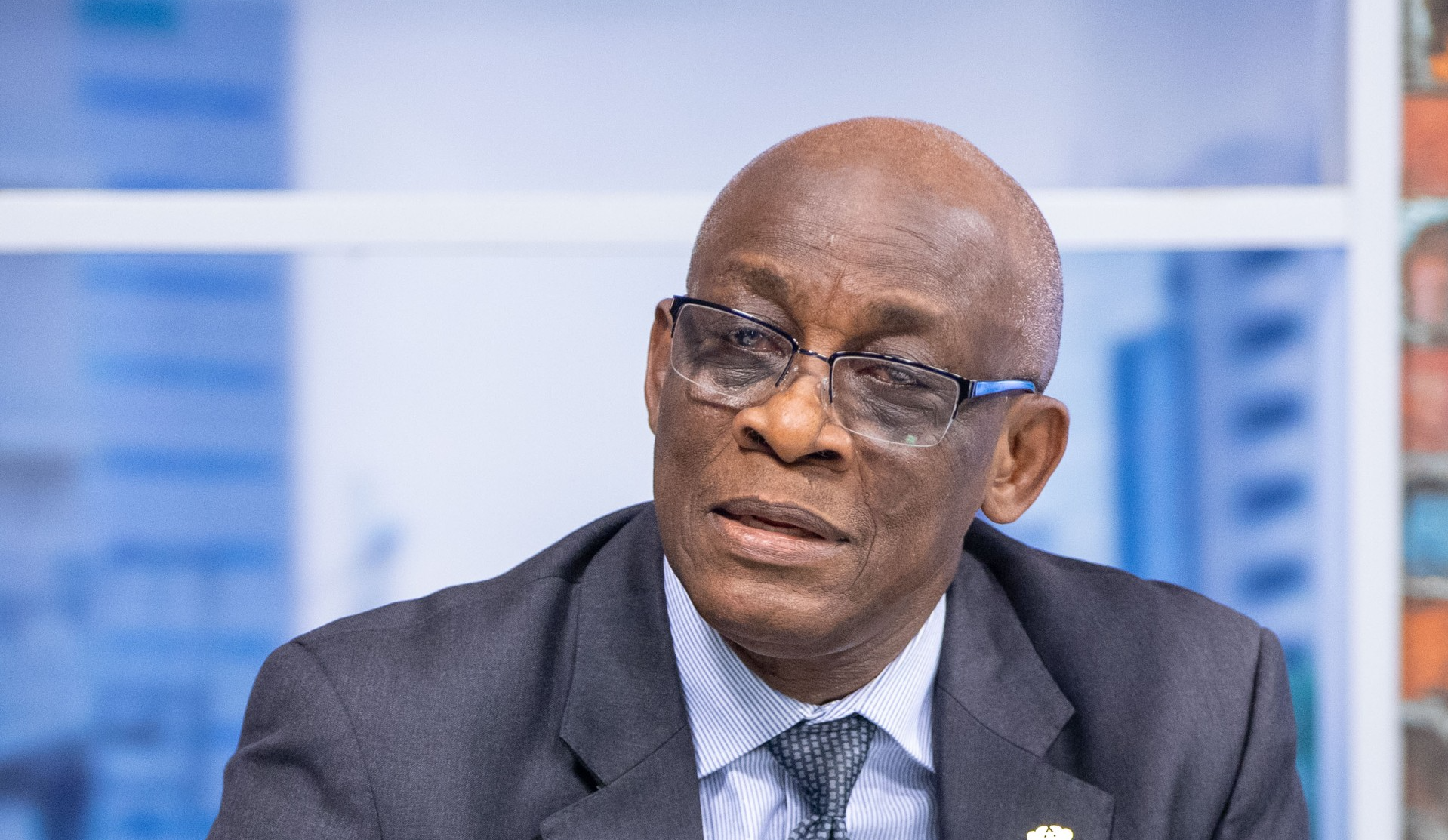

Seth Terkper Advocates Counter-Cyclical Policies to Strengthen Economic Resilience
Presidential Advisor on the Economy and former Finance Minister, Seth Terkper, has underscored the vulnerability of economies to both global and domestic shocks, stressing the need for proactive policy responses to manage cyclical disruptions.
Speaking on PM Express Business Edition on Joy News on Thursday, March 19, 2026, he noted that global events—ranging from wars to commodity price fluctuations—have historically destabilised economies, affecting both domestic management and international economic coordination.
According to him, such disruptions are not limited to geopolitical developments, as natural occurrences like excessive rainfall and droughts also pose significant risks, particularly in countries with infrastructure deficits.
He explained that heavy rains often lead to flooding and destruction of crops, while drought conditions can reduce food production, compel increased imports, and exert pressure on foreign reserves and currency stability.
Mr Terkper further indicated that these shocks, though not always predictable with precision, are recurring and should be anticipated within economic planning frameworks.
He emphasised that economies typically operate in cycles—alternating between periods of growth and downturns—and noted that it is unrealistic to expect sustained economic stability over extended periods without encountering crises.
To manage such cycles, he highlighted the importance of counter-cyclical policies, which involve building fiscal buffers during periods of economic expansion to cushion the impact of downturns.
He pointed to instruments such as stabilisation funds and strategic reserves as critical tools, explaining that reserves accumulated during favourable periods can be deployed to mitigate the effects of adverse shocks.
Touching on global financial institutions, he reiterated that organisations like the International Monetary Fund and the World Bank have historically provided support during crises, although their original design was not centred on Africa.
He argued that advanced economies, which initially benefited from these institutions, have since built strong buffers and now play financing roles within the same institutions.
Drawing comparisons, he noted that emerging economies, including Asian countries and China, have transitioned from borrowers to financiers by strengthening their internal economic buffers.
Mr Terkper also referenced Ghana’s past policy interventions, citing the use of strategic petroleum reserves and stabilisation mechanisms between 2013 and 2016 as measures that helped prevent fuel shortages and mitigate the impact of price volatility.
He further highlighted reforms such as “smart borrowing,” which encouraged state-owned enterprises to finance projects using their own balance sheets rather than relying on government guarantees, thereby reducing contingent liabilities.
Providing examples, he pointed to infrastructure projects such as the development of Terminal 3 at Accra International Airport and port expansion initiatives, which were financed through structured revenue-backed arrangements rather than direct government borrowing.
He maintained that such approaches demonstrate the effectiveness of innovative financing strategies in reducing fiscal risks while delivering critical infrastructure.
On broader structural reforms, he noted that many policy measures often attributed to external institutions are not new, but rather reflect established practices adopted by emerging and advanced economies.
Mr Terkper also challenged perceptions about Africa’s economic status, arguing that the continent is not solely composed of low-income countries, as classifications by the World Bank include a significant number of lower-middle and upper-middle-income economies.
He concluded by emphasising the importance of strategic planning, fiscal discipline, and buffer-building in ensuring economic resilience, particularly in the face of recurring global and domestic shocks.

