


- Climate Finance Becomes Ghana’s New Development Capital Strategy
Ghana is intensifying its climate diplomacy as the government seeks to unlock global green finance to support economic transformation, infrastructure development and climate resilience at a time when domestic fiscal space remains constrained.
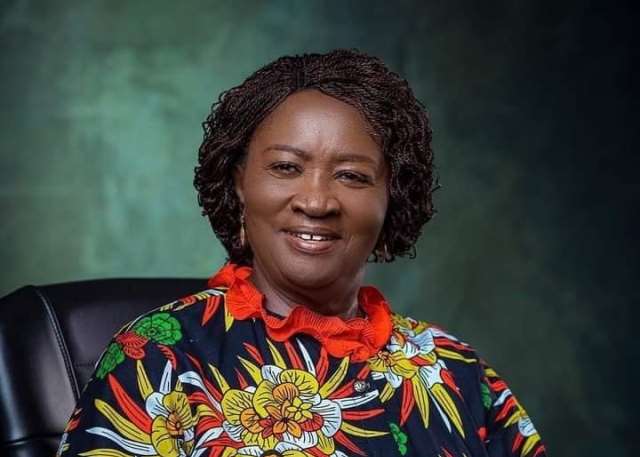
Vice President Professor Jane Naana Opoku-Agyemang has called for deeper and more strategic participation in international climate negotiations, arguing that Ghana must strengthen its presence at the negotiating table if it is to secure a larger share of global climate finance.
Her message reflects a growing shift in Ghana’s development financing strategy. Climate diplomacy is no longer being treated only as an environmental obligation. It is increasingly becoming an economic policy tool — one through which the country hopes to mobilise concessional funding, attract private capital, reduce dependence on expensive borrowing and finance projects that can strengthen long-term resilience.
“As climate-related shocks continue to threaten agriculture, energy security and critical infrastructure, policymakers increasingly view successful climate diplomacy not merely as an environmental objective but as an economic strategy,” the Vice President’s remarks suggest.
The timing is significant. Ghana is pursuing fiscal consolidation after a difficult period of debt distress and restructuring. Public finances remain tight, borrowing space is limited and the cost of commercial financing continues to constrain the state’s ability to fund large infrastructure and adaptation projects. In that context, climate finance offers an alternative pool of capital — but one that is highly competitive and difficult to access without strong project preparation and negotiation capacity.
At the global level, competition for climate finance has intensified. At COP29, countries agreed to triple finance to developing countries from the previous US$100 billion annual goal to US$300 billion annually by 2035, while also calling for all actors to scale up finance from public and private sources to US$1.3 trillion per year by 2035.
For Ghana and other climate-vulnerable economies, the issue is not whether global money exists. It is whether they can position bankable projects, credible institutions and strong negotiating teams to access it.
The Vice President’s call therefore places climate negotiations at the centre of Ghana’s external financing agenda. Her argument is that Ghana must not merely attend global climate meetings, but must influence outcomes, defend its priorities and ensure that funding mechanisms reflect the country’s development needs.
That matters because climate finance is often shaped by the quality of a country’s proposals, the credibility of its institutions, the clarity of its policy framework and its ability to align national projects with international financing priorities. Countries that negotiate better and prepare stronger investment pipelines are more likely to secure concessional loans, grants, guarantees and private co-investment.
Ghana has already begun building a framework for this shift. In March 2026, the Ministry of Finance announced the formal validation of the country’s revised Climate Prosperity Plan at a high-level national workshop in Accra. The plan was designed to scale climate and development finance and provide an updated investment and financing framework for climate-resilient growth.
The revised plan identifies financing instruments including debt-for-climate and debt-for-nature swaps, carbon market transactions under Article 6 of the Paris Agreement, blended finance mechanisms and stronger engagement with multilateral development banks to crowd in private investment.
This is important because Ghana’s climate finance challenge is not only about accessing donor support. It is about designing financial structures that can combine public money, private capital, concessional funds and market-based instruments in ways that reduce risk and make projects investable.
The Climate Prosperity Plan is also aligned with Ghana’s broader economic transformation agenda, including the 24-Hour Economy policy, the Accelerated Export Development Programme and the Big Push infrastructure initiative. The Ministry of Finance has said this alignment is intended to ensure climate investment acts as a multiplier of national development priorities rather than a stand-alone environmental programme.
That framing is critical. If climate finance is treated only as an environmental funding stream, it may remain too narrow to transform the economy. But if it is linked to industrialisation, green transport, renewable energy, climate-smart agriculture, water resilience, health infrastructure, flood protection and export competitiveness, it can become part of Ghana’s growth strategy.
The revised plan is anchored on six strategic pillars: sustainable industrialisation and value addition; accelerated renewable energy deployment and green transport systems; climate-resilient health and water infrastructure; strengthened financial and economic resilience; sustainable food systems; and nature-based solutions that enhance ecological integrity and productive infrastructure.
For ordinary citizens, the climate finance conversation may sound distant. But its practical implications are immediate. Climate funding can support drainage systems that reduce flooding, irrigation schemes that protect food production, coastal defences that safeguard communities, renewable power that lowers energy vulnerability, and transport systems that reduce fuel dependence.
Ghana’s updated Nationally Determined Contributions also show the scale of the financing challenge. The NDC Partnership estimates that implementing Ghana’s updated NDC will cost between US$9.3 billion and US$15.5 billion, covering mitigation and adaptation actions across areas including early warning systems, disaster risk management, resilience building, food and landscape restoration, sustainable mobility and sustainable energy transition.
That financing requirement cannot realistically be met through the national budget alone. Ghana will need grants, concessional loans, carbon finance, private investment and risk-sharing instruments from development partners and multilateral institutions.
This is why climate diplomacy has become an economic necessity.
For the Ministry of Finance, stronger climate finance access could create fiscal space. For the Ministry of Energy, it could support renewable energy and grid resilience. For the Ministry of Agriculture, it could finance climate-smart production and irrigation. For local authorities, it could support flood control, waste systems and resilient urban planning. For the private sector, it could open investment opportunities in green manufacturing, carbon markets, clean transport and sustainable infrastructure.
But the opportunity comes with hard conditions. International climate finance is not automatic. Ghana must build a credible project pipeline, improve coordination among ministries, strengthen monitoring and reporting systems, and ensure that climate funds are transparently managed.
The Ministry of Finance has said the validated Climate Prosperity Plan provides Ghana with a coherent platform to engage international climate funds, development finance institutions and private investors with a structured, investment-ready proposition. It also said the framework positions Ghana to show how climate action can drive industrial competitiveness, job creation, capital accumulation and long-term resilience.
That ambition is sound. But execution will determine whether it becomes real.
Ghana’s climate diplomacy must therefore be matched by domestic institutional discipline. Negotiators can secure commitments, but ministries must prepare projects. Development partners can pledge support, but governments must meet fiduciary standards. Carbon markets can offer revenue, but credits must be credible. Debt-for-climate swaps can create fiscal space, but they require strong governance and measurable environmental outcomes.
The Vice President’s call for stronger participation in climate negotiations should therefore be read as more than a diplomatic appeal. It is a signal that Ghana wants to compete more aggressively for the new global climate finance architecture.
The country’s case is strong. Ghana faces climate risks in agriculture, water, energy, coastal protection and urban infrastructure. It also has credible opportunities in renewable energy, green industrialisation, sustainable transport, carbon markets and nature-based solutions.
But in the climate finance economy, vulnerability alone is not enough. Countries must convert vulnerability into bankable investment proposals.
For Ghana, the next phase must be practical: build the projects, cost them properly, structure them for investors, negotiate strongly, and account transparently for every dollar mobilised.
Climate finance will not replace fiscal discipline. It will not remove the need for domestic revenue mobilisation. It will not eliminate Ghana’s debt management challenges.
But if pursued strategically, it can become an important source of development capital at a time when traditional financing options are limited.
That is why Ghana’s climate diplomacy now matters not only to environmental policy, but to economic transformation.
The real test will be whether the country can turn global climate conversations into roads, drains, power systems, farms, industries and jobs that make the economy more resilient.

