

- Tech hype vs tax reality: Economic Advisor says Ghana needs stronger core tax and PFM systems before AI
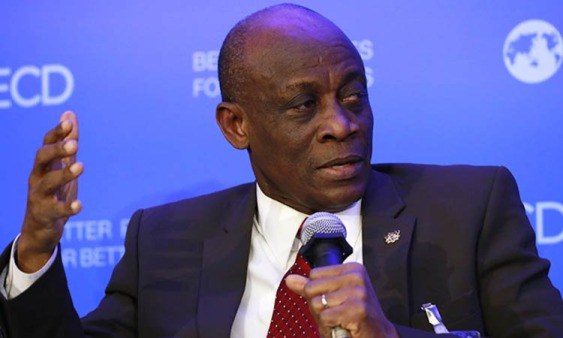
Ghana’s public-sector reform conversation is starting to sound like the global one: artificial intelligence is promised as the next efficiency leap, a way to widen the tax net, detect fraud, and reduce leakages. But at Ghana’s Economic Outlook 2026 Business Forum, Seth Terkper, the former Finance Minister and now Economic Advisor to the President, offered a blunt counterpoint: without basic fiscal “plumbing”, AI will be an expensive disruptor.
Mr Terkper’s argument was simple but cutting. Ghana risks becoming tech-forward but systems-poor. Even if the state succeeds in capturing invoices and receipts through AI, he said, the benefits will evaporate if the government lacks an integrated fiscal architecture to analyse the data and enforce compliance. “If you collect VAT invoices through AI… and you don’t have a domestic tax system and domestic tax analytics… you are not going anywhere,” he said.
It is a warning against debates that a single technological tool can fix complex institutional problems. Mr Terkper’s point was not anti-technology. Sequencing was the key point: adding AI to fragmented underlying systems can simply automate confusion.
He pointed out that Ghana is now building a comprehensive domestic tax system with the coverage and enforcement capability needed to make such tools meaningful. In his view, the country needs to strengthen the core tax infrastructure for income tax and VAT, including the analytics layer that allows the government to turn captured transactions into assessed liabilities and credible enforcement.
From there, he shifted to work: integration. Ghana’s fiscal system, he suggested, must use connected platforms that “talk” to each other. Instead, the state must build linkages between revenue collection, border processes, and spending controls so that the government can see who is trading, what is being imported, what taxes are due, and how public money is being committed and paid.
In practical terms, he referenced linking domestic tax to customs processes and pointed to the importance of completing modules of GIFMIS, the government’s integrated financial management system, as part of spending control and transparency. The concept is straight Forand expenditure control is not a separate battle. Tighten one side while the other remains porous, and macro discipline cannot hold.
His remarks also carried a subtle warning about the politics of reform. AI is attractive partly because it looks like a leap, a visible, modern “solution” that can be announced quickly. But fiscal plumbing is often invisible: improving data standards, reconciling databases, integrating platforms, and enforcing consistent workflows inside bureaucracies. These are slow tasks, harder to sell, and easier to postpone. Mr Terkper’s message was that postponement is precisely the trap: Ghana can digitise at the surface while the leaks remain underneath.
The wider context is Ghana’s search for durable stability as it navigates a post-crisis policy environment. Businesses want signals that reforms will last beyond the immediate stabilisation window. Mr Terkper’s prescription suggests that what matters now is not the headline promise of AI, but whether the government can deliver the unglamorous foundation that makes technology effective: coherent tax administration, credible compliance enforcement, and a spending control system that reduces slippages.
He framed the issue as a gap between “collecting” data and “using” it. Capturing VAT invoices is only the first step; without analytics and enforcement, it becomes an electronic archive rather than a tax system. The same logic extends to ct: digitised processes can still produce weak outcomes if they sit atop fragmented databases with inconsistent rules.
For private sector operators, the takeaway is not that Ghana should slow down on technology. It is that the government’s technology agenda should be judged by its integration plan: what systems are being linked; what datasets are being standardised, who owns the architecture; what controls are being embedded; and how compliance will be enforced consistently without drifting into arbitrary pressure on compliant taxpayers.
Mr Terkper’s intervention also lands with particular weight because he is not speaking from the outside. He served previously as Ghana’s Finance Minister and is now positioned as a senior economic adviser to the President with a mandate that, through public reporting, includes counsel on fiscal policy, debt management, and stabilisation strategy. That vantage point helps explain why his critique focused less on “tools” and more on the state’s capacity to make tools work.
If the next phase of Ghana’s reforms becomes an AI race without a systems roadmap, his comments imply, the country risks repeating an older pattern: reform announcements that do not translate into institutional capability. If, however, the state uses the current window to build integrated tax and financial management systems, AI can become a multiplier rather than a mirage.
In the end, his case was a reminder that fiscal capacity is not built by slogans. It is built with systems that work together and the discipline to fix the plumbing before installing the smart meters.

