

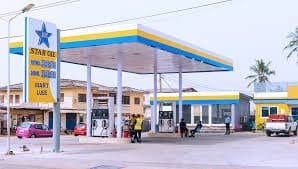

Star Oil and the New Economics of Ghana’s Fuel Market
Ghana’s motorists are enjoying an unfamiliar pleasure: falling fuel prices. At the centre of this cheer is Star Oil, an indigenous oil marketing company that has confounded expectations, unsettled incumbents and ignited a bruising price war in one of West Africa’s most competitive downstream petroleum markets. Its success raises a larger question. Is this merely a cyclical skirmish, or a structural shift in how fuel is priced and sold in Ghana?
From also-ran to agenda-setter
Ghana’s fuel market is crowded, with close to 200 licensed oil marketing companies (OMCs). For most of the past two decades, leadership has been stable. GOIL, the state-owned behemoth, alongside Shell (operated by Vivo Energy) and France’s TotalEnergies, has dominated forecourts and balance sheets alike. Star Oil, founded in 1998 and wholly Ghanaian-owned, long sat outside this inner circle.
That has changed. By 2025, Star Oil had vaulted into the top tier of the market, climbing from 13th place in 2020 to market leader within five years. In the first half of 2025 alone, it increased fuel volumes by over 40%, reaching more than 400m litres and overtaking GOIL in market share. By October that year, Star Oil controlled over 15% of the market—more than any rival.
Such leaps rarely happen overnight. Star Oil’s rise has been the result of patient accumulation rather than sudden brilliance.
The virtues of being cheaper
Star Oil’s strategy has been blunt but effective: sell fuel for less, sell more of it, and own the means of doing so. Over several years, the firm priced consistently below the majors, expanded aggressively into peri-urban and underserved areas, and acquired existing filling stations, including some previously operated by GOIL. Today it runs more than 200 stations nationwide.
Lower prices have been made possible by structural advantages rather than financial alchemy. Ghana’s regulator, the National Petroleum Authority, classifies fuel by sulphur content. Tier-one firms—such as Shell, TotalEnergies and GOIL—must sell ultra-low sulphur fuel (9 parts per million or less). It is cleaner, and costlier. Star Oil operates in tier two, selling fuel with up to 40ppm sulphur. The difference, sanctioned to ensure affordability in price-sensitive markets, gives Star Oil room to undercut its rivals.
Vertical integration strengthens this advantage. Unlike foreign-owned firms, which are legally required to operate through local dealers, Star Oil owns and manages its retail outlets directly. By eliminating the retailer’s margin, it can shave further cedis off pump prices. Scale helps too. Higher volumes mean stronger bargaining power with bulk distributors.
Currency movements also matter. Multinationals must account in dollars to parent companies abroad, making them more vulnerable to swings in the cedi. Star Oil, with local costs and reporting, enjoys a degree of insulation.
When competition turns combative
The result of these advantages has been a price war that escalated sharply in 2025. Industry insiders trace the spark to GOIL’s decision to match Star Oil’s price cuts, breaking a long-standing pattern of price leadership. Once discipline slipped, others followed. By January 2026, smaller players such as Zen and JP were selling fuel below both Star Oil and GOIL, while the international brands were left charging markedly higher prices.
Consumers have benefited. Balance sheets, less so.
There are limits to how long this can continue. Persistent price wars erode margins, drain capital and, in extreme cases, drive weaker firms out of the market. Yet competition, when it works, exposes inefficiencies and forces adaptation. Star Oil’s rise has done precisely that.
Refining the advantage
One variable looms large: the Tema Oil Refinery (TOR). Its return to partial operation has allowed tier-two OMCs to source locally refined 40ppm fuel, reinforcing Star Oil’s pricing edge. But TOR cannot yet produce 9ppm fuel. If and when upgrades are completed, tier-one firms could regain access to cheaper cleaner fuel, narrowing the gap.
Meanwhile, the incumbents are not without weapons. GOIL, with roughly 400 stations—twice Star Oil’s footprint—has the capacity to absorb thinner margins for longer, should it choose to do so.
A quarrel beyond prices
Star Oil’s challenge is no longer confined to the forecourt. In January 2026 it suspended its membership of the Chamber of Oil Marketing Companies (COMAC), the industry’s main lobby group. The dispute centres on the petroleum price floor, a regulatory mechanism that limits how low pump prices can fall.
Star Oil has argued for its removal, claiming it delays the pass-through of global price movements and exchange-rate changes, dulls competition and ultimately harms consumers. COMAC’s leadership has taken a different view. Star Oil complains that its position has been misrepresented in public, exposing it to reputational risk. Hence the walkout.
The episode underlines a deeper tension. As Star Oil reshapes the market, it is also challenging the rules—and the consensus—that have governed it.
More than a price war
For now, Star Oil is winning. It has leveraged regulatory nuance, operational discipline and local ownership into market leadership. Whether this advantage endures will depend on oil prices, currency stability, refinery upgrades and the response of rivals and regulators alike.
What seems certain is that Ghana’s fuel market is no longer a club run by familiar names. An indigenous upstart has forced a rethink—not just of pricing, but of how competition itself should work. That may be its most lasting contribution.

