
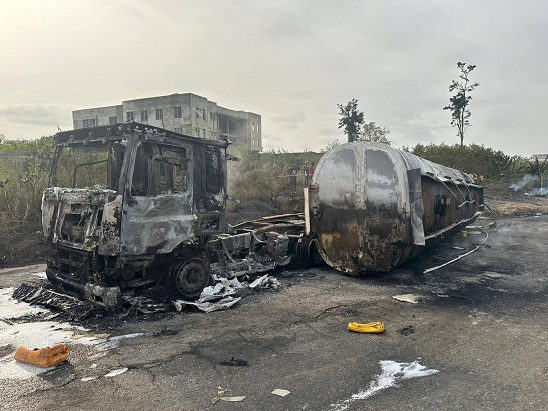

GTYA Calls for Urgent Road Safety and Infrastructure Reforms After Nsawam Tanker Explosion
Green Tax Youth Africa (GTYA) has called for urgent reforms in road safety enforcement and infrastructure planning following the recent fuel tanker explosion on the Nsawam–Kumasi highway, warning that systemic weaknesses continue to put lives at risk.
In a statement issued on February 16, 2026, the policy advocacy group expressed condolences to families affected by the tragedy and described the incident as part of a broader pattern of fatal crashes along the Accra–Nsawam corridor, a critical national transport route.
Citing preliminary data from the National Road Safety Authority and the Motor Traffic and Transport Department, GTYA noted that more than 20 serious crashes were recorded on the Accra–Nsawam stretch in January 2025 alone, resulting in at least 15 fatalities. Heavy-duty vehicles, including fuel tankers and long-haul trucks, were identified as major contributors to high-impact collisions, particularly in areas affected by road construction and congestion.
According to the organisation, the explosion highlights persistent enforcement gaps in restrictions on the movement of articulated trucks during peak traffic hours. It argued that although regulations exist, weak enforcement has allowed heavy vehicles to operate in highly congested urban corridors, increasing risks for motorists and pedestrians.
GTYA also raised concerns about safety challenges arising from the ongoing Accra–Kumasi road rehabilitation, saying major construction works have commenced without adequate diversion routes or mobility management plans. This, it said, has forced commuters and commercial drivers to share active construction lanes, heightening accident risks.
The group further criticised what it described as design gaps in the near-completed Phase Two of the Pokuase–Nsawam road, including the absence of pedestrian walkways, cycling lanes, stormwater drainage systems and utility ducts. It also pointed to limited consideration for traders displaced by the construction, raising questions about the implementation of Environmental Impact Assessment recommendations.
As part of its recommendations, GTYA called for stricter enforcement of heavy-duty vehicle movement restrictions through digital tracking and coordinated inter-agency monitoring. It urged authorities to require contractors to present clear diversion and safety plans before commencing major road works and advocated the integration of “complete street” principles into all large-scale road projects.
The organisation also proposed the development of structured truck rest terminals along major highways, particularly between Tema Port and the Nsawam corridor, to reduce driver fatigue and improve vehicle inspections. Additionally, it called for broader accountability measures to address hazards such as spillage of construction materials and unsafe cargo fastening.
“The Nsawam fuel tanker explosion is a painful reminder that road infrastructure is not merely about asphalt and concrete, but about human lives and governance accountability,” the statement said, adding that preventable tragedies should not be normalised in Ghana’s transport system.

