

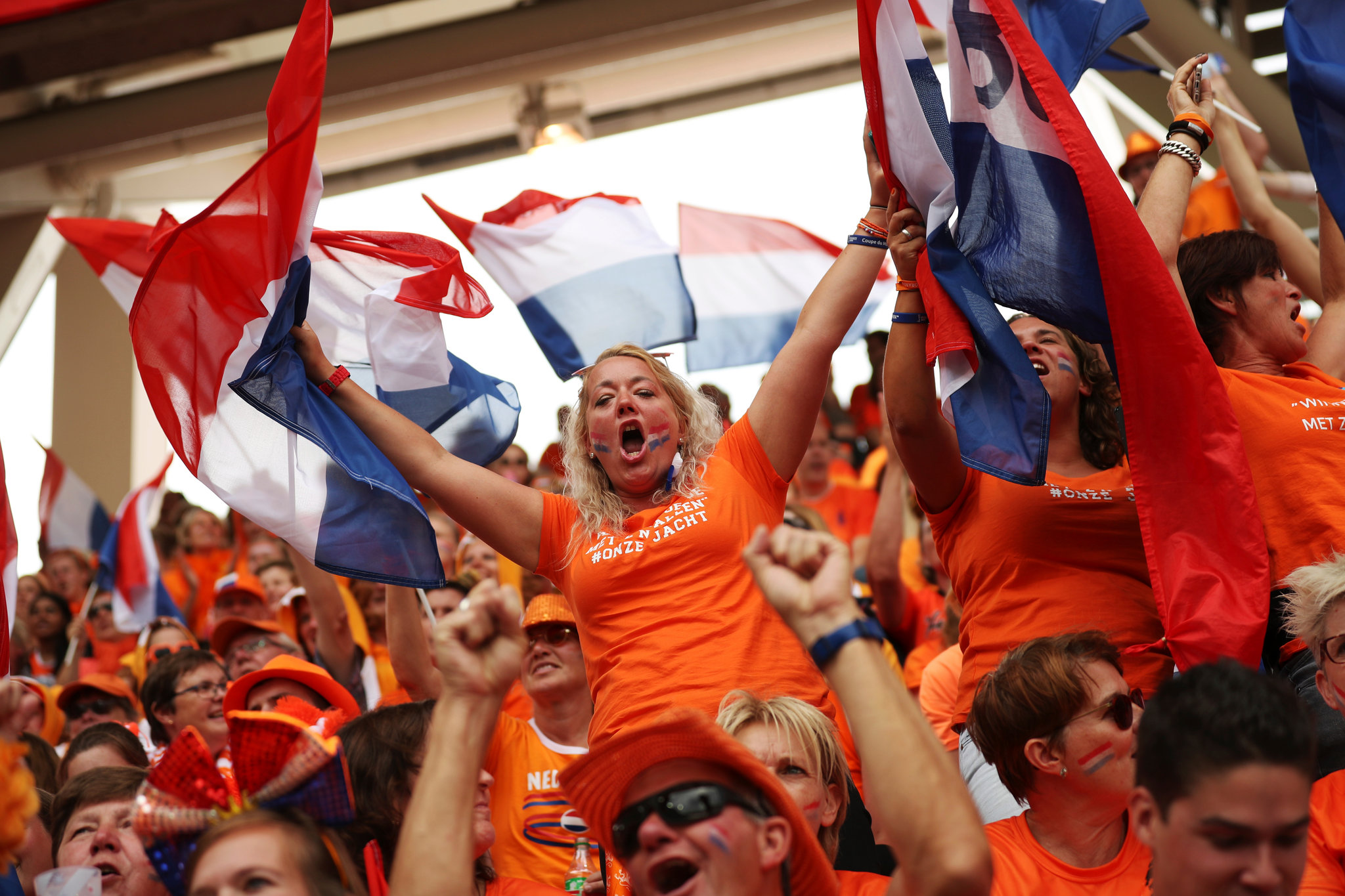

- Dutch Fans Named World Cup’s Most Stressed as Late Goals, Shootout Heartbreak Pile Up
Dutch football fans have endured the most stressful experience of the 2026 FIFA World Cup, according to a new July 2026 report by live streaming platform CasinoStreamers.com, which analysed late goals, one-goal margins, penalty shootouts, extra time, eliminations and Google search spikes across all 48 teams in the tournament.
The Netherlands topped the Fan Stress Index with a score of 70, after a tournament marked by two late goals conceded, two matches decided by one goal or fewer, one penalty shootout defeat and one extra-time match. Search interest around the Dutch team also surged to 12 times its normal baseline, the highest among the top five most stressed fanbases.
The findings show that the emotional cost of a World Cup is not only measured by how far a team goes, but by how painfully it gets there — or how painfully it exits.
For Dutch supporters, the tournament became a sequence of nervous endings. Goals conceded after the 75th minute left fans watching the clock with dread, while the penalty shootout loss to Morocco added another chapter to the Netherlands’ long and difficult history with knockout-stage heartbreak.
The report suggests that every Dutch match carried tension until the final whistle, offering supporters little emotional comfort. In football terms, the Netherlands did not just play matches; they dragged their fans through the most intense version of the World Cup experience.
Germany ranked second with a Fan Stress Index of 68.7, driven by three one-goal contests, one late goal conceded, one extra-time match and a penalty shootout defeat against Paraguay. Search activity around Germany rose to more than 10 times the usual rate, reflecting the anxiety of supporters following matches that could easily have turned either way.
Paraguay placed third with a score of 68.6, despite avoiding a penalty shootout defeat. Their stress profile came from consistency of tension: four matches decided by one goal or fewer, the highest among the top five. For Paraguay fans, the tournament became a test of endurance, with nearly every match hanging on a single decisive moment.
That Paraguay reached this level of stress without losing a shootout shows an important point: fan anxiety is not only produced by defeat. Sometimes winning narrowly, repeatedly, can be just as draining. Scraping through one tight match may bring joy. Doing it again and again turns support into emotional labour.
Senegal ranked fourth with a Fan Stress Index of 59.6, largely because of five late goals conceded — the highest among the leading stressed fanbases. For Senegalese supporters, the pain came from watching matches shift dramatically in the closing stages. Late goals are among football’s cruelest moments because they leave little time for recovery. They turn control into panic, draws into defeats and hope into frustration.
Australia completed the top five with a score of 58.5. Their campaign included two one-goal matches, an extra-time contest and a penalty shootout loss against Egypt. Australian fans, like the Dutch, experienced the particular agony of a tournament decided not only by tactics and effort, but by the fine margins of extra time and penalties.
Brazil placed sixth with a stress score of 55.2 after two late goals conceded and three matches decided by one goal or fewer. Cabo Verde followed with 54.4, reflecting one of the tournament’s most dramatic underdog runs, including two late goals conceded, four narrow matches and one extra-time contest.
Portugal ranked eighth with a score of 52.6, after four matches decided by one goal or fewer and a tense knockout elimination by Spain. The emotional pressure on Portuguese fans was intensified by the possibility that the tournament represented Cristiano Ronaldo’s final World Cup appearance, making every match feel heavier than the scoreline alone suggested.
The United States and Canada rounded out the top 10, with scores of 47.9 and 47.7 respectively. The USA conceded two late goals and played one match decided by a single goal, while Canada conceded two late goals and had three matches settled by one goal or fewer.
The study’s method is revealing because it treats football stress as a measurable experience. It looked at 10 match-level causes of fan anxiety, including goals conceded in the 75th minute or later, one-goal margins, penalty shootout losses, extra time, knockout-stage pressure, elimination and Google search spikes.
That last metric is especially interesting. Search spikes capture what fans do when uncertainty becomes unbearable. They search for updates, permutations, injury news, referee decisions, qualification scenarios and emotional reassurance. In the modern World Cup, anxiety is not only seen in stadium faces; it is visible in search data.
A football analyst from CasinoStreamers.com said the most stressful moments are often the ones that create the deepest emotional bonds between fans and teams.
“Trophy lifts get the headlines, but the real bonding happens in the minutes between a late goal and the final whistle, when every fan in every time zone is holding their breath together,” the analyst said. “That shared silence, that collective dread, is what turns a global tournament into a personal memory. The Dutch fans may have suffered the most, but they also experienced the World Cup in its most raw, unfiltered form. You can’t buy that kind of emotional investment.”
The report captures something every football supporter understands: stress is part of the contract. Fans do not only watch for goals. They watch through fear, uncertainty, stoppage time, VAR checks, extra time and penalties. The suffering is part of the attachment.
For the Dutch, that suffering has been deeper than for any other fanbase at the 2026 World Cup.
Their team may not have delivered peace of mind. But according to the data, no supporters have lived the tournament more intensely.

