


- Banks, PSPs Warned Against Facilitating 20 Unlicensed Digital Lenders — BoG
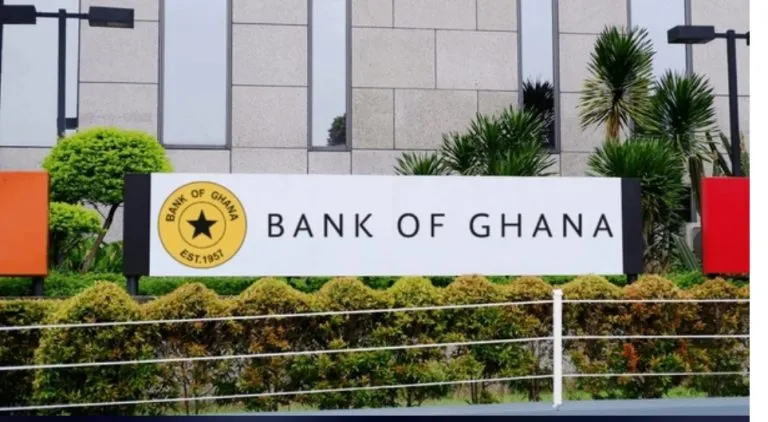
The Bank of Ghana has named 20 mobile loan applications operating without the required regulatory licence and warned banks, specialised deposit-taking institutions and payment service providers against facilitating transactions for the affected digital lenders as it intensifies enforcement across the rapidly expanding digital credit market.
In a public notice dated August 3, 2026, the central bank said it continued to observe entities providing digital loans to Ghanaians through online and mobile channels without authorisation, despite an earlier regulatory warning.
The Bank said the operations contravene its Directive for Digital Credit Service Providers issued in September 2025, alongside other applicable laws governing financial services in Ghana.
The latest action puts greater pressure on unlicensed digital lenders whose operations have expanded as consumers increasingly use smartphones and mobile money accounts to access short-term credit.
The 20 applications identified by the regulator are Adamfo Loan, Agyapacredit, Amanfi Loan, Arco Cash, Aya Lend, Bucks Now, CediGo, CGrab, DumboCash, FCash, GH Loans, GH Loans Pro, Hasty Credit, Newgry Money Tree, Omanpesa, PoPoCedi, Ready Money, Sika Tap, Sikapa Loan and Zigwe Loan.
The Bank’s intervention goes beyond questions about whether the companies have the correct operating licences.
It said the activities of the named entities raise significant concerns around customer information, consumer rights and adherence to established financial-sector standards.
“The Bank reiterates that the operations of these entities constitute significant violations of customer data privacy, consumer protection, and established regulatory standards,” the central bank said.
That warning addresses one of the most contentious aspects of Ghana’s emerging digital lending market.
Digital lenders can provide faster and more convenient access to small loans than conventional banking channels, often using simplified application processes and automated credit assessment. But the same model can create consumer-protection risks where lenders operate outside established supervision or collect sensitive personal information without adequate controls.
For the regulator, the issue therefore concerns both financial activity and the manner in which borrowers are treated.
The Bank’s warning also places regulated financial institutions directly within the enforcement framework.
“Banks, Specialised Deposit-Taking Institutions (SDIs), and Payment Service Providers (PSPs) are also cautioned against facilitating or processing transactions on behalf of unlicensed loan providers,” the Bank said.
The significance of that directive is substantial because many digital lenders rely on regulated institutions to move money into and out of customer accounts.
Mobile money platforms, bank transfers and payment-service infrastructure can form the settlement layer through which loans are disbursed and repayments collected. Restricting access to those channels could therefore make it considerably harder for an unlicensed lender to operate at scale.
The approach effectively extends regulatory responsibility beyond the lender itself to institutions providing the financial plumbing necessary for digital credit transactions.
For licensed banks and payment companies, that increases the importance of due diligence.
Institutions may need to establish whether digital lending businesses using their platforms have valid authorisation before processing payments on their behalf. That could require stronger monitoring of merchant accounts, settlement arrangements and other relationships associated with digital credit providers.
The notice represents a continuation of the Bank’s broader attempt to formalise Ghana’s digital lending industry.
The central bank specifically referenced an earlier notice on unlicensed Digital Credit Service Providers and the September 2025 directive governing the sector, indicating that the latest publication is part of an ongoing compliance programme rather than a one-off intervention.
The regulatory challenge is particularly important because digital credit occupies a sensitive position within financial inclusion.
Small mobile loans can provide emergency liquidity to households and working capital to micro-enterprises that may struggle to access conventional bank credit.
But speed and accessibility can also expose borrowers to excessive charges, aggressive collection practices, inappropriate access to personal data and unclear contractual terms if operators are not subject to effective supervision.
The Bank’s response suggests it wants digital credit to continue developing, but within a licensing and consumer-protection framework.
It has therefore advised members of the public not to engage with unlicensed loan providers and encouraged consumers who identify such activities to report them directly to its Fintech and Innovation Department.
The central bank said it would also work with other state institutions to identify and investigate unlicensed operators.
“The Bank of Ghana will continue to collaborate with relevant state institutions to identify, investigate, and take appropriate enforcement action against such entities in order to safeguard consumers and uphold the integrity and stability of the financial sector,” it said.
That language indicates that publication of the names may not represent the end of the regulatory process.
Entities that continue operating could potentially face further enforcement measures depending on the powers available to the Bank and other relevant agencies.
For consumers, the immediate implication is that convenience should not be treated as evidence that a loan provider is authorised.
An application may be easily downloadable and capable of disbursing money digitally while still operating outside the regulatory framework.
The Bank’s latest action is therefore aimed at creating a clearer distinction between innovation and regulatory legitimacy.
Ghana’s digital lending market has significant potential to deepen financial inclusion, but the central bank is signalling that growth will not be allowed to occur outside established rules governing consumer protection, data privacy and financial stability.
By publicly identifying 20 applications and warning regulated institutions not to facilitate their transactions, the Bank of Ghana is moving from general caution to a more targeted enforcement phase one that could materially reshape how digital lenders access Ghana’s payments infrastructure.

