


- Government Moves to Uncap Youth Employment Funds and Free GH¢1 billion
The government plans to free an additional GH¢1 billion for youth employment and apprenticeship programmes by removing the cap on Communications Service Tax revenue allocated to them.
The proposal could give employment agencies more money to train and place young people. Its real test, though, will be whether the change produces paid work, skills employers need and programmes that lead somewhere after the funding ends.
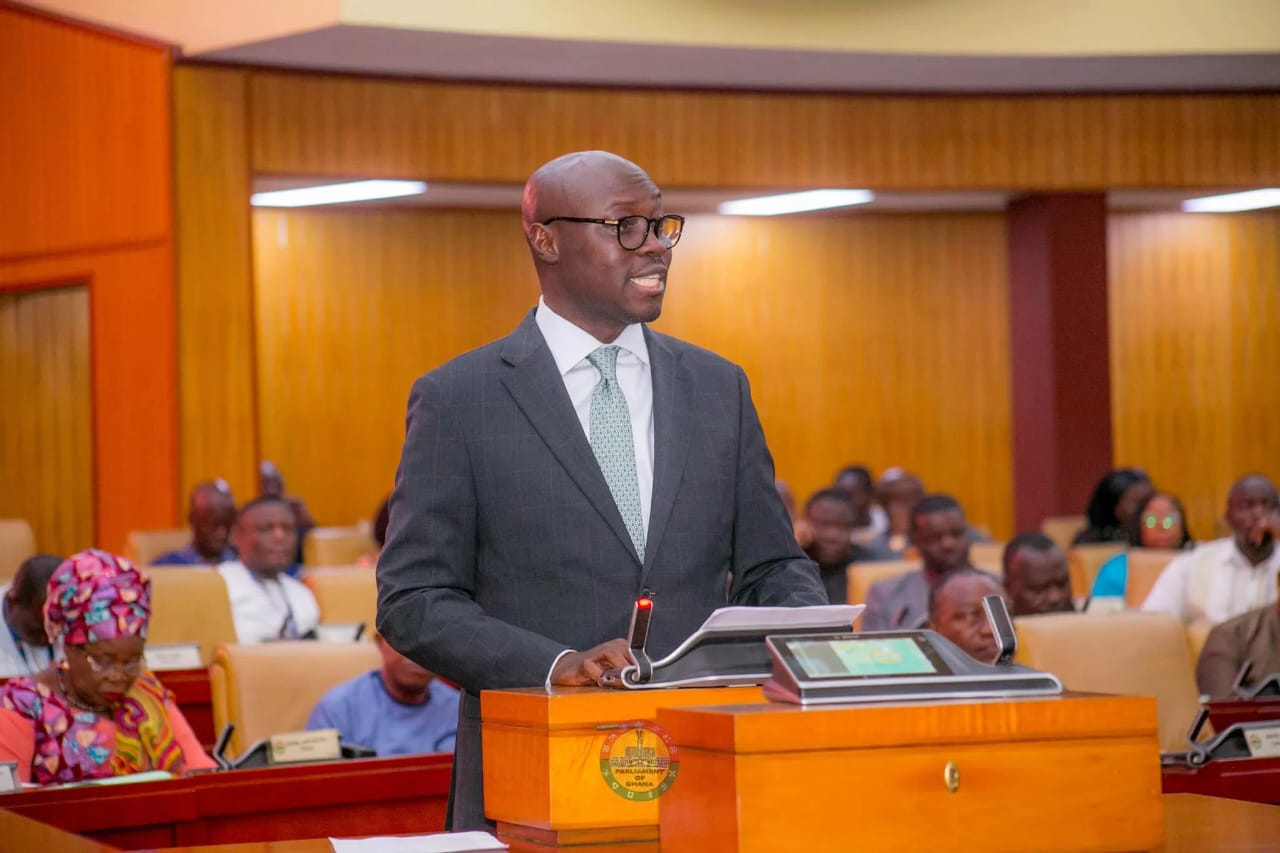
Presenting the 2027 Budget, Finance Minister Cassiel Ato Forson said the government would amend the Earmarked Funds Capping and Realignment Act, 2017 (Act 947), to remove the cap on funding for youth employment programmes.
“This reform will free up additional GH¢1 billion for youth employment and apprenticeship programmes,” he told Parliament. He also announced plans to amend and modernise the Youth Employment Act to harmonise existing programmes.
The proposal concerns how much of the Communications Service Tax (CST) revenue earmarked for youth employment and apprenticeships can reach those programmes. Forson said the revenue would no longer be capped.
The announcement does not describe an increase in the tax rate. It is a change to the allocation of revenue already accruing to the designated programmes.
That distinction matters in a budget that promises no new taxes while also seeking additional resources for jobs, infrastructure and industrial expansion. Uncapping the allocation could make more funding available without imposing a new charge on households and businesses.
But it also redirects more revenue to a specific purpose, reducing the share available for other government priorities unless higher collections or savings offset the transfer.
The funding change sits alongside a GH¢3.5 billion allocation to the Ministry of Youth Development and Empowerment in 2027. Within that provision, GH¢2 billion is allocated to youth employment and skills development programmes, GH¢1 billion to National Service Personnel allowances, GH¢170 million to the National Entrepreneurship and Innovation Programme, and GH¢200 million to the National Youth Authority.
The budget must make clear how the uncapped GH¢1 billion relates to the GH¢2 billion employment and skills line. Is the amount expected to flow through that line, or will it sit alongside the Ministry’s allocation as a separate funding stream?
The answer is important: without it, Parliament and the public could struggle to judge the total commitment or track how much money has actually reached employment programmes.
More money can expand access to training, apprenticeships and job-placement schemes. It cannot, on its own, guarantee that participants find work. The outcome depends on how programmes select beneficiaries, which skills they teach, the quality of training, the employers involved and whether participants have a route into paid employment.
That is why harmonising the programmes could matter as much as increasing their resources. A fragmented system can leave agencies running overlapping schemes, collecting different data and measuring success in incompatible ways. T
he proposed modernisation of the Youth Employment Act could create a common structure for coordinating programmes and tracking participants. But the announcement does not yet set out the proposed legal changes, a timetable or how the government will measure whether the schemes work.
The most useful measure of success will be more than enrolment. How many people complete training? How many find work within six or twelve months? How many remain employed after subsidies or programme support end?
Are participants earning more, gaining recognised qualifications or moving into permanent roles? Without public answers to those questions, a larger allocation could be reported as activity rather than demonstrated employment.
The design of apprenticeships will also determine whether the funding builds lasting skills. Training tied to real vacancies and employer demand can help young people enter work. Programmes designed without employers, certification or clear placement arrangements risk leaving participants with attendance records but limited prospects. Government’s stated aim is to equip young people with relevant skills and connect them to employment opportunities; the next step is to show how the connection will be made.
There is a fiscal balance to manage. Earmarking gives a programme a more dependable claim on revenue, which may protect youth employment funding from annual budget competition. Yet uncapping also reduces the government’s discretion over receipts that might otherwise support other services or investments.
Parliament will need to assess not only the case for additional youth funding, but also the cost of limiting flexibility elsewhere in the budget.
That scrutiny is particularly relevant as Ghana moves from stabilisation towards investment-led growth. The 2027 Budget sets aside GH¢30 billion for the first year of the four-year New Economy programme, alongside allocations for youth employment, infrastructure and other priorities. Government’s challenge is to direct these commitments towards productive activity while protecting fiscal discipline.
Youth employment policy is one place where those ambitions meet. If programmes prepare young people for work in growing sectors, the investment can support both livelihoods and production. If training is disconnected from employers, firms may continue to report skill shortages while programme participants struggle to find work.
The proposed funding cap amendment is not yet law. Parliament must consider the change, and the government still needs to explain how the additional revenue will be allocated, managed and audited.
The Youth Employment Act reforms will also need to be detailed before the public can judge whether they will genuinely simplify and strengthen the programmes.
The GH¢1 billion commitment raises expectations, but its value will be determined by the jobs it helps create and the skills it leaves behind.
Ghana needs to know not only how much CST revenue is released, but who receives it, what they deliver and what happens to participants once a programme ends.
Uncapping the funds could remove a financial constraint. It will not remove the harder test: turning public money into work that lasts.

