


World Cup Goal Machines: The Power of Teamwork in Scoring
In the storied history of the FIFA World Cup, teams have often relied on star players to take the spotlight and lead them to glory. Icons like Pelé, Cristiano Ronaldo, Zinedine Zidane, Lionel Messi, and Kylian Mbappé have dazzled on the pitch, each capable of single-handedly changing a match’s outcome. Yet, there are rare cases where a collective approach proves equally effective—where every player contributes to a prolific scoring campaign, making it challenging for opponents to know where the danger will strike next.
FIFA has highlighted only three teams that have successfully deployed this strategy: France in 1982, Italy in 2006, and Belgium in 2018. Each of these extraordinary squads boasted ten different goalscorers during their respective World Cup campaigns, showcasing their well-rounded and unpredictable nature as they scored from all positions on the field.
France 1982: A Collective Force
The 1982 FIFA World Cup in Spain marked a transformative era for French football. Under coach Michel Hidalgo, the team embraced a fearless and attacking style. Their potential was demonstrated despite a 3-1 loss to England in their opening match, during which Gérard Soler scored their first goal.
As the tournament progressed, France quickly showcased its depth. In a commanding 4-1 victory over Kuwait, contributions came from multiple players, including Bernard Genghini, Michel Platini, Didier Six, and Maxime Bossis. With a semi-final clash against West Germany, Les Bleus fought fiercely but fell in a dramatic penalty shootout after a 3-3 draw, ultimately finishing fourth. The 1982 squad may not have achieved their ultimate goal, but their legacy still resonates in football history.
Italy 2006: Mastering the Art of Balance
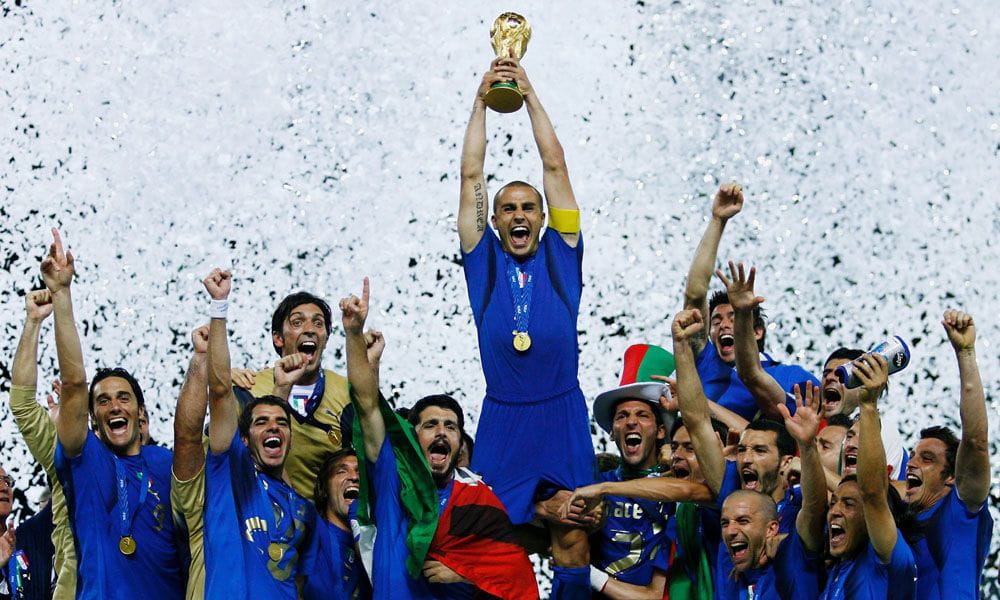
Fast forward to the 2006 FIFA World Cup in Germany, where Italy captured its fourth title through a balanced approach that hinged on solid defense and a variety of attacking talents. The Azzurri started strong with a 2-0 victory over Ghana, courtesy of goals from Andrea Pirlo and Vincenzo Iaquinta.
As the knockout rounds unfolded, new key players emerged with each match. Francesco Totti provided a late penalty to secure a win over Australia in the Round of 16, while Fabio Grosso and Alessandro Del Piero netted late goals to clinch victory against hosts Germany in the semi-finals. In the tightly contested final against France, Marco Materazzi’s goal canceled out Zidane’s famous Panenka penalty, paving the way for Italy to triumph in a thrilling shootout. This exceptional distribution of scoring made Italy a formidable opponent throughout the tournament.
Belgium 2018: The Golden Generation
Belgium’s golden generation reached its zenith during the 2018 FIFA World Cup in Russia, demonstrating versatility and depth in their attack from the very beginning. They kicked off their campaign with a 3-0 win over Panama, featuring goals from Dries Mertens and a brace from Romelu Lukaku.
After a convincing performance against Tunisia, where Michy Batshuayi also got on the scoresheet, Belgium faced a challenging showdown with England, where Adnan Januzaj emerged as the unlikely hero. The team exhibited remarkable resilience in the Round of 16, overcoming a two-goal deficit against Japan with contributions from Jan Vertonghen and Nacer Chadli.
Despite falling to France in the semi-finals, Belgium clinched third place with a commanding victory over England, encountering yet another different goalscorer in Thomas Meunier. This tournament marked Belgium’s best World Cup performance, solidifying their place among football’s elite.

