

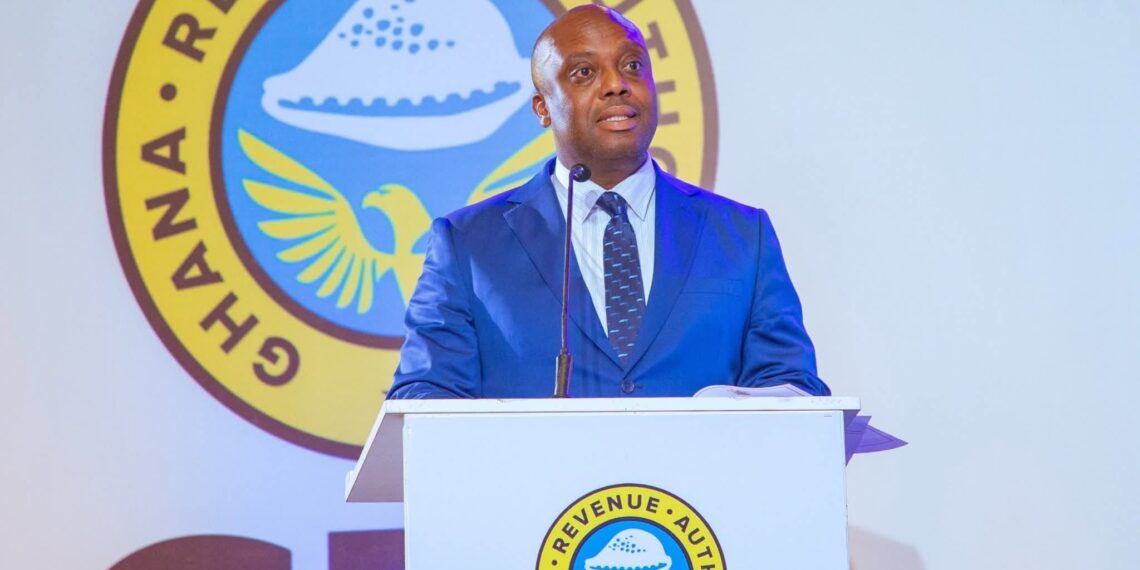

- Ghana’s Women’s Bank Nears Take-Off With GHS 500.00 million Seed Capital – Dep. Finance Minister
Ghana’s proposed Women’s Development Bank has moved closer to operational take-off after government committed GHS 500.00 million in seed capital to the institution, with the bank now awaiting final licensing approval from the Bank of Ghana.
The special-purpose bank, one of President John Dramani Mahama’s flagship women’s economic empowerment promises, is expected to provide affordable and flexible financing to women-owned and women-led businesses, particularly micro, small and medium-sized enterprises.
Deputy Finance Minister Thomas Nyarko Ampem disclosed that the bank had been registered and that government was now awaiting regulatory approval from the central bank before full operations could begin.
The announcement marks a significant increase from the initial GHS 51.30 million allocation announced in the 2025 Budget for the establishment of the Women’s Development Bank. The earlier allocation had drawn concerns from some policymakers and analysts who argued that it would not be enough to meet the minimum capital requirement for a licensed bank in Ghana.
The new GHS 500.00 million capital commitment therefore strengthens the financial basis of the initiative and signals government’s intention to move the Women’s Development Bank beyond campaign promise and policy discussion into the operational phase.
The bank is expected to focus on women entrepreneurs who are often excluded from mainstream credit because of collateral barriers, limited financial records, high interest rates and the informal nature of many women-led businesses.
Women play a major role in Ghana’s trading, agriculture, food processing, textiles, retail and services sectors. Yet many continue to face significant constraints in accessing long-term and affordable finance.
The Bank of Ghana has previously described the Women’s Development Bank as a potentially important intervention for closing the credit gap facing women-led enterprises across trade, agriculture and technology.
Supporters of the initiative argue that a dedicated women-focused bank could help address structural gaps in Ghana’s financial system by offering products tailored to the realities of female entrepreneurs.
These may include lower collateral requirements, group-based lending models, business development services, financial literacy programmes, digital banking support and patient capital for women-owned MSMEs.
The case for such an institution is rooted in a simple economic argument: women’s financial inclusion is not only a social policy issue, but also a growth strategy.
Women-led businesses contribute significantly to household welfare, employment, food security and local economic activity. When women gain access to finance, the benefits often extend beyond individual enterprises to families, communities and wider consumer markets.
Parliamentary discussions on the Women’s Development Bank have highlighted this point, with lawmakers noting that women’s businesses contribute substantially to Ghana’s economy but remain constrained by credit access challenges.
The proposed bank also fits into a broader global push for gender-inclusive finance.
Across emerging markets, development finance institutions and governments are increasingly using specialised funds, guarantee schemes and targeted lending institutions to improve women’s access to credit.
In Ghana, the Development Bank Ghana has already committed to supporting women-led businesses, including through gender-responsive financing initiatives and partnerships aimed at addressing barriers in the financial landscape.
The Women’s Development Bank could therefore become a central institution within Ghana’s gender finance architecture if properly structured and governed.
But the success of the bank will depend heavily on design.
A women-focused bank must avoid becoming a politically driven credit vehicle where loans are distributed without proper risk assessment, repayment discipline or institutional independence.
If it is to succeed, it must operate as a credible financial institution, not merely a welfare scheme.
That means strong governance, professional management, transparent lending criteria, sound risk controls and proper supervision by the Bank of Ghana.
The Bank of Ghana will have to assess whether the proposed institution satisfies regulatory requirements on capital, governance, ownership, internal controls, liquidity, risk management and business model sustainability.
A bank created to empower women must still be safe, properly capitalised and professionally run.
This is particularly important because development-focused financial institutions can fail when political objectives override credit discipline.
Ghana’s financial sector has already experienced the cost of weak governance and poor lending practices. The clean-up of the banking and specialised deposit-taking sector showed that undercapitalised and poorly supervised institutions can create systemic risks and impose large costs on the public purse. The Women’s Development Bank must therefore be built differently.
It should have a clear mandate but also strong guardrails.
Its lending should target women entrepreneurs, but repayment discipline must be maintained. Its products should be flexible, but credit risk must be properly priced. Its social mission should be strong, but it must not become a channel for politically directed loans.
The bank should also be integrated with financial literacy and business support.
Many women-led MSMEs do not only need loans. They need bookkeeping support, market access, digital payment tools, tax education, business registration assistance, inventory management and export readiness training.
Without these complementary services, credit alone may not deliver sustainable business growth.
The bank could also partner existing rural and community banks, savings and loans companies, fintechs, mobile money operators, women’s cooperatives and market associations to reach women in informal and rural settings.
That approach would prevent the institution from becoming too Accra-centred and ensure that women in agriculture, food processing, trading and small-scale manufacturing are not left behind.
The proposed bank also has an opportunity to use data intelligently.
Women entrepreneurs often lack formal collateral, but many have rich transaction histories through mobile money, supplier relationships, market association records and digital sales platforms. If the bank can build alternative credit assessment models, it could lend more effectively to women who are currently invisible to traditional banking systems.
A modern Women’s Development Bank should not simply replicate old branch-based banking models. It should be digitally enabled, data-driven and connected to Ghana’s fast-growing digital payments ecosystem.
The goal should be to reduce the cost of lending, improve loan monitoring and make access easier for women who cannot always visit banking halls during regular business hours.
The GHS 500.00 million capital commitment gives the bank a stronger starting point.
The real test will be whether the institution can reach the right beneficiaries, price credit affordably, maintain repayment discipline, avoid political capture and support women-led enterprises to grow into stronger, more formal and more competitive businesses.
For government, the Women’s Development Bank is an opportunity to show that gender inclusion can be treated as economic infrastructure.
For the Bank of Ghana, the licensing process is an opportunity to ensure that the institution begins on a sound regulatory foundation.
For women entrepreneurs, the bank could become a long-awaited bridge between ambition and capital.
A single bank cannot solve all the financing challenges facing Ghanaian women. It can, however, become a powerful anchor institution if it is linked to broader reforms in collateral systems, credit guarantees, financial literacy, business formalisation and market access.
The Women’s Development Bank is therefore more than a banking project. It is a test of whether Ghana can design a development finance institution that is inclusive, disciplined and commercially credible.
With registration completed and BoG licensing awaited, the initiative is now moving from promise to implementation.
That is where the real work begins.

