


- IMF Urges Malta to Address Infrastructure and Skills Shortages as Growth Slows Towards 2027
The International Monetary Fund (IMF) has praised Malta’s strong economic performance and progress in restoring fiscal stability but cautioned that sustained growth will depend on deeper structural reforms, stronger public finances and increased investment in productivity-enhancing sectors.
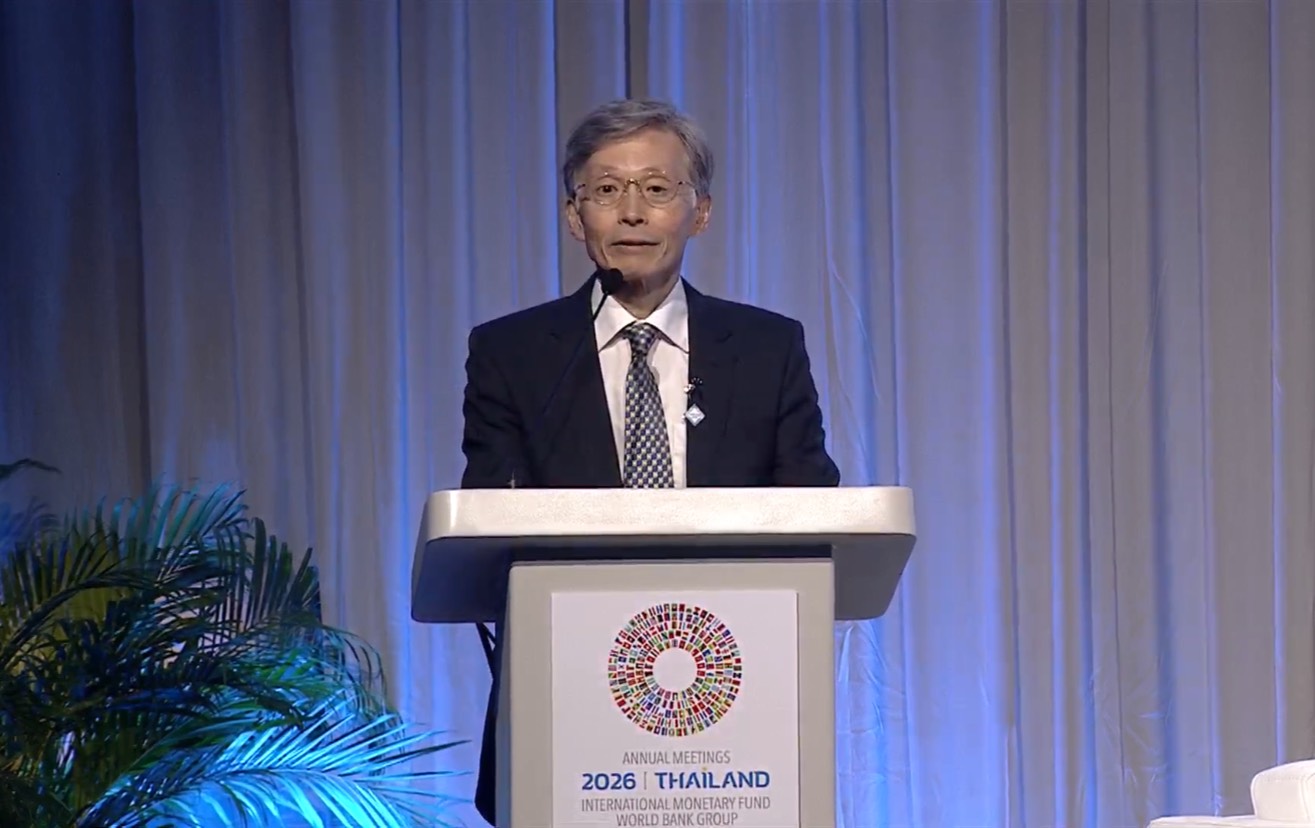
IMF Deputy Managing Director Kenji Okamura, concluding an official visit to Valletta on November 20, described Malta as one of the European Union’s fastest-growing economies, supported by robust tourism, expanding professional services, a resilient labour market and sound macroeconomic management.
His assessment comes as the Mediterranean economy prepares for a period of more moderate growth, with the European Commission projecting real gross domestic product to expand by 3.90% in 2026 before slowing to 3.50% in 2027.
The outlook presents a significant policy challenge for Malta, which must preserve its economic momentum while managing public expenditure, infrastructure pressures and the transition towards more productive industries.
In his statement following meetings with Prime Minister Robert Abela, Finance and Employment Minister Clyde Caruana and Central Bank Governor Alexander Demarco, Mr Okamura acknowledged the country’s economic resilience.
“Malta is among the fastest-growing economies in the European Union, supported by strong tourism activity, growing professional services, a resilient labor market, and sound macroeconomic policies.”
However, the IMF official emphasised that maintaining this performance would require continued policy adjustments as global economic conditions become increasingly uncertain.
The Fund’s intervention highlights the distinction between achieving relatively strong economic growth and building the institutional and productive foundations necessary to sustain that growth over the longer term.
Malta’s performance has remained comparatively robust despite the challenges confronting several European economies.
The European Commission’s November 2026 forecast estimates that Malta’s economy expanded by 4.70% in 2025 and will maintain growth of 3.90% in 2026, before moderating to 3.50% next year and recovering to 3.80% in 2028.
The projected slowdown suggests that the economy remains exposed to external uncertainty, even as domestic activity continues to provide support.
Tourism is a particularly important contributor, generating demand across accommodation, hospitality, transport and other service industries.
The country’s expanding professional services sector has also contributed to economic diversification, attracting business activity and supporting employment.
Nevertheless, dependence on international tourism and services creates vulnerabilities when global demand weakens or external costs increase.
For a relatively small and open economy, these risks reinforce the importance of strengthening domestic competitiveness rather than relying exclusively on continued expansion in established industries.
Fiscal policy formed a central part of Mr Okamura’s discussions with the Maltese authorities.
The IMF welcomed Malta’s exit from the European Union’s Excessive Deficit Procedure, describing it as evidence of progress in strengthening public finances.
The Council of the European Union formally closed the procedure on June 12, 2026, after Malta reduced its government deficit below the bloc’s 3.00% of GDP reference threshold.
The procedure had been opened in 2024 because Malta’s fiscal position breached European budgetary requirements.
Its closure marked an important achievement, demonstrating that the government had taken sufficient corrective measures to return its deficit within the required limit.
However, the improvement does not mean fiscal pressures have disappeared.
The European Commission expects Malta’s government deficit to increase from 2.10% of GDP in 2025 to 2.80% in 2026, remaining at that level in 2027 and 2028.
Although the projected deficit remains below the European Union’s 3.00% threshold, it leaves relatively limited room before reaching that reference level again.
This explains the IMF’s emphasis on rebuilding fiscal buffers.
Mr Okamura stated, “we agreed on the importance of continuing to rebuild fiscal buffers, while creating room for investments that can support growth and resilience.”
The recommendation reflects a broader concern about the need for governments to maintain sufficient fiscal capacity to respond to future economic shocks.
Fiscal buffers allow governments to manage unexpected expenditure demands, support vulnerable households during economic disruptions and preserve essential public services when revenue weakens.
For Malta, rebuilding these buffers while maintaining productive investment will require careful expenditure prioritisation.
The government must distinguish between spending that supports immediate consumption and investment capable of improving long-term economic performance.
Infrastructure, skills development and technological innovation are particularly important because they can strengthen productivity and create opportunities for higher-value economic activity.
The IMF also welcomed Malta’s progress in modernising tax administration, an area where the Fund continues to collaborate with the authorities.
More efficient revenue administration could improve compliance, reduce collection weaknesses and strengthen fiscal resources without necessarily requiring higher tax rates.
However, improvements in tax administration must be accompanied by predictable rules and efficient procedures to avoid increasing unnecessary burdens on businesses.
Beyond public finances, the IMF placed considerable emphasis on structural transformation.
Mr Okamura identified infrastructure constraints, workforce skills, technological adoption and innovation as priorities for sustaining economic growth.
These issues become particularly important when an economy approaches the limits of expansion through additional labour and conventional investment.
Raising productivity allows businesses to generate greater economic value from existing resources, potentially supporting higher wages and improved competitiveness.
For Malta, the transition towards higher-value industries under the Malta Vision 2050 framework is intended to strengthen these capabilities.
The strategy seeks to support a more diversified economy through innovation, improved skills and investment in productive sectors.
During his visit, Mr Okamura examined developments in tourism and advanced manufacturing, acknowledging efforts to improve the sustainability of tourism while strengthening competitiveness in higher-value industries.
The emphasis on advanced manufacturing is significant because it offers opportunities to diversify economic activity beyond traditional services.
Specialised manufacturing can support skilled employment, technological development and stronger participation in international production networks.
Nevertheless, attracting such investment requires reliable infrastructure, appropriate workforce capabilities and an operating environment capable of supporting long-term business decisions.
The same considerations apply to tourism.
Although strong visitor numbers can generate employment and foreign exchange earnings, sustained expansion may place pressure on transport systems, housing, environmental resources and public infrastructure.
A more sustainable tourism model would seek to increase economic value without relying exclusively on higher visitor volumes.
That could involve improved service quality, infrastructure efficiency and investment in activities that generate greater spending and productivity.
For Malta, the policy challenge is therefore to reconcile continued tourism growth with environmental sustainability and the needs of residents.
The IMF’s central message is that Malta’s strong economic performance provides an opportunity to accelerate structural reforms rather than postpone them.
The country has achieved an important fiscal milestone by exiting the European Union’s excessive deficit framework, but maintaining that position will require continued discipline.
Similarly, strong economic growth creates opportunities for investment, but longer-term prosperity will depend on whether businesses become more productive and the economy develops higher-value activities.
The distinction carries wider implications for other small, open economies seeking to balance economic expansion with fiscal stability.
Improving government finances can strengthen investor confidence, but it does not automatically resolve structural weaknesses affecting competitiveness and employment.
Likewise, expanding tourism and services can generate substantial economic activity without necessarily eliminating constraints involving infrastructure, skills and technological capacity.
The IMF’s engagement with Malta therefore reflects a broader development challenge: translating favourable macroeconomic conditions into sustainable improvements in productivity and economic resilience.
For the Maltese authorities, the next phase will involve maintaining fiscal discipline while implementing reforms under Malta Vision 2050.
For businesses, the opportunities will depend on access to skilled labour, efficient infrastructure and the capacity to adopt emerging technologies.
For workers, the longer-term benefits will be determined by whether productivity improvements translate into better employment opportunities and earnings.
Mr Okamura concluded by reaffirming the IMF’s commitment to continued cooperation with Malta.
The outlook remains relatively favourable, with growth expected to remain above that projected for the European Union as a whole.
However, the projected moderation in 2027 reinforces the importance of protecting fiscal stability and addressing structural constraints before they become more significant obstacles.
Malta’s economic performance has demonstrated resilience, but its next challenge will be ensuring that strong growth is supported by productivity, innovation and sustainable public finances.
The longer-term measure of success will not simply be whether the country continues outperforming its European peers, but whether that growth produces a more diversified and competitive economy capable of withstanding future shocks.

