


- No New Taxes in 2027: Can Ghana Collect What It Is Owed?
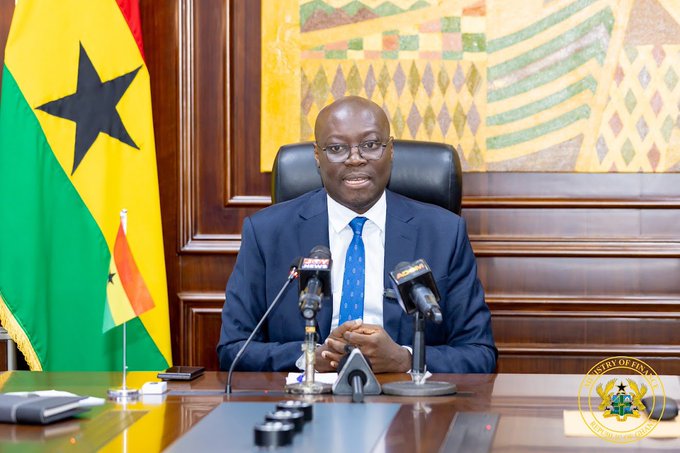
Finance Minister Dr Cassiel Ato Forson has promised that the 2027 Budget will introduce no new taxes, offering households and businesses relief from further tax measures as the government prepares to spend GH¢389.2 billion next year.
The pledge is clear. Its consequences will depend on what follows: whether the government can raise enough revenue through better collection, whether planned reviews of existing tax laws alter taxpayers’ obligations, and whether the spending programme delivers enough growth to sustain public finances without returning to new levies.
“This 2027 Budget will not introduce any new tax. Our task is to collect what is lawfully due, close the leakages and make the revenue system work better,” Dr Forson told Parliament.
He said the approach was intended to ease pressure on households, support businesses and create a more favourable environment for growth.
The promise comes after the government abolished several measures introduced in previous years, including the Electronic Transfer Levy, the COVID-19 Levy, the Emissions Levy, withholding tax on betting and lottery winnings, and Value Added Tax on motor vehicle insurance.
Dr Forson said those changes had been made to give families “breathing space and businesses room to grow”.
The new pledge signals that the government wants to make tax relief part of its economic recovery narrative. But removing or declining to introduce taxes is only one part of that bargain.
The other is financing public priorities without weakening fiscal discipline or shifting the burden indirectly through charges, enforcement changes or adjustments to existing tax rules.
The scale of the 2027 spending plan makes that challenge immediate. The government projects total expenditure of GH¢389.2 billion and revenue and grants of GH¢323.4 billion, leaving a cash-basis deficit of GH¢65.8 billion, or 3.60% of GDP. On a commitment basis, it projects a primary surplus of 0.50% of GDP.
Those figures do not make a no-new-tax policy impossible. They do, however, place greater weight on the government’s ability to collect revenue already due, limit waste and ensure that spending produces economic value.
If compliance improves and leakages narrow, the state can raise more without changing tax rates. If those gains fall short, pressure may build to reconsider the pledge or find other ways to fund planned spending.
The government has outlined reforms to the Income Tax Act, the Revenue Administration Act, stamp duty administration and the Communications Service Tax framework. It also plans to review customs tariff and duty concessions on selected raw materials, machinery and other inputs, and to revise regulations to ensure consistent application of tax laws.
These measures are not automatically new taxes. Updating laws can simplify compliance, close avoidance routes and remove outdated provisions.
But a review can still affect what a household or company pays if it changes how existing rules are applied, narrows exemptions or alters the treatment of particular transactions.
The test will be whether the reforms improve fairness and clarity while keeping the Finance Minister’s central assurance intact.
That distinction matters to businesses making investment decisions. Investors need to know not only that no new tax is planned, but also that the rules governing existing taxes will be predictable.
Dr Forson acknowledged that need, saying: “Taxpayers deserve clear rules, fair treatment and timely decisions.” The government has also promised to strengthen dispute resolution so tax compliance is simpler and less costly.
The review of Ghana’s Double Taxation Agreements adds another dimension. The Finance Minister said the agreements would be examined in line with the United Nations Framework Convention on International Tax Cooperation, with the stated aims of addressing tax evasion and treaty abuse while protecting legitimate investment.
The balance will be important: stronger safeguards against abuse can protect the tax base, but investors will also watch whether legitimate cross-border activity continues to receive consistent treatment.
For households, a year without new taxes could help preserve disposable income, particularly if the relief from earlier abolished levies is maintained.
For companies, the benefit may be less certain. A stable headline tax rate is valuable, but businesses also face costs from delays, unclear tax decisions and inconsistent enforcement.
A more efficient administration could reduce those burdens; a compliance drive that is poorly executed could instead increase uncertainty even without changing rates.
The 2027 Budget places major emphasis on productive investment, including GH¢30 billion for the New Economy programme and GH¢100.4 billion in capital expenditure. The government says the shift is intended to expand production, create jobs and raise incomes.
If those investments generate wider economic activity, they could help broaden the tax base over time. But the revenue benefits will not arrive simply because money has been allocated. Projects must be selected carefully, completed on schedule and connected to businesses and workers that can generate lasting value.
The policy challenge is therefore one of credibility. A no-new-tax pledge can support confidence if people believe it will hold and if public services and investment are financed responsibly.
It can also sharpen scrutiny of how existing taxes are collected, how exemptions are granted and whether public spending delivers enough to justify the revenue collected.
The government is asking taxpayers to believe that better administration can substitute for new tax measures. That is a reasonable objective, but it requires evidence: stronger compliance without arbitrary enforcement, transparent treatment of concessions, timely resolution of disputes and public reporting on revenue gains.
The promise will be judged not only by the absence of a new tax line in the 2027 Budget. It will be judged by the burden people actually face, the consistency of the rules and whether the state can finance its ambitions without returning to the tax increases it has ruled out.

