

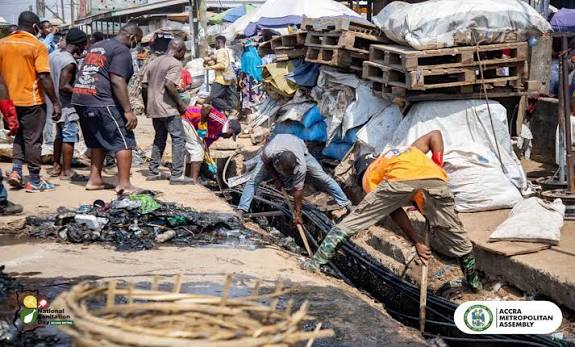

- AMA Opens Whatsapp Reporting Line as City Begins Free Refuse Collection Exercise
The Accra Metropolitan Assembly has announced a month-long free refuse collection exercise across the capital as part of intensified efforts to improve sanitation, clear accumulated waste and reduce the risk of flooding in vulnerable communities.
The initiative follows recent heavy rains that overwhelmed parts of Accra, leaving several communities with waste buildup, blocked drains and heightened environmental health risks.
Mayor of Accra, Michael Kpakpo Allotey, announced the intervention during a visit to flood-affected communities, where he assessed sanitation conditions and interacted with residents on ongoing clean-up efforts.
The free collection exercise is intended to encourage households, traders and businesses to dispose of accumulated waste without the financial barrier of collection charges.
According to the AMA, the decision was taken after the Assembly observed significant waste accumulation in some affected areas, contributing to choked drains and worsening flood conditions.
Sanitation officers have been deployed across communities to coordinate the clean-up and ensure that refuse placed at designated collection points is promptly evacuated.
The Assembly has also introduced a dedicated WhatsApp reporting line, 054 491 4628, to allow residents to report waste accumulation, illegal dumping and sanitation offences for swift response by city authorities.
The intervention forms part of broader measures to restore cleanliness in the capital after the floods and strengthen public cooperation in waste management.
Accra’s recurring floods have often been linked not only to heavy rainfall but also to poor waste disposal, blocked drains, weak enforcement and inadequate sanitation infrastructure.
By absorbing the cost of refuse collection for one month, the AMA is seeking to remove one of the barriers that prevents some residents from disposing of waste properly, especially in communities already affected by flooding.
The exercise is also expected to support public health by reducing stagnant waste, contaminated flood debris and the risk of disease outbreaks in affected communities.
The latest move adds to renewed calls for a more disciplined approach to sanitation enforcement in the capital. Analysts and urban governance experts have repeatedly warned that emergency clean-up exercises must be complemented by sustained waste collection, stricter enforcement against dumping in drains and long-term investment in drainage maintenance.
For businesses operating in flood-prone parts of Accra, improved waste evacuation could help reduce operational disruptions caused by blocked access routes, contaminated premises and delayed movement of goods.
However, the success of the one-month exercise will depend heavily on public participation, timely evacuation by waste contractors and strict monitoring by AMA sanitation officers.
The Assembly is expected to intensify community-level coordination to ensure residents know where to place refuse for collection and how to report sanitation offences.
The free refuse collection campaign also comes as government and local authorities face pressure to move beyond post-flood relief and tackle the structural causes of Accra’s perennial flooding.
While the intervention offers immediate sanitation relief, it also highlights the need for a permanent and financially sustainable waste management system capable of preventing drains, markets, business districts and residential areas from becoming dumping grounds.

