


- Poor Succession Planning Is Quietly Killing Ghana’s Family Businesses – IFC Warns
Ghana’s family-owned businesses risk losing value, continuity and competitiveness because many founders are failing to deliberately prepare the next generation to take over, the International Finance Corporation has warned.
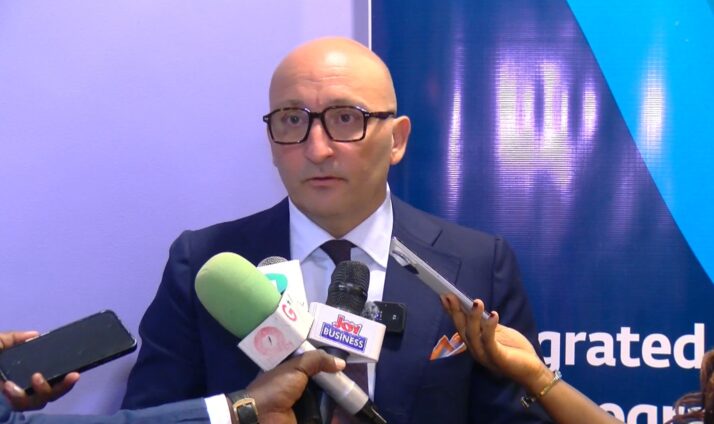
Speaking at an IFC-led event, Jean Philippe Prosper Miaoui said one of the biggest weaknesses confronting family enterprises in Ghana and across Africa is the absence of structured succession planning.
According to him, many successors may have formal education but lack deep knowledge of the business, its culture, operating model, risks, customers, governance structures and long-term strategic direction.
“The fact that successors are not well prepared, not well educated about the business and do not have the necessary capabilities is a major challenge,” he said. “In many cases, they may have the right educational background, but they do not know the business well enough because they have not been adequately prepared by the family, the business or the current leadership.”
His warning touches one of the most sensitive but often avoided issues in Ghanaian enterprise development: what happens to a business when the founder is no longer in charge?
Across Ghana, many businesses have been built around powerful founders, family names, personal relationships, reputation, informal decision-making and direct owner control. These businesses often grow through discipline, sacrifice and entrepreneurial instinct.
But what makes them strong in the first generation can become a weakness in the second.
When decision-making, customer trust, supplier relationships, bank negotiations, staff loyalty and strategic direction all depend on one founder, the business becomes vulnerable. If that founder falls ill, dies, retires or loses control, the enterprise may quickly face instability.
That is why succession planning is not merely a family matter. It is an economic issue.
Family businesses employ workers, pay taxes, supply goods, provide services, support communities and contribute to domestic capital formation. When they collapse because of poor succession, the damage extends beyond one household.
Miaoui noted that succession challenges are often made worse by the reluctance of founders and current leaders to let go.
“The other challenge is leaders who are not ready to let go because their identity and the business are one and the same. They find it very difficult to separate themselves from the business, making the transition process particularly challenging,” he explained. This is a familiar problem in many Ghanaian businesses.
Founders often see the business as an extension of themselves. They built it from nothing. They carried the risk. They endured failure. They negotiated with banks, suppliers, regulators and customers. They know the business better than anyone else.
But that emotional attachment can become dangerous when it prevents leadership renewal.
If the founder never delegates, the successor never learns. If the founder refuses to share information, the next generation inherits confusion. If decision-making is never institutionalised, the business becomes dependent on memory rather than systems.
Successful succession therefore requires more than naming a son, daughter, nephew or trusted relative as the next leader.
Future leaders must be exposed to the business early, trained across departments, mentored by senior executives, tested with responsibility and allowed to understand both the numbers and the people behind the company.
They must know the customers, suppliers, financiers, regulators, staff and operational risks. They must also understand the values that built the business, while being given room to modernise it. Without that preparation, succession becomes a ceremonial handover rather than a serious transfer of leadership capacity.
IFC Senior Country Officer Yewande Giwa also underscored the importance of family-owned businesses to economic development and job creation across Africa.
She noted that family enterprises are uniquely positioned to contribute to inclusive growth because they often take a long-term view of their impact on communities and future generations. That long-term view can be a major advantage.
Unlike some short-term investors, family businesses often think across generations. They are more likely to care about legacy, reputation and community relationships. They can be patient in building brands and investing in people.
But those strengths must be supported by governance.
A family business without governance can quickly become a family dispute.
Questions over ownership, dividends, management roles, employment of relatives, leadership succession, board control and sale of shares can create tension. If these issues are not resolved before transition, they can destroy the business.
This is why family constitutions, advisory boards, independent directors, shareholder agreements, succession plans and conflict-resolution structures are becoming increasingly important.
Ghana’s family businesses must begin to treat governance as seriously as sales, branding and expansion.
A company may have loyal customers and strong revenue, but if ownership and leadership are unclear, banks, investors and partners may hesitate to commit long-term capital.
The succession issue is also linked to access to finance.
Financial institutions and investors want to know whether a business can survive beyond its founder. They want to see audited accounts, proper boards, management depth, internal controls and clear decision-making structures.
Where everything depends on one person, risk is higher.
This means poor succession planning can increase the cost of capital or reduce access to funding altogether.
For Ghana, the challenge is particularly urgent because many founder-led businesses created in the 1980s, 1990s and early 2000s are now approaching generational transition.
Some founders are ageing. Some children are educated abroad but detached from the business. Some families are divided over who should lead. Some companies have professional managers but no clear ownership strategy.
The next decade could therefore determine whether many Ghanaian family businesses become enduring institutions or disappear with their founders.
The IFC warning should prompt Ghanaian entrepreneurs to ask difficult questions.
Who will lead the business when the founder steps aside?
Is that person ready?
Does the next generation understand the business or only enjoy its benefits?
Are family members clear on their roles as owners, managers or beneficiaries?
Is there a board with independent oversight?
Are the company’s finances properly documented?
Can the business survive a dispute among siblings?
Can professional managers make decisions without family interference?
These questions may be uncomfortable, but avoiding them is more dangerous.
Family businesses often delay succession conversations because they fear conflict. But silence does not prevent conflict. It only postpones it until the founder is no longer able to manage the transition. At that point, disagreements become harder to resolve.
The lesson from other markets is clear. Family businesses that survive across generations usually do three things well: they professionalise management, separate ownership from day-to-day control, and prepare successors long before transition becomes urgent.
Founders must begin to see succession not as loss of control, but as protection of legacy.
A business that dies with its founder is not a legacy. It is an unfinished project.
For policymakers and business associations, the IFC warning should also trigger action. Ghana needs more structured support for family-enterprise governance, including training programmes, succession planning clinics, tax and estate planning advisory, board development and SME governance support.
Professional bodies, banks, private equity funds, chambers of commerce and business schools can all play a role.
Banks, in particular, should begin encouraging succession and governance planning among SME borrowers. If family businesses are important to loan books, then their continuity should matter to lenders.
Many family businesses remain informal in ownership, accounting, tax compliance and internal controls. This weakens their ability to attract investment, survive transition and scale beyond the founder.
The next stage of Ghana’s private-sector development will depend not only on starting businesses but also on helping them endure.
Ghana does not lack entrepreneurs. It lacks enough enterprises that can survive succession.
The country has many founders. It needs more institutions.
If family businesses are to become engines of long-term growth, they must move from personality-driven control to governance-driven continuity.
That means preparing successors, empowering professional managers, documenting ownership, building boards and creating systems that can outlive the founder.
The future of Ghanaian enterprise may depend on whether today’s founders are willing to do the hardest thing in business: build something strong enough to succeed without them.

