



- AETC Pushes Youth, Solar and Innovation Plan for Africa’s Energy Future
The Africa Energy Technology Centre has presented its plan to transform Africa’s energy sector to President John Dramani Mahama.
The high-level meeting was led by the Founder and President of the Centre, Ms Emelia Cedar-Palm Akumah.
The engagement was held under the auspices of the Minister for Energy and Green Transition, Dr John Jinapor. It brought together senior government officials, energy sector leaders and members of the AETC Board of Directors.
The main focus of the meeting was how Africa can take greater control of its energy future.
AETC said Africa must move from being mainly a consumer of imported energy technologies to becoming a producer, innovator and exporter of sustainable energy solutions.
Ms Akumah said the continent’s energy future must be deliberately built by Africans.
“The future is not something we wait for. It is an architecture we build deliberately, courageously, and sustainably,” she said during the engagement.
According to AETC, Africa’s energy transition should not only be about access to power. It should also be about jobs, local manufacturing, technology ownership, youth entrepreneurship and industrial development.
The Centre said its long-term goal is to build an African energy economy driven by local innovation, intellectual property ownership and technology manufacturing.
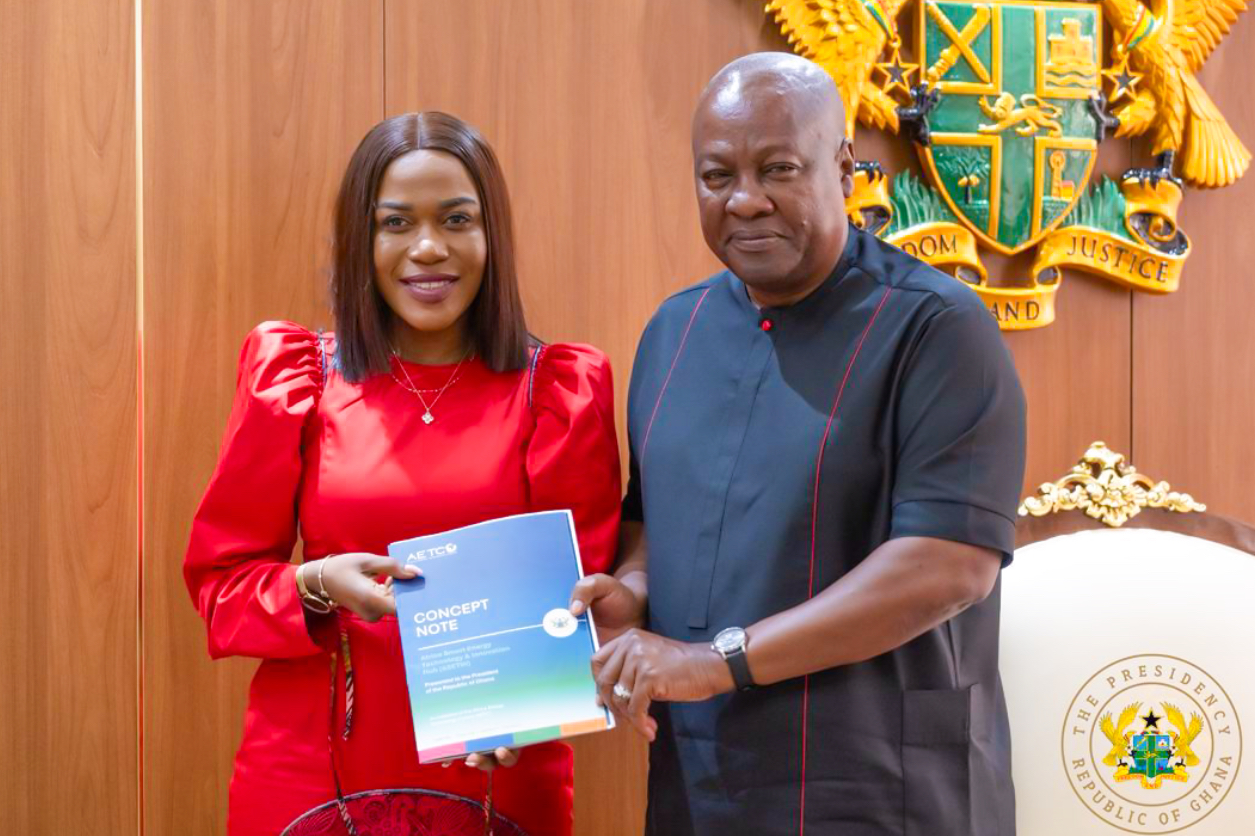
One of the major programmes presented to President Mahama was the Youth Energy Entrepreneurship and Incubation Programme.
The programme is designed to train young Africans and support them to become innovators, founders and business leaders in the energy sector.
It will provide technical training, business incubation, mentorship and access to financing for young people with ideas in the energy space.
AETC believes this programme can help turn Africa’s large youth population into a major force for energy innovation and business growth.
The Centre also presented the Africa Smart Energy Technology and Innovation Hub.
This initiative seeks to make Africa a centre for energy technology research, development and intellectual property creation.
The aim is to support African-led research and create technologies that can be used on the continent and exported to the rest of the world.
Another major initiative is the Ghana National Solar Prosumer Initiative.
The project focuses on expanding rooftop solar power and supporting net-metering policies.
Under the plan, households, businesses, schools, hospitals and public institutions will be encouraged to generate and use their own electricity.
AETC said this will reduce pressure on the national grid and improve energy security. It will also support cleaner and more sustainable power generation.
President Mahama also endorsed the Africa Energy Technology Conference, according to the Centre.

The conference is expected to bring together heads of state, ministers, investors, technology developers, researchers and development partners.
Its purpose is to promote energy innovation, strategic investment, intra-African energy trade and industrial growth.
AETC described the President’s endorsement as an important boost for its work and a major step towards building support for African-led energy solutions.
Speaking on the Centre’s broader mission, Ms Akumah said the goal is to create an energy future that is designed, built, owned and exported by Africans.
She said Africa should no longer remain a passive consumer in the global energy transition.
Instead, the continent must use its talent, resources and ideas to become a strong player in the global energy technology market.
The message from AETC is clear.
Africa’s energy transition must create value for Africans. It must not only bring imported technologies onto the continent. It must also help build African companies, African jobs, African factories and African-owned intellectual property.
This is important because energy is now at the centre of economic growth.
Countries that control energy technology will have an advantage in manufacturing, transport, digital services, agriculture and trade.
For Ghana, the AETC agenda also fits into the country’s wider ambition to become a centre for innovation, green investment and industrial development.
If the proposed solar, innovation and youth enterprise programmes are implemented well, they could help reduce energy pressure, create businesses and support local skills development.
The challenge, however, will be execution.
The Centre will need strong partnerships with government, private investors, universities, development institutions and energy companies.
It will also need clear financing structures, policy support and measurable targets to make the initiatives work.
For now, the meeting with President Mahama gives AETC stronger visibility and political backing.
It also places Ghana at the centre of a broader African conversation about energy independence, technology ownership and industrial transformation.
The Africa Energy Technology Centre is headquartered in Accra. It focuses on energy technology innovation, youth entrepreneurship, local content development, intellectual property creation and policy harmonisation across Africa.
Its latest engagement with President Mahama shows its ambition to make Ghana a key platform for Africa’s energy future.
For AETC, the task ahead is to turn that vision into practical projects that deliver power, jobs, innovation and long-term value for the continent.

