


- Accra Moves on Lukoil Stake as Sanctions Reshape Oil Assets
Ghana is taking steps to acquire Lukoil PJSC’s 38% stake in the Deepwater Tano Cape Three Points offshore oil block, in a move that could increase state control over future petroleum output and reshape the ownership structure of one of the country’s most important undeveloped upstream assets. The government is reportedly considering the use of its pre-emptive rights to buy the Russian company’s interest in the block after private equity firm Carlyle Group agreed in January to acquire most of Lukoil’s international portfolio, which is believed to include the Ghanaian asset.
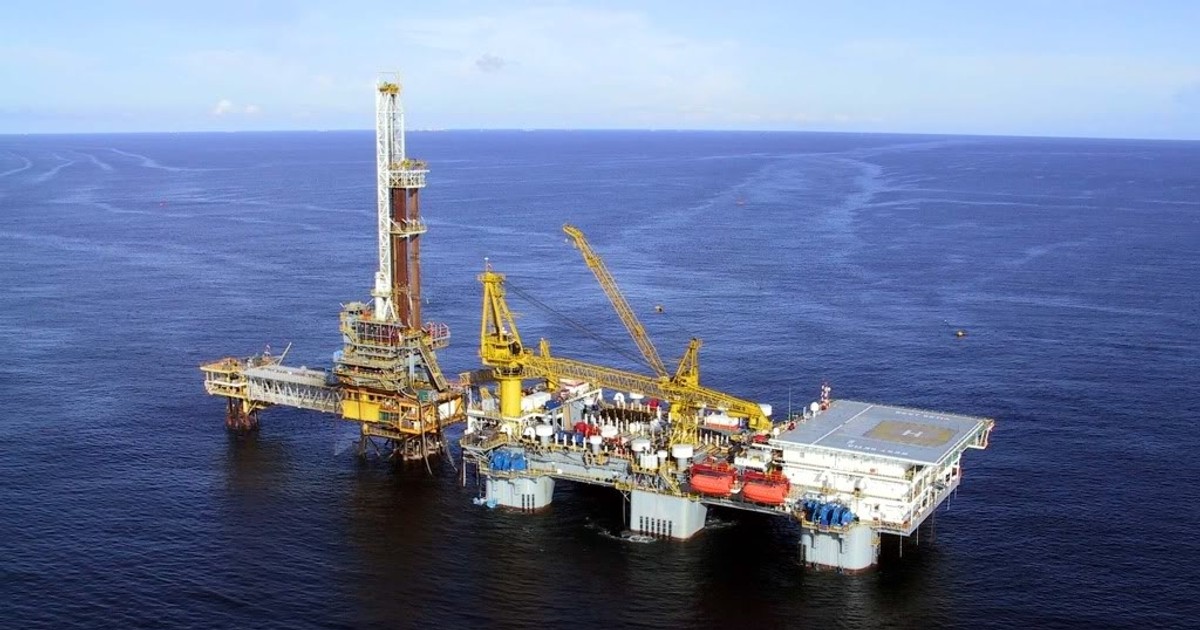
The Deepwater Tano Cape Three Points block is located about 115 kilometres offshore Ghana and includes the Pecan field, an ultra-deepwater oil and gas development that has long been regarded as one of Ghana’s most promising but delayed petroleum projects. The block’s ownership and development path have been complicated by Lukoil’s position as a sanctioned Russian energy company, with Western restrictions and financing concerns creating uncertainty around the future of its international assets.
Lukoil holds a 38% interest in the block, while Africa Finance Corporation, through Pecan Energies, became the operator after the exit of Oslo-based Aker Energy and holds a 50% stake. Ghana’s national oil company is already a participant in the block, while the government is now seeking to increase its control through the potential acquisition of Lukoil’s stake.
The proposed transaction comes at a critical moment for Ghana’s upstream petroleum sector. Crude oil production has been under pressure in recent years, while new field development has lagged behind earlier expectations. Successive governments have therefore faced mounting pressure to unlock stalled discoveries, attract credible partners and prevent the country’s hydrocarbon reserves from moving into long-term decline. For Accra, the Lukoil stake represents more than a financial asset. It is a strategic lever.
By acquiring the Russian company’s interest, Ghana could gain greater influence over the pace of development, the choice of partners and the structure of future revenues from the block. It could also help remove a geopolitical complication that has weighed on project financing and investor appetite.
According to the report, Ghana has already commissioned a share appraisal and formally signalled its intention to exercise pre-emptive rights. Authorities are also said to be considering bringing in additional partners to help finance the high development costs associated with the field.
The block is particularly important because of the Pecan discovery, which analysts say contains estimated volumes of about 450 million to 550 million barrels of oil equivalent within a wider 2,010-square-kilometre concession area.
The asset has, however, struggled to move from discovery to development. Earlier attempts to advance the project were delayed by changing ownership structures, field development uncertainties, financing challenges, and the wider complications arising from sanctions on Russian-linked assets.
In 2023, reports indicated that Lukoil had been in talks with Indian companies to sell its stake in the deepwater block, partly because banks were reluctant to become involved in a transaction linked to a sanctioned Russian company. At the time, the Pecan development plan had also been delayed due to uncertainty over Lukoil’s role, supply-chain disruptions and inflationary pressures.
The latest move therefore reflects both opportunity and risk.
On one hand, acquiring the stake could allow Ghana to assert stronger national participation in a strategic petroleum asset at a time when global oil companies are becoming more selective about frontier upstream investment. On the other, the transaction would require rigorous valuation, financing discipline, legal clarity and technical capacity to avoid saddling the state with an expensive asset that still requires substantial development capital.
The proposed acquisition also revives wider questions about the role of the state in Ghana’s petroleum sector. Ghana has previously sought to increase national participation in upstream assets, including earlier attempts by the Ghana National Petroleum Corporation to acquire stakes linked to Aker Energy and AGM Petroleum. Those efforts attracted scrutiny over valuation, financing, transparency and governance.
For energy policy watchers, the central issue will be whether this transaction is structured as a commercially disciplined move to unlock a stranded asset, or as another state-led upstream bet with uncertain returns.
The geopolitical context makes the current situation different. Lukoil’s global portfolio has come under pressure following sanctions on Russian energy interests, with several countries and investors examining ways to acquire, ring-fence or restructure its international assets. Lukoil’s foreign holdings include upstream, refining and retail interests across Africa, the Middle East, Central Asia, Europe and Latin America
That pressure could give Ghana a window to move on the asset. But it also means any transaction will have to be carefully handled to avoid sanctions exposure, financing complications and legal disputes with other interested buyers.
There are also indications that other major players may be watching the asset. Business Insider Africa, citing people familiar with the matter, reported that Shell Plc is in discussions to acquire a portion of the local unit, underlining the strategic interest surrounding the block.
For Ghana, the prize is clear: a potentially significant offshore resource that could support future output, fiscal revenues, energy security and local content if successfully developed.
The government will need to demonstrate that the acquisition is backed by independent valuation, transparent financing, credible development planning and a clear strategy for bringing in partners with the balance sheet and technical capability to move the project forward.
If handled well, the move could help Ghana unlock a long-delayed deepwater asset and strengthen national participation in the upstream sector.
If mishandled, it could become another costly attempt to use the state balance sheet to solve a complex commercial and geopolitical problem.
For now, Ghana appears to be making a strategic play in a sanctions-shaped energy market one that could determine whether the Deepwater Tano Cape Three Points block finally moves from promise to production.

