


- 2026 Mid-Year Budget: Ghana’s Anti-Corruption Push Will Be Judged by Implementation
Transparency International Ghana has welcomed the government’s anti-corruption and public financial management reforms outlined in the 2026 Budget, but warned that the programme will succeed only if political commitments are matched by enforcement, adequate funding, transparency and institutional coordination.
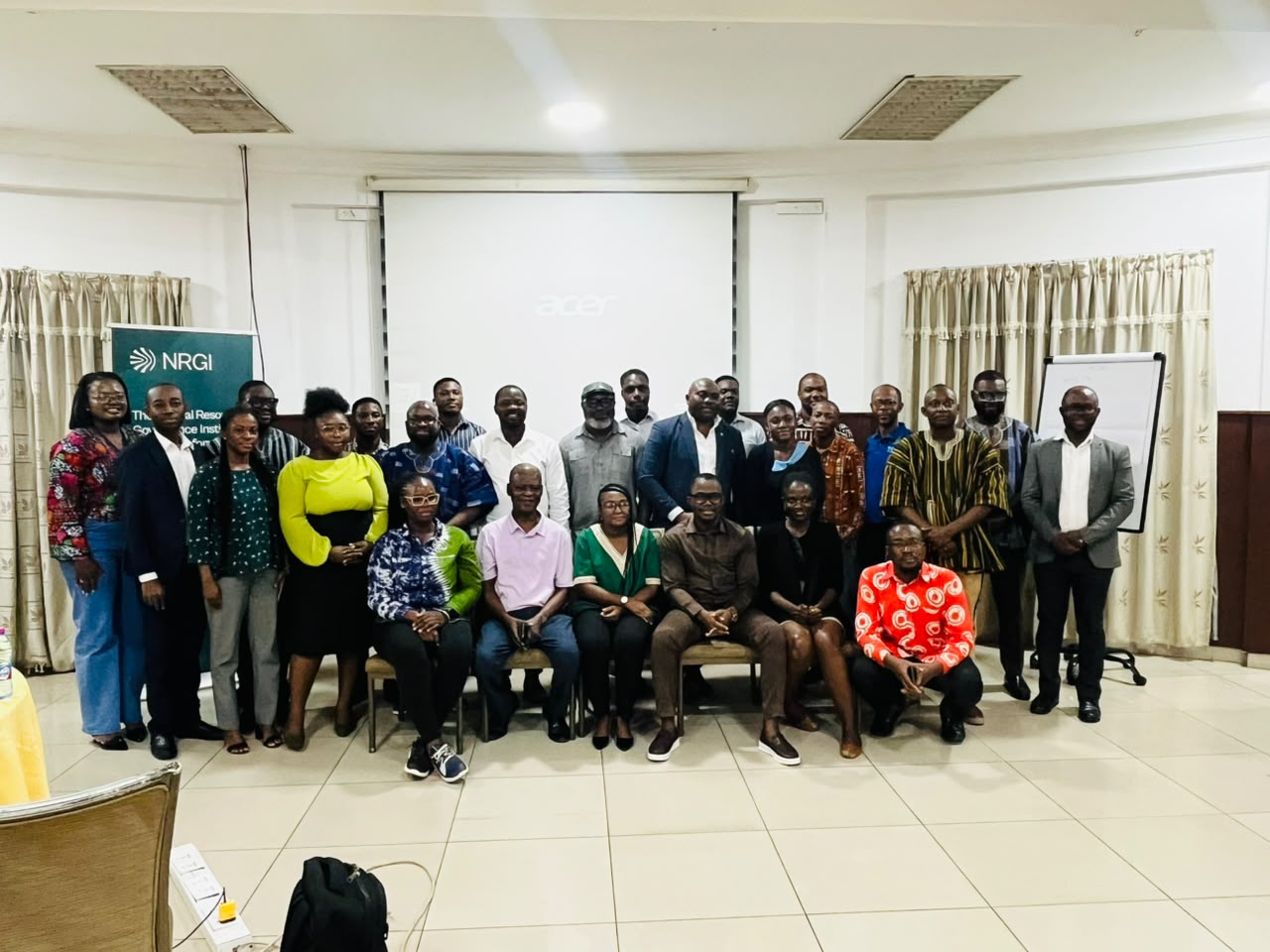
Presenting an assessment at the Natural Resource Governance Institute’s Civil Society Engagement on the 2026 Mid-Year Budget Review, Bright Ayivi, Assistant Programmes Officer at Transparency International Ghana, said the budget contains important governance commitments, but cautioned that Ghana’s anti-corruption record has often been weakened by poor implementation.
“The 2026 Budget presents solid anti-corruption commitments. However, enforcement, transparency and adequate resourcing remain critical to their success,” he told participants.
The warning goes to the heart of Ghana’s governance challenge. Successive governments have announced anti-corruption reforms, established accountability institutions, updated legal frameworks and promised stronger public financial management. Yet corruption risks persist across procurement, revenue mobilisation, public expenditure, infrastructure delivery and the management of state resources.
TI-Ghana’s assessment suggests that the 2026 Budget may be stronger in policy ambition than previous fiscal statements, but the decisive question remains whether the state can convert reform language into measurable change.
According to the organisation, the government’s governance agenda has been strengthened by the laying of the Conduct of Public Officers Bill before Parliament, the enactment of the Public Procurement Amendment Act, 2025, Act 1139, the updating of the National Anti-Corruption Action Plan, and plans to introduce a Value for Money Bill in 2026.
The planned Value for Money Bill is expected to improve procurement efficiency, reduce waste and strengthen accountability in the use of public resources. If properly designed, it could help address one of the most persistent weaknesses in Ghana’s public spending system: projects that are overpriced, poorly scoped, delayed, duplicated or abandoned.
TI-Ghana also highlighted the planned rollout of a Fixed Asset Register and an Integrated Bank of Projects as important public financial management tools. These initiatives are intended to reduce duplication, curb cost overruns and improve oversight of public investment.
The significance of those reforms lies in their potential to bring order to a project environment that has often suffered from fragmented planning. Ghana’s public investment system has repeatedly produced projects started without clear financing, infrastructure delivered without full value-for-money scrutiny, and capital expenditure programmes vulnerable to political cycles.
A credible asset register would help the state know what it owns, where public assets are located and how they are being maintained. An integrated project bank could also help prevent governments from repeatedly initiating new projects while existing ones remain incomplete.
But the effectiveness of these tools will depend on whether they are publicly accessible, regularly updated and used to guide budget decisions. Without transparency, they risk becoming internal bureaucratic systems rather than accountability instruments.
TI-Ghana also welcomed increased budgetary allocations for key accountability institutions, including the Office of the Special Prosecutor, the Commission on Human Rights and Administrative Justice, the Ghana Audit Service, the Judicial Service and the Attorney-General’s Department.
Mr Ayivi said stronger oversight institutions are essential to restoring public confidence in governance. That point is important because anti-corruption laws are only as strong as the institutions empowered to enforce them. Underfunded agencies may exist legally, but struggle operationally. They may lack investigators, prosecutors, auditors, technology, logistics and independence in practice.
The organisation also pointed to government’s public financial management reforms, including plans to deploy artificial intelligence-powered customs trade analytics for revenue assurance, expand the Ghana Integrated Financial Management Information System, the Human Resource Management Information System and the Integrated Customs Management System, while strengthening the Revenue Assurance, Compliance and Enforcement programme.
These reforms are aimed at improving revenue mobilisation and detecting corruption risks across Ministries, Departments and Agencies. The use of artificial intelligence in customs trade analytics could be particularly important if it helps identify under-invoicing, misclassification, revenue leakages and suspicious transaction patterns.
However, digitalisation alone does not eliminate corruption. Technology can reduce discretion, but it can also become another layer of opacity if data is not independently audited, publicly reported and protected from manipulation. The real governance value of digital public financial management systems lies not simply in automation, but in traceability, disclosure and enforcement.
Despite welcoming the reforms, TI-Ghana identified several implementation concerns. It warned of possible overlaps between the proposed Value for Money Office and existing institutions such as the Public Procurement Authority and the Ministry of Finance.
That concern is important. Ghana does not lack institutions. In many cases, the problem is overlapping mandates, weak coordination and unclear accountability. Creating a new office without clearly defining its relationship with existing agencies could produce institutional confusion rather than reform.
TI-Ghana also called for clearer delineation of responsibilities between the Office of the Special Prosecutor and the Attorney-General. This reflects a long-running issue in Ghana’s anti-corruption architecture: how to ensure that investigation, prosecution and political accountability functions are properly coordinated without weakening institutional independence.
As part of its recommendations, TI-Ghana urged the government to enforce compliance with the Ghana Electronic Procurement System, accelerate implementation of Auditor-General recommendations, publish budget execution and procurement data regularly, and extend digital public financial management systems to Metropolitan, Municipal and District Assemblies.
The call to expand systems to local assemblies is especially important. Corruption risks are not limited to central government. Many of the public services citizens experience directly local roads, sanitation, markets, schools, clinics, permits and basic infrastructure are managed or influenced at the district level. Weak logistics and poor internet connectivity at assemblies can therefore undermine national reform efforts.
TI-Ghana also recommended the establishment of an independent monitoring platform for major infrastructure projects. Such a platform could allow citizens, civil society, Parliament and the media to track project cost, contractor information, timelines, funding source, completion status and procurement history.
Mr Ayivi further encouraged civil society organisations to intensify oversight of public expenditure, procurement and revenue mobilisation, arguing that public scrutiny remains central to accountability.
That recommendation reflects a wider reality: anti-corruption reform cannot be left to government alone. Civil society, media, professional bodies, Parliament, auditors and citizens all play a role in monitoring how public resources are collected, allocated and spent.
The 2026 Budget may therefore represent an important governance moment. It contains reforms that could strengthen procurement, improve project oversight, enhance revenue assurance and support accountability institutions. But Ghana’s history shows that anti-corruption success is not determined by the number of laws passed or systems announced.
It is determined by whether politically exposed breaches are punished, whether procurement data is published, whether audit recommendations are enforced, whether public officers declare assets transparently, whether institutions are funded, and whether citizens can track what government is doing with public money.
TI-Ghana’s message is therefore both supportive and cautionary. The government has outlined a stronger anti-corruption agenda. But unless implementation is rigorous, transparent and adequately resourced, the reforms risk becoming another well-written governance promise with limited impact.
For Ghana, the test is no longer whether anti-corruption is mentioned in the budget. It is whether the budget can become an instrument for changing behaviour, enforcing accountability and rebuilding public trust.

