
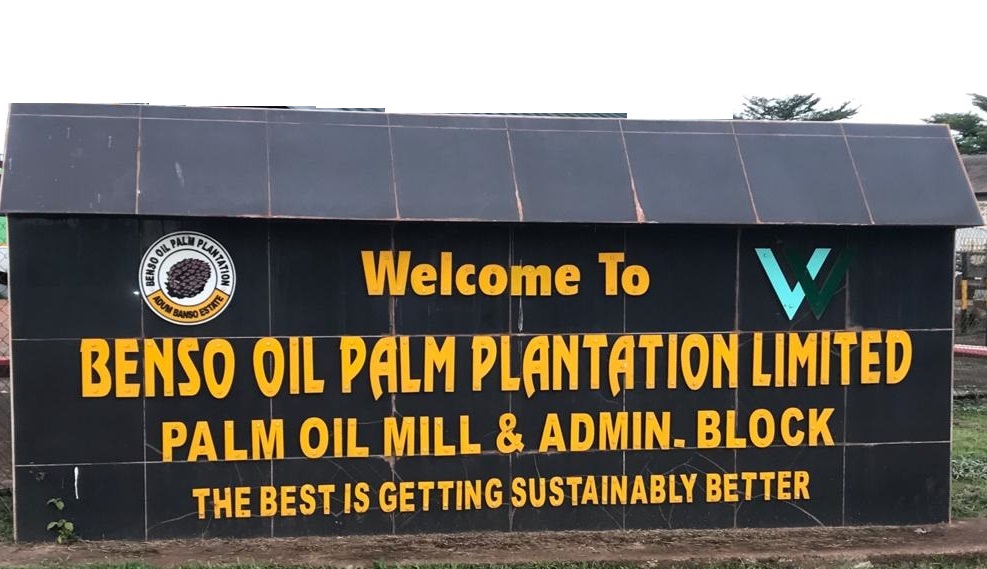

- Benso Oil Palm Q1 Profit Falls to GH¢19.1m Despite Higher Costs Weigh on First-Quarter Earnings
Benso Oil Palm Plantation PLC recorded a decline in first-quarter profit for 2026, as lower revenue and higher production costs weighed on earnings despite what the company described as strong performance and relatively stable crude palm oil prices.
The Ghana Stock Exchange-listed agribusiness company posted total comprehensive income of GH¢19.1 million for the three months ended March 31, 2026, down from GH¢36.1 million in the same period of 2025.
Revenue declined to GH¢104.4 million, from GH¢120.7 million a year earlier, representing a drop of about 13.5%. Cost of sales rose to GH¢70.0 million, compared with GH¢67.8 million in the corresponding period, compressing gross profit to GH¢34.4 million, from GH¢52.9 million.
Operating profit consequently fell to GH¢22.5 million, compared with GH¢42.3 million in the first quarter of 2025. Administrative expenses increased to GH¢12.2 million, from GH¢11.5 million, while other income declined sharply to GH¢291,000, from GH¢942,000.
Net profit before tax stood at GH¢22.5 million, down from GH¢42.4 million. Current and deferred tax expense fell to GH¢3.4 million, from GH¢6.2 million, leaving total comprehensive income of GH¢19.1 million.
Basic and diluted earnings per share declined to GH¢0.5486, compared with GH¢1.0384 in the same period last year.
The revenue breakdown shows that crude palm oil remained the company’s main earnings driver, with sales of GH¢95.6 million, compared with GH¢108.3 million in 2025. Palm kernel oil sales declined to GH¢7.8 million, from GH¢11.6 million, while palm kernel expeller sales increased to GH¢1.0 million, from GH¢764,000.
By customer category, related-party sales accounted for almost all revenue at GH¢103.2 million, compared with GH¢117.1 million in the prior year. Third-party sales stood at GH¢1.2 million, down from GH¢3.6 million.
The company’s cost base was driven largely by fresh fruit bunch material costs, which increased to GH¢32.1 million, from GH¢29.3 million. Fertiliser costs stood at GH¢6.5 million, while staff costs rose to GH¢9.0 million, from GH¢8.0 million. Processing costs, depreciation, other materials consumed, and energy and power also contributed to cost of sales.
On the balance sheet, total assets increased marginally to GH¢429.8 million, from GH¢428.4 million a year earlier. Non-current assets rose to GH¢281.5 million, from GH¢224.9 million, supported by property, plant and equipment of GH¢148.7 million, biological assets of GH¢16.2 million, and long-term receivables of GH¢116.6 million.
Current assets, however, declined to GH¢148.3 million, from GH¢203.6 million. Cash and bank balances fell sharply to GH¢16.2 million, from GH¢43.8 million, while inventories declined to GH¢29.9 million, from GH¢33.6 million. Trade and other receivables also fell to GH¢28.7 million, from GH¢34.7 million.
The company generated GH¢35.4 million in net cash from operating activities, compared with GH¢28.8 million in the first quarter of 2025, indicating stronger operating cash generation despite the decline in profit.
However, investment spending increased. BOPP used GH¢19.0 million in investing activities, compared with GH¢12.8 million a year earlier, mainly on property, plant and equipment. Dividend payments to shareholders also rose to GH¢29.0 million, from GH¢6.4 million, contributing to a net decrease in cash and cash equivalents of GH¢12.7 million during the period.
Total equity stood at GH¢341.8 million, compared with GH¢343.2 million in March 2025. Current liabilities rose slightly to GH¢88.0 million, from GH¢85.2 million, with trade and other payables of GH¢41.6 million, employee benefit obligations of GH¢20.8 million, dividend payable of GH¢17.1 million, and deferred tax liabilities of GH¢5.7 million.
In its outlook, Benso Oil Palm Plantation said it continued to deliver strong performance in the first quarter on the back of higher sales volumes and a fairly stable United States dollar price. It noted that net profit declined because lower Q1 2025 results were strengthened by gains from cedi appreciation.
The company said it remains focused on managing costs across all levels, maintaining good plantation practices to ensure strong harvests and future yields, and enhancing its capital structure with optimal levels of equity and debt.
Looking ahead, BOPP said operating conditions for the rest of the year would depend on the domestic macroeconomic environment and the evolution of geopolitical tensions. Still, management said the company’s strong business fundamentals and resilience should support steady returns for shareholders.

