


Economy Expands by 7.7% in February as Industry, Services Drive Growth
Ghana’s economy expanded by 7.7 per cent in February 2026, reflecting stronger activity across industry and services and reinforcing signs that the country’s macroeconomic recovery is gaining traction. The latest Monthly Indicator of Economic Growth released by the Ghana Statistical Service showed that the MIEG index rose to 111.3 in February 2026, from 103.3 in the same month of 2025. The indicator provides an early signal of quarterly gross domestic product trends by tracking monthly changes in economic activity.
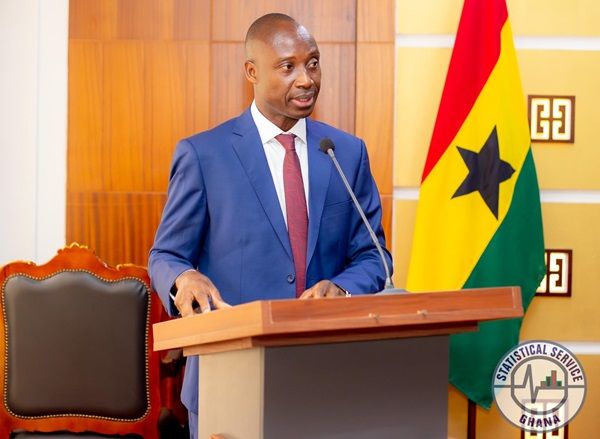
Government Statistician Alhassan Iddrisu PhD, presenting the figures at a press briefing on May 13, said the latest data pointed to improved market performance and rising confidence in the economy compared with the same period last year. The expansion was led by the services sector, which accounted for 47.6 per cent of the overall 7.7 per cent growth. Industry followed closely with a 44.2 per cent contribution, while agriculture contributed 5.5 per cent. Net indirect taxes accounted for the remaining 2.7 per cent.
Industry recorded the strongest sectoral growth, expanding by 9.6 per cent year-on-year, a sharp improvement from the 2.8 per cent growth recorded in February 2025. The performance was driven mainly by mining and quarrying, manufacturing and electricity production, suggesting a broad-based recovery in productive activity.
The services sector also posted firm growth of 7.4 per cent, up from 4.4 per cent in February 2025. The expansion was supported by information and communication, finance and insurance, health, and trade, underscoring the continued dominance of services in Ghana’s economic structure.
Agriculture, however, slowed markedly, recording growth of 3.8 per cent, compared with 9.4 per cent in February 2025. The GSS attributed the sector’s performance mainly to crops, livestock, forestry and logging.
The data comes at a time when Ghana is attempting to shift from macroeconomic stabilisation to broader growth that delivers employment, credit expansion and improved household welfare. While headline growth has strengthened, policymakers remain under pressure to ensure that the recovery is felt beyond official indicators.
The latest figures also follow revisions to January 2026 estimates. The GSS revised January growth downward from the provisional estimate of 7.5 per cent to 6.1 per cent after incorporating new data from the Ghana Revenue Authority, Fisheries Commission, Controller and Accountant-General’s Department, and the Volta River Authority.
The revisions affected manufacturing, trade, fishing, electricity, public administration, health and education. Industry estimates were revised upward from 7.0 per cent to 8.9 per cent, while services saw the sharpest downward revision, from 9.6 per cent to 5.3 per cent.
The Statistical Service noted that the MIEG remains an experimental statistic and is not yet seasonally adjusted because the available time series is still limited. As a result, the current release reports only annual growth comparisons.
The next MIEG release, covering March 2026, is expected on June 10, 2026, alongside Ghana’s first-quarter GDP estimates. The February numbers strengthen the case that Ghana’s recovery is gathering pace, but the sectoral pattern also raises important questions. Industry and services are carrying the rebound, while agriculture — still a major employer — is losing momentum.
That makes the quality of growth as important as the headline figure. If the expansion is to translate into jobs and living standards, stronger output will have to be matched by improved private sector credit, higher productivity, wage growth and deliberate support for employment-intensive sectors.

