

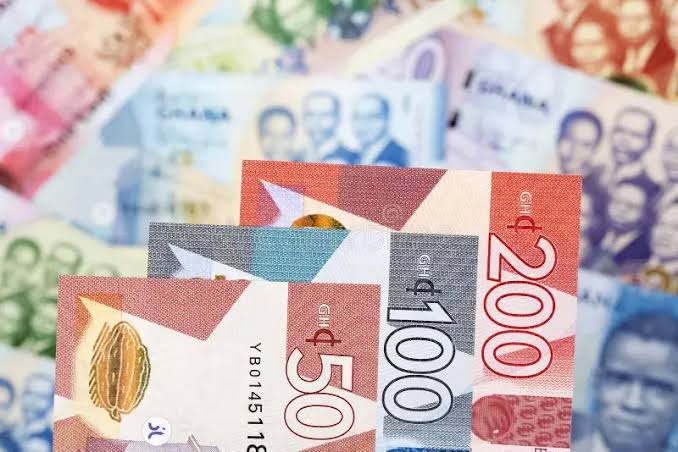

- Cedi Could Weaken To GH¢12.80 Per Dollar as Ghana’s External Debt Servicing Rises In 2027 — Fitch
Ghana faces renewed pressure on the cedi in 2027 as external debt-servicing obligations are projected to rise to US$5.05 billion, placing additional demands on foreign exchange resources at a time when the country is seeking to rebuild international reserves and consolidate its recovery from the debt crisis.
Fitch Solutions, through its BMI research division, expects the local currency to weaken by 7.40% against the United States dollar next year, ending 2027 at approximately GH¢12.80 per dollar.
The projection reflects concerns about increasing external debt repayments, potentially weaker gold export earnings, reduced foreign exchange supply and the Bank of Ghana’s commitment to accumulating reserves.
It highlights a central vulnerability in Ghana’s economic recovery: although debt restructuring has improved fiscal sustainability, the resumption of substantial repayment obligations could expose the country to renewed currency pressures.
International Monetary Fund projections indicate that Ghana’s external debt-servicing requirements will increase from US$4.70 billion in 2026 to approximately US$5.05 billion in 2027.
That represents an increase of US$353 million, or 7.51%, within a year.
The IMF projects a further increase to approximately US$5.30 billion in 2028, suggesting that external debt repayments will remain a significant consideration in Ghana’s medium-term economic management.
The financing challenge is complicated by the government’s decision to avoid issuing new Eurobonds until 2030 while placing limits on external project-loan disbursements.
These commitments are intended to protect debt sustainability and prevent the accumulation of excessive external liabilities.
However, they also restrict the government’s ability to offset maturing external obligations through fresh international borrowing.
Ghana’s US$3 billion Extended Credit Facility programme with the IMF concluded in July 2026, further changing the country’s external financing environment.
The government’s reactivated US Dollar Sinking Fund is expected to provide approximately US$1.20 billion towards Eurobond repayments, offering an important buffer against immediate financing pressures.
Nevertheless, Fitch estimates that about US$3.90 billion in remaining external debt-service obligations will create substantial demands for foreign exchange.
These obligations include payments to multilateral, bilateral and commercial creditors.
The existence of a sinking fund does not eliminate the foreign exchange cost of debt servicing. Rather, it allows the government to accumulate resources in advance and reduce the need to mobilise the entire amount when repayments fall due.
The broader impact on reserves will depend on the availability of budgeted resources, external inflows and financing arrangements.
The concern is that debt repayments will coincide with the Bank of Ghana’s efforts to strengthen reserve buffers under the Ghana Accelerated National Reserve Accumulation Policy.
Reserve accumulation requires the central bank to retain or purchase foreign currency, potentially reducing the amount available for intervention in the domestic foreign exchange market.
Fitch consequently anticipates that the authorities may become less willing to supply dollars to moderate ordinary exchange-rate fluctuations.
This creates a difficult policy balance.
Maintaining stronger reserves can improve Ghana’s capacity to meet external obligations, absorb economic shocks and support investor confidence.
However, accumulating reserves while foreign exchange demand remains elevated could contribute to depreciation if the supply of dollars to the domestic market becomes insufficient.
The challenge is particularly relevant because Ghana’s foreign exchange earnings remain heavily dependent on gold.
The country’s export performance has benefited substantially from elevated international bullion prices, providing important support for the balance of payments.
Bank of Ghana data show that gold exports generated approximately US$20.92 billion during the first ten months of 2026, reinforcing the metal’s dominant position in Ghana’s export economy.
Nevertheless, strong export earnings do not automatically guarantee that an equivalent amount of foreign currency becomes available for domestic transactions.
The relationship depends on export repatriation, foreign exchange conversion, reserve accumulation and the operational arrangements through which proceeds enter the financial system.
Fitch expects international gold prices to moderate towards US$4,200 per ounce in 2027.
A sharper decline could reduce foreign exchange receipts, particularly if production volumes fail to compensate for lower prices.
Disruptions to exports facilitated through the Ghana Gold Board could also affect dollar availability.
Conversely, gold prices approaching US$5,000 per ounce could strengthen export earnings and provide greater support for the currency.
The contrasting possibilities demonstrate how Ghana’s exchange-rate outlook remains sensitive to developments in international commodity markets.
Ghana remains dependent on imported petroleum products, meaning higher oil prices can increase the demand for dollars needed to finance fuel purchases.
Fitch identifies renewed escalation in the US-Iran conflict as one potential trigger for higher energy prices.
Such an outcome could increase Ghana’s import bill while reducing the benefits derived from strong gold exports.
The combination of rising fuel-import costs and higher external debt repayments would create competing demands on foreign exchange resources.
These pressures could also transmit into domestic inflation through higher import prices, transport costs and production expenses.
The consequences would be felt by households and businesses, particularly those dependent on imported machinery, raw materials and finished products.
A further risk arises from Ghana’s domestic debt market.
The government’s planned redemption of domestic bonds in February 2027 could inject significant cedi liquidity into the financial system.
If some investors convert their redemption proceeds into foreign currency, demand for dollars could increase.
This possibility is particularly relevant when short-term Treasury bill yields are relatively low and investors are assessing alternative assets.
However, the extent of any foreign exchange conversion will depend on investor behaviour and available domestic investment opportunities.
It should not be assumed that all bond redemption proceeds will move into dollars.
The Bank of Ghana’s monetary operations will therefore remain important in managing liquidity conditions.
Fitch identifies tighter liquidity management and higher market interest rates as potential factors that could reduce depreciation pressure.
Nevertheless, monetary tightening would involve trade-offs, particularly if higher borrowing costs constrained private-sector credit and investment.
The broader economic challenge is that Ghana must manage the transition from debt restructuring to normalised debt servicing without undermining the gains achieved in inflation control and fiscal consolidation.
In July 2026, the IMF upgraded Ghana’s external and overall debt-distress risk assessments to moderate, reflecting progress in restructuring and macroeconomic reforms.
That improvement was significant, but it did not remove the country’s exposure to external financing shocks.
The IMF’s assessment also emphasised the importance of maintaining fiscal discipline and prudent debt management as repayment obligations increase.
For the government, the 2027 challenge will involve ensuring that planned repayments are supported by credible foreign exchange resources without excessive reliance on reserve drawdowns.
For the Bank of Ghana, the task will be balancing exchange-rate stability against reserve accumulation and the need to maintain appropriate monetary conditions.
For businesses, the implications are practical.
Companies with significant dollar obligations may need to strengthen currency-risk management, while import-dependent firms could face higher costs if depreciation accelerates.
The central risk is not simply that Ghana must repay US$5.05 billion in external obligations, but that these repayments will coincide with reserve accumulation, uncertain commodity prices and potentially weaker foreign exchange supply.
The government has made substantial progress in restoring debt sustainability, but the durability of that recovery will be tested by its ability to meet obligations without destabilising the currency.
Fitch’s GH¢12.80 end-2027 forecast is not an inevitable outcome. Stronger gold prices, improved foreign exchange inflows and effective liquidity management could limit depreciation.
Equally, weaker commodity earnings, renewed energy shocks and greater-than-expected demand for dollars could worsen the outlook.
For Ghana, 2027 will therefore be an important test of whether the improvements achieved through debt restructuring can translate into lasting external-sector stability.
The decisive measure will be the country’s ability to service its obligations, strengthen reserves and maintain confidence in the cedi without imposing excessive costs on businesses and households.

