

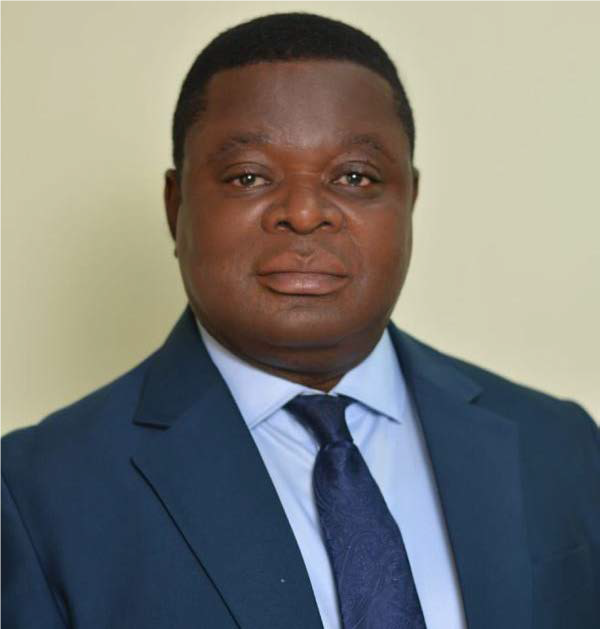

- Economist Prof Peter Quartey Elected to Lead Ghana’s Petroleum Watchdog PIAC
Economist and development finance expert Professor Peter Quartey has been elected chair of the Public Interest and Accountability Committee (PIAC) for a one-year term, as the petroleum revenue watchdog begins a reconstituted membership and faces renewed scrutiny over how oil and gas revenues are reported and used.
Quartey, who represents the Ghana Academy of Arts and Sciences, was elected by committee members at a meeting on November 3. He succeeds Richard Ellimah, whose tenure as chair ended in October. Samuel Bekoe, the member representing think tanks, was elected vice-chair for a one-year term.
Quartey was also sworn in for another two-year term as a PIAC member following his renomination by the Ghana Academy of Arts and Sciences. His appointment to the chair therefore adds a leadership role to his continuing membership of the committee.
The economist brings more than 22 years of experience in development finance, private sector development, monetary and financial sector development and digital finance.
He holds a PhD in Development Economics from the University of Manchester, an MSc in Quantitative Development Economics from the University of Warwick, and an MPhil and BA in Economics from the University of Ghana.
The committee’s statement says six representatives from nominating institutions were sworn in on November 3: Mama Agumekosua V of the Queen Mothers Association of Ghana; Dr Edmund Adinkra-Darko of the Trades Union Congress; Alhaji Abdul Majeed Saeed of Muslim Groups; Rev Johoiada Godwin Amuzu of Christian Groups; Daniel Kissi, representing the Association of Ghana Industries and the Ghana National Chamber of Commerce and Industry; and Kyei Yamoah of civil society and community-based organisations.
The statement refers to five incoming members in one paragraph, but lists six names in its membership section.
PIAC was established under the Petroleum Revenue Management Act to “monitor and evaluate compliance with the Act”. Its work includes scrutinising petroleum revenue collection, allocations and expenditure, and reporting its findings to the public.
The new leadership inherits that mandate at a time when the management of petroleum revenues is again under public discussion.
PIAC’s 2026 semi-annual report recorded petroleum receipts of US$561.41 million in the first half of the year, up from US$370.34 million in the same period of 2025. The increase was supported by higher crude oil prices and stronger corporate income tax collections.
The report also highlighted the exposure of petroleum receipts to international price movements, underscoring the importance of scrutinising not only how much revenue is collected but also how it is allocated and spent.
A recent dispute over information on the Annual Budget Funding Amount (ABFA) illustrates the demands facing the committee. PIAC said it lacked some information from the Ministry of Finance needed to fully assess the use of petroleum revenues.
The Ministry rejected the suggestion that it had withheld data, saying it provided receipts and distribution information and explained that ABFA resources had been ring-fenced for the Accra–Kumasi Expressway. It also said the 5% share due to the District Assemblies Common Fund was being paid from the Consolidated Fund.
The disagreement points to a practical test of accountability: whether PIAC can obtain, verify and publish sufficient information to assess how petroleum money moves from collection into projects and public services.
The committee’s ability to explain what information it needs, what it has received and what remains outstanding will be important to public confidence. The Ministry, for its part, says it will continue to provide information and publish details through fiscal and petroleum reports.
Quartey’s background in economics and development finance is relevant to that work, but the committee’s credibility will depend on its institutional performance as much as the chair’s credentials.
Its assessments must be evidence-based, its requests for information clearly explained, and its findings presented in a way that distinguishes documented facts from unresolved questions or differences of interpretation.
The committee’s reconstituted membership brings representatives from labour, traditional leadership, religious groups, industry, commerce, think tanks and civil society into its deliberations.
That breadth can help PIAC consider how petroleum revenue affects different parts of the country. It also raises the responsibility to ensure that the committee’s work remains rigorous and independent of the institutions and interests it monitors.
The new members were nominated by their respective institutions under the established process and sworn in by the Ministry of Finance’s Director of Legal Affairs, Evelyn Amerley Nuno-Amarteifio.
Their task will include helping PIAC continue its oversight and public reporting as Ghana manages revenues from a petroleum sector exposed to changes in production, prices and investment.
For Quartey, the one-year chairmanship begins with an established mandate and a set of immediate accountability questions. How can PIAC obtain the information needed to assess petroleum-funded projects?
How should it report disagreements with government agencies? And how can the committee demonstrate whether its recommendations lead to better disclosure and stronger management of the country’s petroleum resources?
The leadership change does not alter PIAC’s statutory role, but it places new responsibility on Quartey and the reconstituted committee to make that role effective.
The measure of the new leadership will be whether it can sustain independent scrutiny, clarify the flow of public petroleum revenue and give citizens a reliable basis for judging how those resources are used.

