

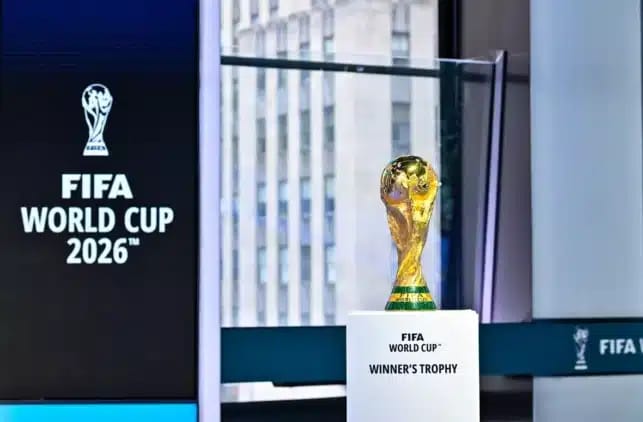

- FIFA’s World Cup Cash Machine: How Football’s Biggest Tournament Generates Billions
As the 2026 FIFA World Cup heads into its decisive stages, attention has not only been on the action on the pitch but also on the enormous financial power behind football’s biggest competition.
The expanded 48-team tournament, featuring 104 matches across the United States, Canada and Mexico, is set to become the richest World Cup in history, with FIFA expecting record-breaking revenues of around $13 billion during the 2023-2026 financial cycle.
FIFA president Gianni Infantino has repeatedly defended the governing body’s finances, insisting that the money generated by the World Cup is reinvested into developing football across the globe.
“Every dollar goes back to the development of football,” Infantino said before the tournament began in Mexico City.
The men’s World Cup continues to be FIFA’s biggest source of income. Unlike most sporting organisations, FIFA operates on a four-year financial cycle tied directly to the tournament.
The governing body typically records losses during the first three years of each cycle before generating enormous profits in the World Cup year.
For the current cycle, FIFA expects approximately $9 billion of its projected $13 billion revenue to come in 2026 alone, largely because of the World Cup.
The figure represents more than a 70 percent increase compared to the previous four-year cycle.
Broadcast rights remain FIFA’s single largest revenue stream.
Television deals, alongside ticket sales and hospitality packages, account for nearly 70 percent of FIFA’s total income.
The organisation has already secured billions of dollars from broadcasters worldwide, with the Middle East, North Africa and Asia emerging as increasingly important markets alongside Europe.
Although the United States remains one of football’s fastest-growing television markets, FIFA is reportedly earning less than market value from its current American broadcasting agreement after extending an earlier contract with Fox.
The expansion from 64 to 104 matches has dramatically increased ticket availability, with nearly 6.7 million tickets made available—more than double the number sold at the 2022 World Cup in Qatar.
Combined ticketing and hospitality revenues are expected to surpass $3 billion, making this the most lucrative World Cup ever from matchday income.
However, FIFA’s ticketing strategy has also attracted criticism.
The use of dynamic pricing has resulted in soaring ticket costs, while authorities in several U.S. states have launched investigations into complaints over ticket sales and seating arrangements.
Despite the controversy, FIFA maintains that its pricing model reflects standard practices used at major sporting and entertainment events.
Commercial partnerships continue to provide another major financial boost.
FIFA has signed several new global sponsors during the current cycle, including agreements with Aramco, Bank of America, Lenovo, Verizon and Lay’s.
These partnerships, alongside existing deals with companies such as Visa, Coca-Cola and Qatar Airways, have helped FIFA exceed its commercial revenue targets well before the tournament concludes.
Although FIFA expects to generate around $13 billion, the organisation also plans to spend almost the entire amount.
Projected expenditure stands at approximately $12.9 billion, leaving only a relatively small operating surplus.
However, FIFA’s financial reserves continue to grow.
By the end of 2025, the organisation had accumulated billions of dollars in reserves, investments and cash holdings, making it one of the wealthiest sporting organisations in the world.
Facing criticism over rising ticket prices and increasing commercialisation, FIFA insists that its financial success ultimately benefits football worldwide.
The governing body says revenues generated from the World Cup are redistributed through development programmes, infrastructure projects, youth competitions and support for its 211 member associations.

