

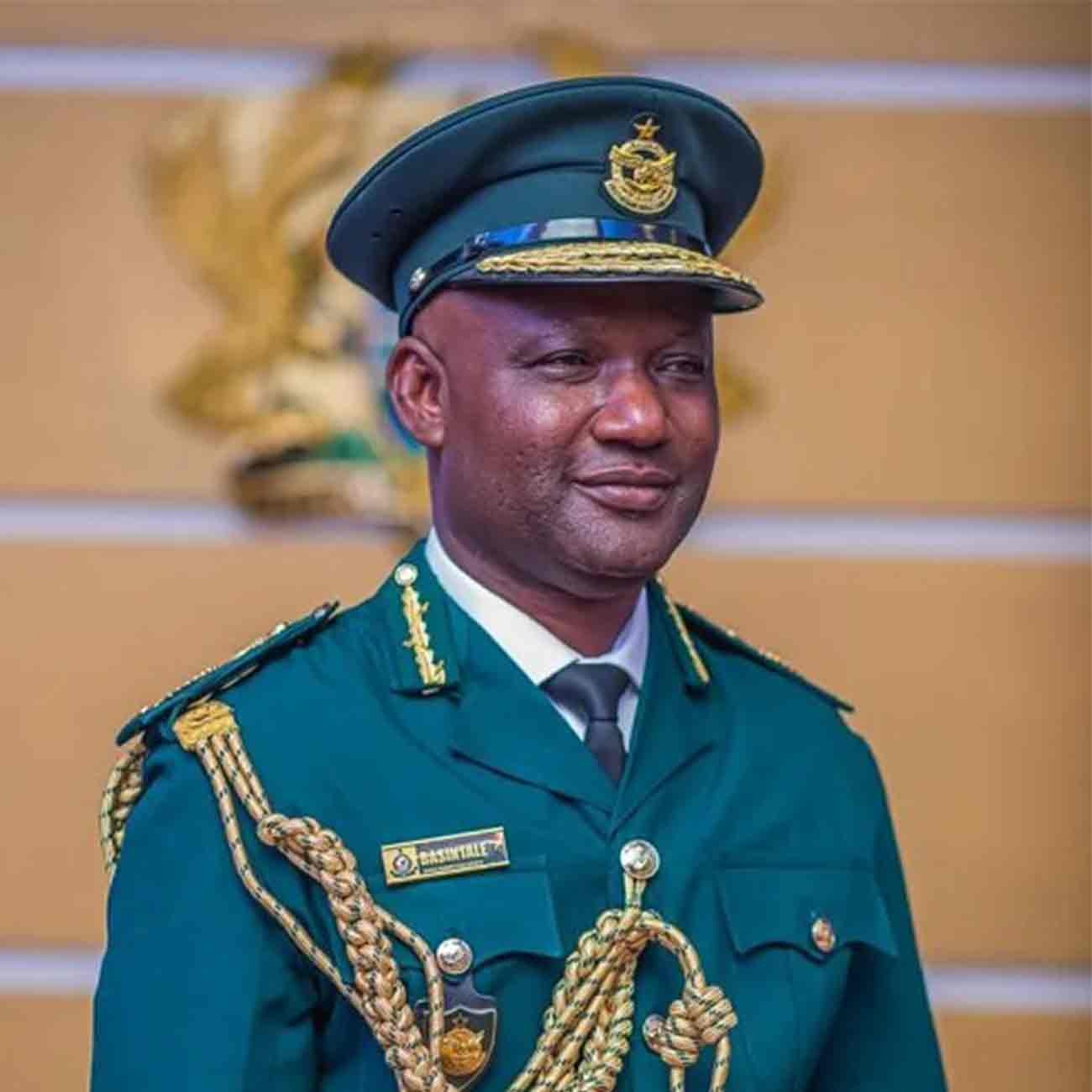

Ghana Immigration Service Records GH¢546m Revenue in First Year Under New Comptroller-General
The Ghana Immigration Service (GIS) has reported significant revenue growth, operational expansion and institutional reforms in the first year under Comptroller-General Samuel Basintale Amadu, with the Service generating more than GH¢546 million over the period.
According to an official news release dated March 23, 2026, the Service says the performance reflects “a renewed national drive toward stronger border security, operational efficiency and institutional reform” following Amadu’s appointment in March 2025.
The statement signed by the Deputy Commissioner at the Public Relations, Maud Anima Quainoo, noted that the new leadership was tasked with strengthening intelligence-led operations, improving inter-agency collaboration and accelerating the digitalisation of visa and permit processes to improve service delivery.
The Service said the revenue increase was largely supported by reforms in visa and permit processing, with a total of 186,959 permits and visas issued during the period – representing a 32.5% increase compared to the previous year.
“Over the past year, GIS generated more than GH¢546 million in revenue, largely driven by reforms in visa and permit processing. Investments in digital infrastructure and automation had significantly reduced processing times and enhanced transparency,” the statement added.
The Service also processed more than 2.8 million passenger movements across air, land, and sea entry points without major incidents, a development it says supported Ghana’s broader tourism and investment agenda.
Beyond revenue performance, the GIS reported strengthened enforcement operations and improved intelligence coordination.
The Service said coordinated operations across its National Operations Department and regional commands led to “major seizures of smuggled goods, narcotics, ammunition and contraband,” all of which were handed over to relevant authorities.
Significant interceptions during the period included over 1,400 bags and jerrycans of smuggled cocoa beans, nearly 1,400 packs of Tramadol, 725 cartridges of ammunition and several consignments of suspected narcotics.
In addition, the Service intercepted 909 individuals at entry points and checkpoints, while a broader enforcement exercise involving more than 7,200 facility inspections resulted in the arrest of 3,533 individuals for immigration-related offences.
The GIS also highlighted progress in institutional capacity building and modernisation of operations, describing the past year as a “more responsive, technology-driven and intelligence-led” phase for the Service.
A total of 666 intelligence requests were processed in collaboration with partner agencies, while the Service also secured 28 convictions out of 29 cases prosecuted, covering offences such as illegal entry, fraud schemes and cybercrime-related activities.
At the same time, the Document Fraud Expertise Centre reviewed 932 suspected cases, with more than one-third confirmed as fraudulent, highlighting the scale of document-related crimes and the growing capacity of the Service to detect them.
The Service also indicated that infrastructure development projects are ongoing across several regions, including Tema, Kumasi, Tamale, Sunyani, Cape Coast and Sekondi-Takoradi, aimed at improving working conditions and decentralising operations nationwide.
It added that international collaboration has also been strengthened through partnerships with the International Organisation for Migration, the United Nations Counter-Terrorism Centre and immigration authorities from Rwanda, Nigeria and Sierra Leone.
“The past year has repositioned the Service as a more responsive, technology-driven, and intelligence-led institution,” the release said, noting that the progress achieved under the new leadership provides “a strong foundation for the future.”
Looking ahead, the Service says it is pushing forward a reform programme focused on sustainability and innovation, including the rollout of Project SECOBOR (Secure Our Borders), a public-private partnership initiative aimed at addressing gaps in surveillance, logistics and infrastructure.

