

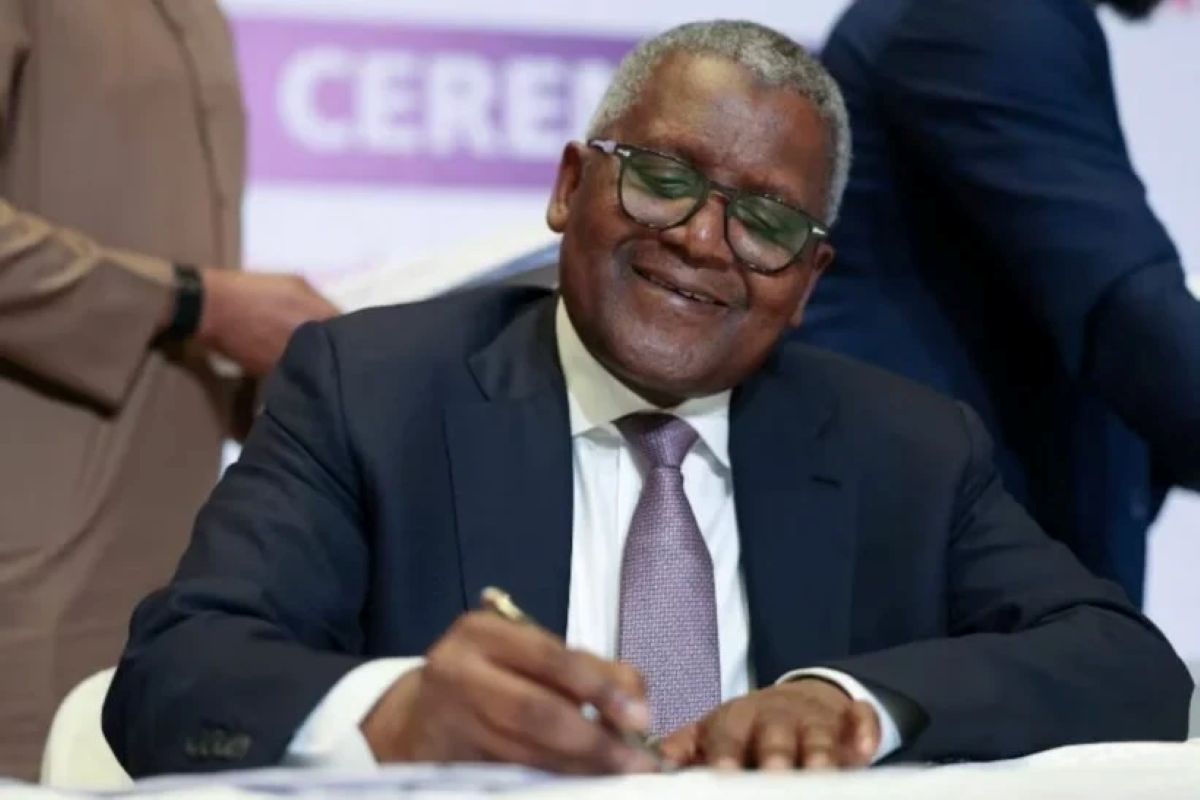

- Dangote in Talks to Make Ghana a Cocoa-Processing Hub in 500,000-Tonne Proposal
Ghana’s cocoa-processing ambition is moving into negotiations that could give it a major test. Aliko Dangote is in discussions with the government over a proposed arrangement involving 500,000 metric tonnes of cocoa, with the stated aim of using Ghana as a hub for local processing.
The proposal could help the country capture more value from one of its most important agricultural commodities. But the terms remain under review, and no contract has been signed.
Finance Minister Cassiel Ato Forson disclosed the talks after presenting the 2027 Budget to Parliament. He said Dangote had expressed interest in processing cocoa locally and that his representatives wanted to formalise an arrangement.
“Dangote has reached out to use Ghana as a hub to process cocoa locally,” Dr Forson said. “We are going through the terms, and they want to sign a contract.”
The distinction between interest and agreement matters. A proposal of this scale may attract attention, but its economic value will depend on what the parties ultimately negotiate: how the cocoa will be sourced, what processing will take place in Ghana, how investment and operating risks will be shared, and what benefits accrue to farmers, workers and local businesses.
The government’s target is to process 50.00% of locally produced cocoa by 2028 and 100.00% by 2030. A legislative instrument under a new Cocoa Board Act is expected to establish the timetable for increasing domestic processing. Dr Forson said Ghana would continue selling beans, but that buyers should add value in the country.
“We are not saying don’t come and buy our cocoa beans,” he said. “But if you are a company out there, come and buy our cocoa beans, but add value here in Ghana.”
That principle is straightforward. The harder question is whether Ghana can build the industrial capacity, commercial arrangements and reliable supply chain needed to make it work.
A processing target is not the same as a functioning industry. The target will require sustained investment in equipment, energy, skills and logistics, alongside arrangements that make local processing commercially viable.
The 500,000-tonne proposal could be significant if it translates into a durable operation with substantial activity on Ghanaian soil.
But the figure on its own does not reveal how much processing would occur locally, whether the volume is a one-off or part of a longer-term arrangement, or what production and employment would result.
Those details will determine whether the proposal advances the government’s broader goal or mainly secures access to cocoa for a buyer.
The negotiations also arrive as Ghana seeks to reduce its dependence on raw commodity exports and retain more value from its agricultural produce.
Processing can create opportunities beyond the sale of beans, including activity in manufacturing, packaging, transport and related services.
Yet those gains are not automatic. They depend on the scale and depth of local operations and on whether domestic firms can participate in the supply chain.
For farmers, the terms will matter as much as the size of the proposed deal. Increased processing demand could support a more developed local market for cocoa, but the proposal’s effects on producer incomes cannot be assumed without knowing the sourcing and pricing arrangements.
If the value created downstream does not translate into fair and predictable returns for producers, the national case for processing may be stronger than the farmer’s.
There is also a supply question. A proposal involving 500,000 metric tonnes must be considered alongside Ghana’s target to process half of its cocoa output by 2028 and all of it by 2030.
The source material does not specify how the proposed volume fits those targets or how much cocoa would be available for other processors. The eventual agreement will need to clarify the relationship between the proposed arrangement and the wider local-processing strategy.
Dr Forson cited his visit to Bangkok for the World Bank and IMF annual meetings as a reminder of the range of cocoa products Ghana could be producing.
His argument was that the country should not remain focused on exporting the raw ingredient when it could capture more of the value through local industry.
That ambition reaches beyond cocoa. Dr Forson said Ghana spends about $3.5 billion annually on imported food products, including palm oil, sugar, rice and poultry, despite what he described as opportunities to expand domestic production. “All we need to do is modernise agriculture,” he said.
The cocoa proposal therefore sits within a larger debate about how agriculture can support industrialisation. Processing cocoa locally may be one part of that effort, but it does not by itself resolve the structural barriers that affect other food industries.
Investment, production capacity and domestic value chains will have to develop together if the country is to reduce import dependence while creating businesses able to compete.
Dangote’s existing investments in agriculture and processing elsewhere in Africa give the proposed Ghana arrangement a wider commercial context. His group has invested in rice and sugar production in Nigeria and has expanded plans for a fertiliser project in Ethiopia.
The cocoa discussions would extend those interests into a new commodity and market. But a company’s track record elsewhere is not a substitute for details about the Ghana proposal itself.
The government will face a negotiation that must balance the attraction of a major prospective buyer with the need to secure value for the country.
That means judging the proposal not only by the volume of cocoa involved, but by its local processing commitments, the investment required, its treatment of producers and the opportunity it leaves for Ghanaian businesses to build capacity.
The proposal could offer Ghana a route to accelerate its processing ambitions. It could also expose the distance between announcing a target and delivering a competitive industry.
The contract, if signed, will show whether the 500,000-tonne figure becomes the foundation for deeper local production or remains a headline volume whose national benefits depend on terms still to be agreed.

