


- PIAC Calls for Gas Master Plan Reset as Ghana Targets Bankable Energy Market
The Public Interest and Accountability Committee has called for a comprehensive update of Ghana’s gas master plan, stronger payment discipline and more reliable infrastructure as the country seeks to turn its natural-gas resources into a foundation for industrialisation and energy security.
The recommendations emerged from PIAC’s two-day Technical Consultative Workshop on Ghana’s gas sector, held on September 23 and 24, 2026, where regulators, public institutions and industry participants examined the structural and commercial constraints affecting the domestic gas economy.
At the centre of the discussions was a warning that Ghana’s existing gas master plan, developed about a decade ago, risks becoming detached from the country’s changing supply outlook, infrastructure needs and industrial ambitions.
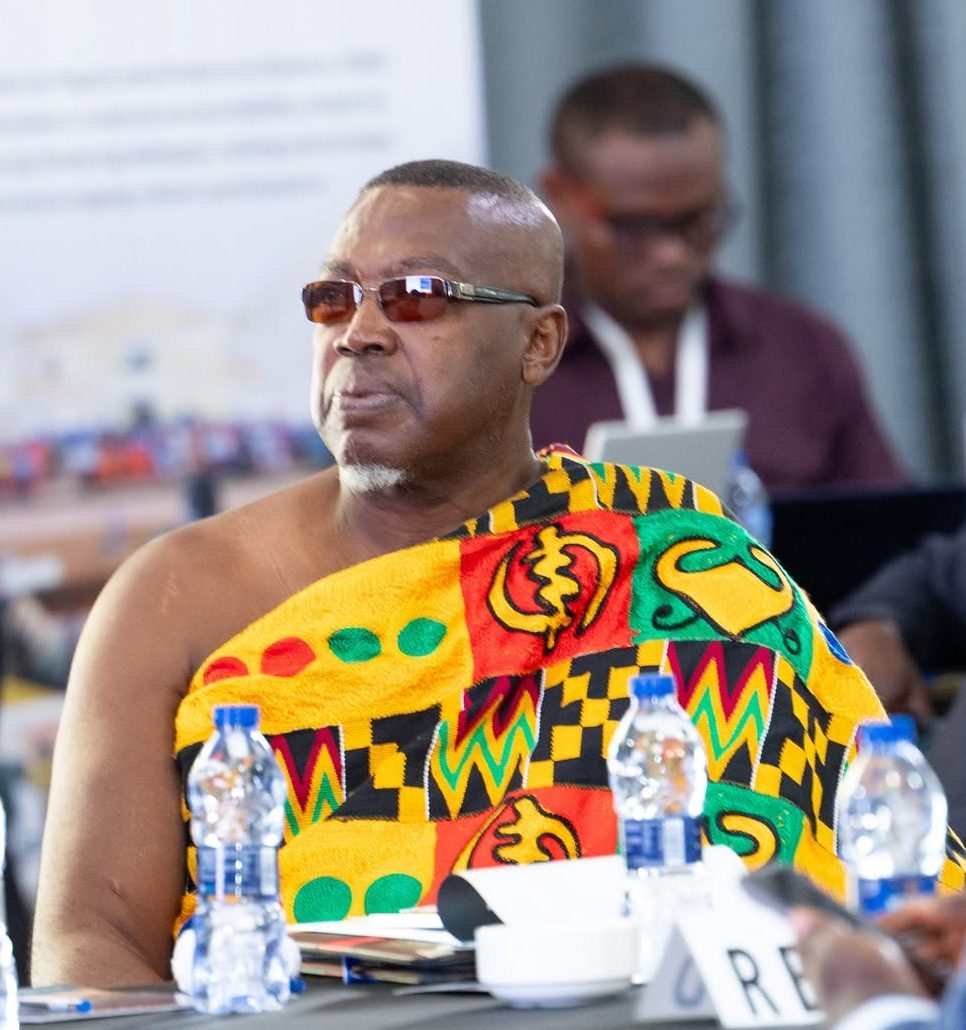
“We are talking about a review or an update of it, since it was agreed that it’s probably about nine to ten years old,” said Nana Kwaku Dankwah Opamago Kodie II, chair of the workshop.
The demand for an updated plan reflects a broader shift in Ghana’s gas debate.
The country’s challenge is no longer limited to identifying additional gas resources. It must determine how future supplies will be processed, transported, priced, financed and matched with credible demand.
A plan prepared under earlier production and market assumptions may not adequately reflect expected incremental supply from producing fields, the condition of existing infrastructure or the potential use of gas outside electricity generation.
Without an integrated framework, individual investments could be pursued without sufficient attention to whether the rest of the value chain is prepared to support them.
PIAC’s recommendations place institutional and regulatory clarity at the heart of the proposed reset.
“We also have to ensure clear and appropriate institutional and regulatory framework,” Nana Kodie said.
Natural-gas projects require large upfront investments and can operate for decades. Investors therefore need predictable rules covering tariffs, access to pipelines and processing facilities, payment arrangements and the allocation of risks among public and private entities.
Unclear or overlapping institutional mandates can delay projects, raise financing costs and create uncertainty over who is responsible when infrastructure or commercial arrangements fail.
The workshop also called for greater private-sector participation and improved domestic expertise.
“Local intellectual capacity, training our young men and women to sustain the industry is also critical,” Nana Kodie said.
Gas development requires specialised skills across petroleum engineering, processing, pipeline operations, commercial contracting, environmental management and infrastructure maintenance.
Building those capabilities locally would allow Ghana to retain more of the economic value generated by the sector and reduce its dependence on external technical support.
But private capital and local expertise will not be sufficient if the market remains financially unstable.
“We have to encourage private-sector participation in the development of the sector, and then manage revenues prudently along the chain to minimise sector debt,” he said.
The workshop identified payment certainty as one of the most important conditions for sustaining gas supply and attracting investment.
Ghana’s gas market is closely connected to the wider electricity value chain. Where power-sector entities fail to collect adequate revenue or settle their obligations, the financial pressure can move backwards from electricity distributors to generators, gas transporters and upstream producers.
Nana Kodie said the objective must extend beyond establishing a regular payment schedule.
“This really also encapsulates what we talked about today, not just regular payments, but making sure that these payments are also done in full, no shortfalls.”
The distinction is fundamental.
A supplier receiving partial or unpredictable payments may continue operating in the short term but will struggle to finance maintenance, repay lenders or invest in additional capacity.
Over time, unpaid balances become debt, debt constrains investment and delayed investment begins to threaten supply reliability.
Payment discipline is therefore not simply a financial-management issue. It is a form of energy security.
Unless gas suppliers and infrastructure operators have confidence that properly issued invoices will be settled fully and on time, Ghana may struggle to attract the capital required to expand the sector.
PIAC also called for a better balance between power-sector demand and non-power uses of gas.
“There must be an appropriate balance between power and non-power markets,” Nana Kodie said.
Ghana’s gas industry has largely developed around electricity generation, but greater industrial use could improve the economics of the market and support domestic value addition.
Potential applications include fertiliser production, industrial heating and combined heat-and-power systems for manufacturers.
A broader customer base could reduce the sector’s dependence on the financial condition of electricity utilities while allowing natural gas to support manufacturing, employment and import substitution.
It could also produce more stable demand throughout the year if industrial users enter long-term supply agreements.
The opportunity, however, depends on reliability and price.
Manufacturers will not redesign production systems around gas if supplies are frequently interrupted. Nor will gas encourage industrial expansion if the delivered price makes Ghanaian products uncompetitive.
PIAC’s recommendations therefore extend beyond securing sufficient quantities of gas.
“We want to make sure that we minimise the delivered cost of the commodity,” Nana Kodie said.
The final cost paid by a consumer includes more than the underlying commodity price. It can incorporate gathering, processing, transmission and distribution charges, as well as statutory fees and levies.
“You can even argue that even the attendant levies and fees, we have to look at all of them if we want to minimise the delivered gas cost,” he said.
This shifts the policy focus from the existence of gas resources to the efficiency of the entire delivery system.
Ghana may possess adequate gas reserves and still fail to create a competitive domestic market if inefficient infrastructure, avoidable charges or weak commercial arrangements make the delivered product too expensive.
Any review of the master plan should therefore disclose the expected cost of moving gas through each stage of the chain and identify where savings can be achieved without undermining maintenance and safety.
For industrial consumers, price predictability may be as important as the initial tariff. Companies making long-term investments require confidence that gas costs will not change unpredictably because of accumulated debts, emergency infrastructure spending or opaque levies.
The workshop also warned that a strategy without financing would remain an aspiration.
“Yes, we may have the best plans, but if we don’t have access to capital to implement these plans, I think it will do us no good. It won’t happen,” Nana Kodie said.
Gas-processing facilities, pipelines, compressors and storage systems require substantial capital and long planning periods.
Investors will assess not only the technical merits of individual projects but also the creditworthiness of purchasers and the reliability of the wider payment chain.
Ghana must therefore improve the commercial foundations of the market at the same time as it seeks financing for new assets.
“We also have to ensure adequate and reliable infrastructure. Adequate and reliable,” Nana Kodie said.
The repetition captures an important distinction. Infrastructure may have sufficient nominal capacity but remain unreliable because critical equipment lacks backup, maintenance is delayed or a failure at one point disrupts the wider system.
Compressors and other rotating equipment are particularly important because their failure can restrict flows even when sufficient gas is available upstream.
Reliability may require redundancy — additional equipment or alternative routes capable of maintaining operations when a primary asset fails.
Such investment can appear expensive when assessed in isolation, but repeated supply interruptions can impose greater costs on power producers, manufacturers and the wider economy.
PIAC’s final recommendation concerned effective operations and maintenance, including the physical protection of gas infrastructure.
Ghana’s infrastructure debate has often focused on commissioning new projects. But the economic value of an asset depends on whether it remains functional throughout its intended life.
The workshop called for Ghana to “develop effective operations and maintenance protocols, including infrastructure protection”.
That requires predictable maintenance budgets, properly trained technical teams, spare-parts planning and clear responsibility for protecting pipelines and processing facilities from damage or encroachment.
Deferred maintenance may reduce expenditure temporarily, but it raises the probability of unplanned failures and more expensive repairs later.
The PIAC workshop ultimately points towards a complete reordering of Ghana’s gas-sector priorities: update the master plan, clarify institutional responsibilities, develop local expertise, enforce full payment, broaden demand beyond power, reduce delivered costs and finance infrastructure that can operate reliably.
The central question is whether Ghana can make the entire value chain commercially functional rather than merely technically capable.
As the Ghana National Petroleum Corporation put it during the workshop, “the entire value chain must work”.
For PIAC, the next step will be to ensure that the workshop communiqué does not become another catalogue of familiar problems.
Its recommendations will matter only if they are converted into an updated national plan with named institutions, financing arrangements, implementation deadlines and measurable responsibilities.

