


- 8 Pillars, One Big Question: Can Ghana Turn GH¢30 billion into Jobs?
Ghana’s proposed US$10 billion New Economy programme is built around a powerful idea: economic growth should be judged by the jobs it creates, the incomes it raises and the productive capacity it leaves behind.
The harder question is whether the state can translate that principle into projects that work, businesses that grow and employment that lasts.
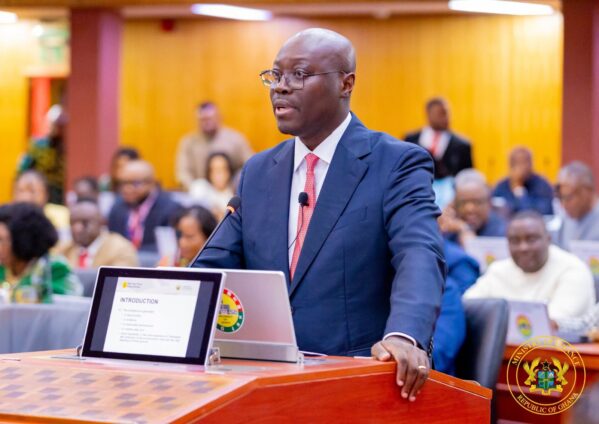
Finance Minister Dr Cassiel Ato Forson has outlined eight pillars for the programme, which is scheduled to run from 2027 to 2030.
They cover macroeconomic stability and affordable finance; commercial agriculture, agri-industry and agribusiness; the oil palm value chain; energy sector reforms; critical minerals and value addition; cotton, textiles and garments; tourism, culture and creative arts; and pharmaceutical manufacturing.
The government plans to invest GH¢30 billion in 2027, equivalent to 1.50% of GDP, and has set a target of 8.00% real GDP growth.
The blueprint’s breadth reflects the scale of the challenge. Ghana exports raw materials while importing a substantial range of processed goods; it has productive businesses but faces constraints in finance, energy and infrastructure.
The eight pillars are intended to address several of these weaknesses together.
Affordable credit could support farmers and manufacturers; agriculture could supply food and inputs to industry; energy investment could support longer operating hours; and local processing could retain more value in the country.
That is the plan’s central strength and its central risk. These are not eight separate spending lines that can succeed in isolation. They depend on one another. A factory cannot expand reliably without power. Farmers cannot supply processors without market access, storage and transport.
A new financing facility cannot create competitive businesses if borrowers lack the skills, inputs or infrastructure to produce at scale.
Dr Forson described the pillars as a shift in how government wants to measure success. “We will judge growth by the jobs it creates, the income it raises and the productive capacity it leaves behind,” he said, adding that “commodity windfalls and debt-financed consumption will no longer define our progress.”
That formulation raises the bar. GDP growth is measurable, but the quality of that growth is harder to establish. The programme will need to show whether public investment creates jobs that persist, raises domestic incomes and builds firms able to compete without permanent state support.
If those outcomes are not tracked and published, the New Economy could be assessed by the amounts allocated and the projects announced, rather than by what changes in workplaces and communities.
The funding plan also makes fiscal discipline part of the industrial strategy. To create room for investment, the government intends to reduce its primary surplus target from 1.50% to 0.50% of GDP and expects tax reforms and stronger compliance to generate additional revenue.
The 2027 allocation is GH¢30 billion, with the wider programme valued at US$10 billion over four years.
That creates a clear trade-off. More room for investment could help build productive assets, but a smaller surplus also leaves less margin if revenue disappoints or costs rise.
The programme’s credibility will depend on transparent budgets, careful project selection and evidence that spending is producing assets and capabilities rather than simply adding to recurrent obligations.
Commercial agriculture is the largest identified pillar, with US$3 billion earmarked for the sector. The government intends to expand domestic food production and strengthen links between farming and industry.
It plans to amend public procurement laws so schools and hospitals buy locally grown food, prohibit commercial rice imports by the end of 2030, achieve sugar self-sufficiency by that year and process all cocoa locally.
Using public purchasing to create a reliable market for local producers could help farmers and processors invest with greater confidence. But procurement rules alone cannot ensure supply. Local producers must meet required volumes, quality standards and delivery schedules at prices public institutions can afford. If domestic supply falls short, institutions could face higher costs or shortages.
The policy will need to build production and processing capacity before restrictions on imports take effect.
Energy is another pivotal pillar. The plan includes a proposed 1,450-megawatt state-owned thermal power plant, a 600-megawatt solar facility with 2,000 megawatt-hours of battery storage, and a goal of phasing out emergency power plants by 2030.
The government also aims to reduce the cost of power generation from 16 US cents to 8 US cents per kilowatt-hour. It has announced a US$200 million nuclear-readiness programme for 2027–2028, with the aim of signing an engineering, procurement, construction and financing agreement by the end of that period.
These are major ambitions that will require financing, procurement discipline, technical capacity and timely construction.
Their value to the wider programme will depend on whether the resulting power is reliable and affordable for productive users.
If energy costs remain high or supply remains uncertain, investment in manufacturing, processing and technology could struggle to deliver the expected jobs.
The other pillars will face their own execution tests. Critical minerals and value addition require investment in processing, skills and infrastructure.
Textiles and garments need consistent access to raw materials and markets.
Pharmaceutical manufacturing requires quality systems and reliable inputs.
Tourism, culture and the creative arts depend on more than promotion: transport, accommodation, visitor services and business finance all shape whether the sector can grow.
Technology also needs workers with relevant skills and companies able to turn innovation into services and exports.
The New Economy programme is therefore a test of coordination as much as spending. Government must decide which projects are ready, which constraints block private investment and where public money can unlock productive activity.
That requires project appraisal and public reporting that allow citizens to compare promised outputs with completed work, jobs created and local value retained.
The blueprint’s ambition is clear. It wants Ghana to rely less on raw commodity exports, produce more at home and make economic growth matter more directly to workers and households. But a four-year programme cannot be judged by its size alone.
Its success will depend on whether GH¢30 billion in the first year begins building enterprises and infrastructure that remain productive long after the initial allocation is spent.

