
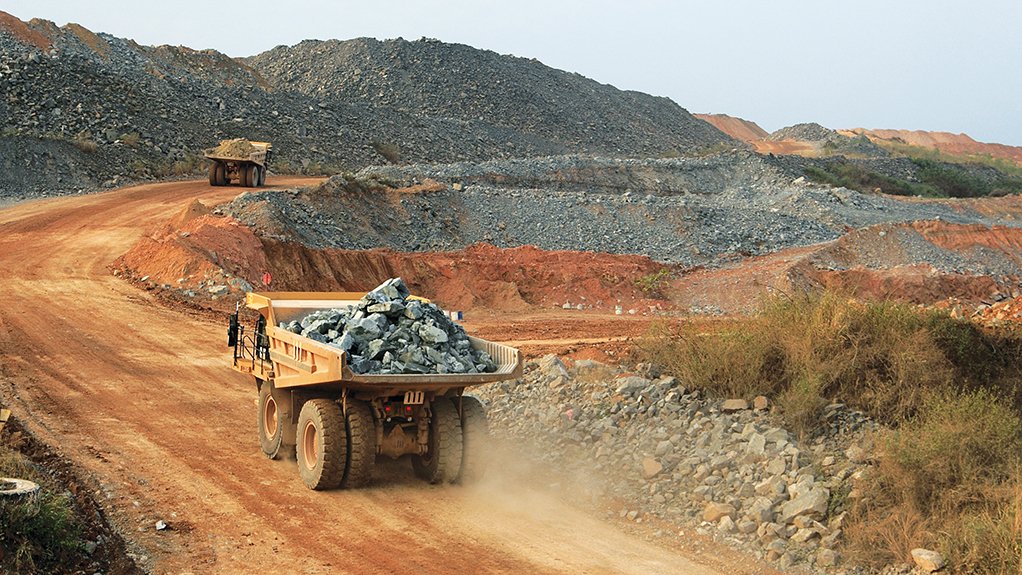

- Damang Mine Transfer Begins as E&P Takes Over Key Gold Asset
Ghana’s government has begun the formal transfer of the Damang Gold Mine from Gold Fields to the contract miner Engineers and Planners (E&P), moving to close out months of political and commercial debate over one of the country’s most closely watched mining transitions.
The handover marks the culmination of a broader policy shift that began in 2025, when authorities rejected Gold Fields’ application to renew its Damang lease and moved to reassert state control over the asset. The decision broke with a long-standing practice of automatic lease extensions and signalled a more assertive approach to resource governance aimed at maximising national value from mineral assets.
The Damang Mine, located in Ghana’s Western Region within the prolific Tarkwa-Damang gold belt, is one of the country’s key gold-producing assets and has been operated by Gold Fields for more than two decades. Over the years, it has served as a significant contributor to export earnings, local employment and community development, with thousands of direct and indirect jobs tied to its operations.
The current transition therefore represents more than a routine ownership change, it is a test case for Ghana’s evolving strategy to deepen indigenous participation in large-scale mining while maintaining operational continuity and investor confidence.
Officials say the handover process is designed to formalise the change in ownership while safeguarding production, asset integrity and regulatory compliance. The transition team is expected to oversee operational handovers, verify asset inventories and ensure that environmental and labour obligations are fully met.
The Damang transaction has drawn unusual public attention because E&P, the indigenous mining and construction group set to take over the asset, is owned by businessman Ibrahim Mahama, brother of President John Mahama. The ownership structure has heightened political scrutiny and raised broader questions about transparency and governance in the transition process.
But government officials who have spoken to NorvanReports on condition of anonymity insist, however, that the process is being conducted within Ghana’s legal and regulatory framework. Their emphasis on compliance and continuity appears aimed at reassuring workers, contractors and market participants that the transition will not disrupt operations.
E&P’s selection is underpinned by its long-standing operational presence at Damang, where it has served as a mining contractor for several years. The company’s familiarity with the mine’s geology, workforce and production systems is viewed as a key advantage in ensuring a smooth transition and reducing execution risk.
The timing of the transfer is also critical. Damang has in recent years shifted from active mining to processing stockpiles, with production declining in line with its life-of-mine plan. Reviving the asset and extending its economic life is expected to require significant capital investment, potentially running into hundreds of millions of dollars, requiring one with not just technical knowledge but also has both the financial and technical capacity required to sustain operations over the medium term, hence the call to give the job to E&P by many Ghanaians.
For policymakers, the transition reflects a broader strategic ambition: to ensure that Ghana’s mineral resources generate greater domestic value through increased local participation, improved revenue capture and stronger linkages to the wider economy.
Damang is not just a mining asset, it is an economic anchor for its host communities and a contributor to Ghana’s foreign exchange earnings in a sector that remains central to the country’s macroeconomic stability.
As the transition unfolds, the key question will be whether Ghana can successfully balance its push for local participation with the need to maintain investor confidence and operational efficiency. The answer may well shape the future trajectory of resource governance in Africa’s leading gold producer.

