
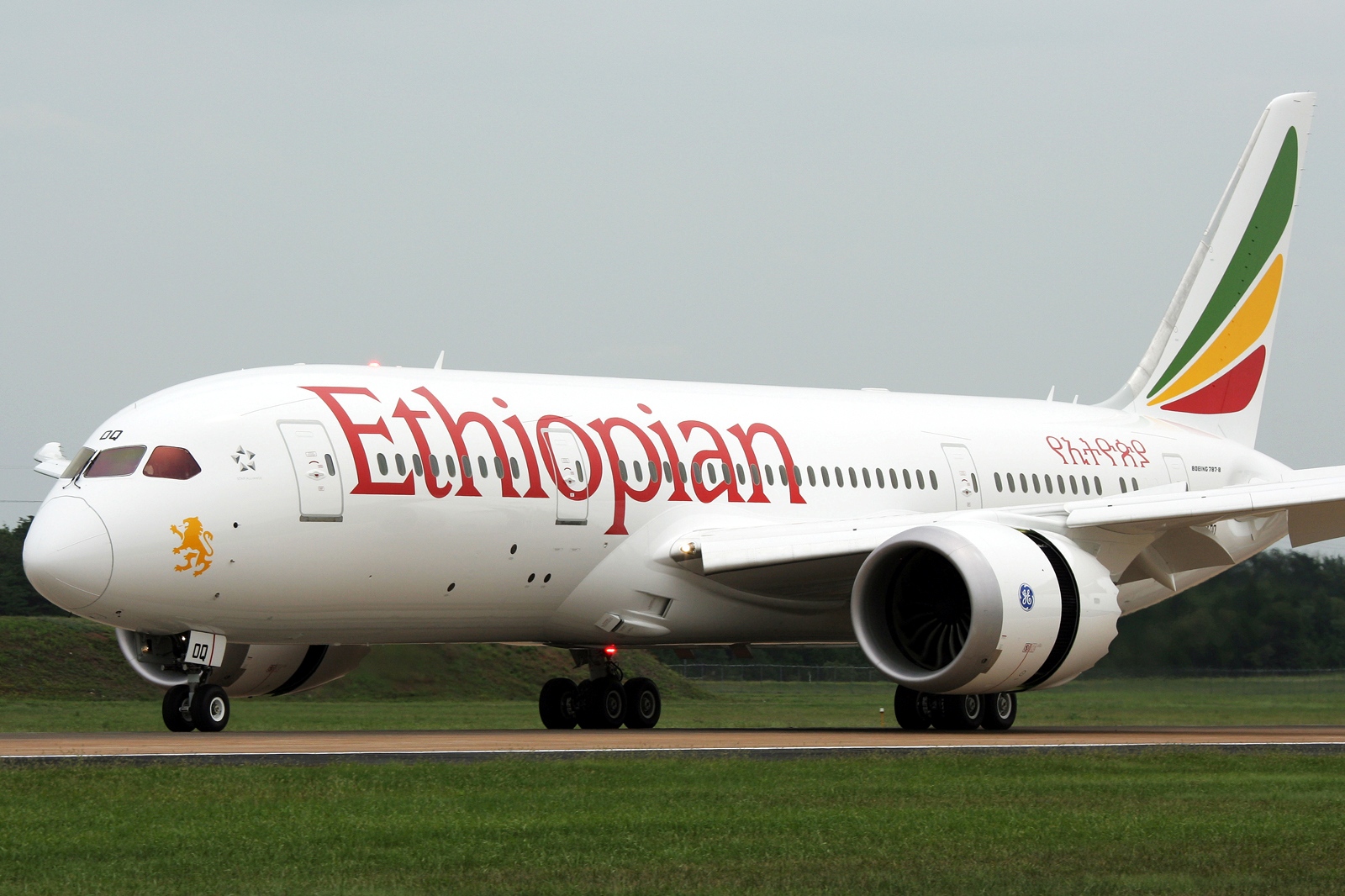

- Ethiopian Airlines Eyes More Airbus Jets in Expansion Push
Ethiopian Airlines Group is in early discussions with Airbus SE over a potential aircraft order, as Africa’s largest airline accelerates plans to expand its regional and long-haul operations. According to Bloomberg, the state-owned carrier is considering the purchase of around six Airbus A350 widebody jets and roughly 20 Airbus A220 regional aircraft, although no final decision has been made on whether the transaction will proceed or on the exact size of any eventual order.
The talks come as Ethiopian Airlines seeks to strengthen its position as one of the world’s fastest-growing carriers and deepen its role as Africa’s leading aviation hub. The airline, which is more than 80 years old, already operates a mixed fleet of about 150 aircraft, including Boeing 737s, 777s and 787s, alongside Airbus A350s and turboprop aircraft.
The possible Airbus order would support two sides of the airline’s strategy. The A350 widebody aircraft would strengthen long-haul capacity, while the A220 regional jets would help expand domestic and short-haul connectivity across Africa.
Ethiopian Airlines has been pushing an ambitious expansion plan aimed at positioning itself alongside global aviation groups such as Turkish Airlines and Emirates. Central to that ambition is a planned US$12.5 billion airport project at Bishoftu, about 45 kilometres southeast of Addis Ababa. The airport is designed to initially handle 60 million passengers annually, with long-term capacity projected to reach 110 million passengers by 2036.
For Ethiopia, the airport project is more than an aviation investment. It is a bet on Addis Ababa’s future as a global transit hub linking Africa, Asia, Europe and the Americas.
The potential Airbus deal also reflects the operational pressure facing Ethiopian Airlines as it expands. The carrier has more than 60 Boeing jets on order, but is grappling with delivery delays from Boeing, a challenge affecting several airlines globally as manufacturers struggle with supply-chain constraints and production backlogs.
For Airbus, an agreement with Ethiopian Airlines would be strategically significant. The airline’s fleet has historically been heavily influenced by Boeing aircraft, and a fresh Airbus order would deepen the European manufacturer’s presence within Africa’s most important carrier.
It would also give Airbus further momentum for the A220, a regional aircraft it has been actively promoting after weaker order momentum in 2024. Recent large orders, including AirAsia’s 150-aircraft order, have helped renew market interest in the model.
The talks also come at a difficult moment for global aviation. Airlines are dealing with disrupted flight routes, higher jet fuel prices and operational uncertainty linked to the Iran conflict and wider instability across key air corridors. Ethiopian Airlines has disclosed that it lost about US$137 million in just one week as the conflict involving the United States, Israel and Iran strained air travel across the Middle East.
That backdrop makes fleet strategy more important. Aircraft with better fuel efficiency, longer range and lower operating costs are becoming more attractive to airlines trying to protect margins while sustaining network growth.
For African aviation, Ethiopian Airlines remains the continent’s benchmark carrier. Its continued investment in fleet expansion, airport infrastructure and network development contrasts with the financial fragility of many national airlines across the continent.
The possible Airbus order therefore carries wider significance. It signals that Africa’s leading airline is not only defending its current market position, but preparing for a more competitive global aviation landscape in which hub strength, aircraft availability, route economics and fuel efficiency will define winners.
For now, the talks remain preliminary. But if concluded, the order would deepen Ethiopian Airlines’ long-haul and regional capacity at a time when Africa’s aviation market is still underdeveloped relative to its population and trade potential.

