

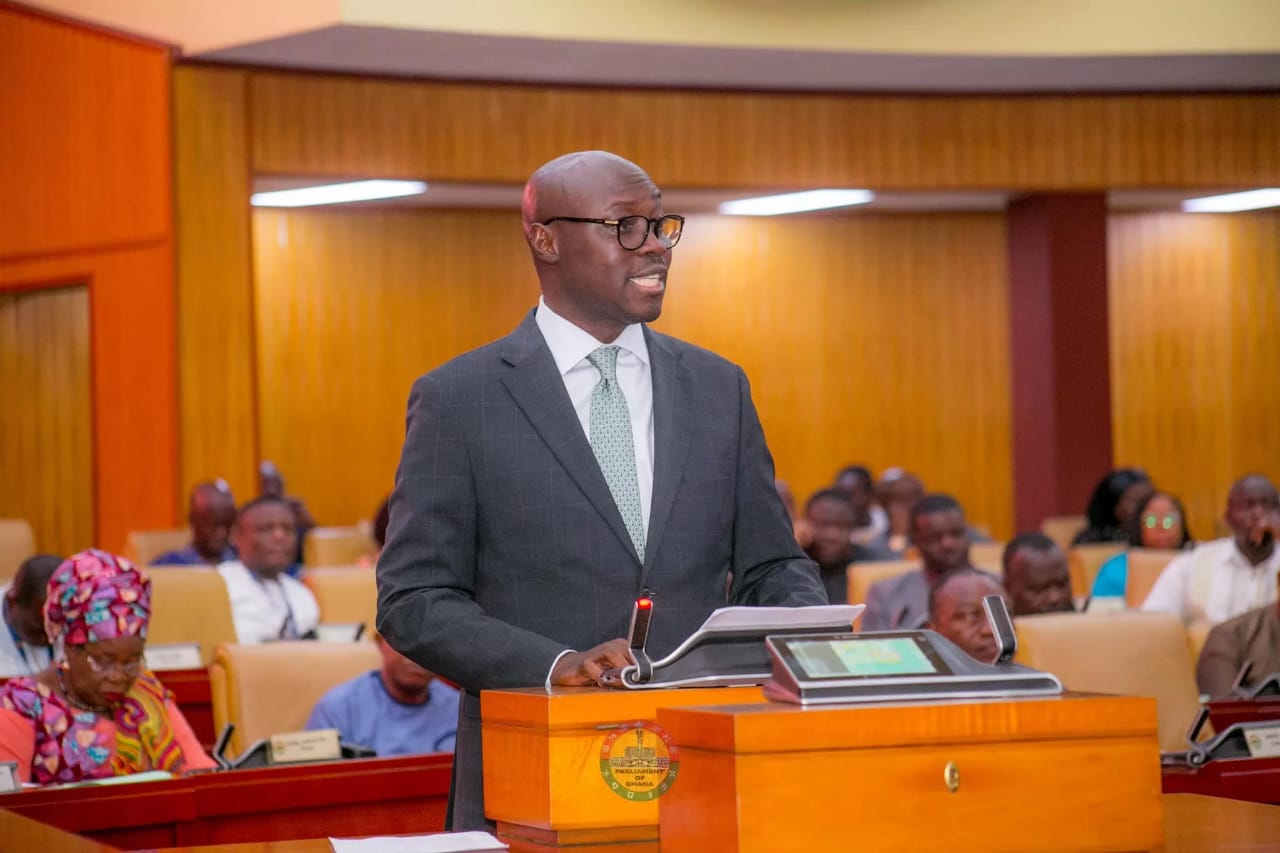

- 2027 Budget to Shift Focus from Stabilisation to Jobs and Investment — Ato Forson
Ghana’s 2027 Budget will shift the government’s economic focus from macroeconomic stabilisation towards job creation, investment and infrastructure, Finance Minister Dr Cassiel Ato Forson has said, signalling the next phase of President John Dramani Mahama’s economic programme.
The Budget is expected to be presented to Parliament in the first week of November, with the Finance Ministry intensifying consultations with government institutions ahead of the fiscal statement.
Dr Ato Forson said the programme would contain major infrastructure projects, employment-focused policy measures and new incentives intended to encourage businesses to expand into new areas.
“The 2027 Budget will outline plans for major infrastructure projects and policy initiatives to create more jobs,” the Finance Minister said.
The significance of the announcement goes beyond the timing of the Budget. It reflects the government’s argument that Ghana is moving from an initial period dominated by fiscal repair, debt restructuring and macroeconomic stabilisation towards one in which policy must increasingly translate those gains into production, employment and investment.
Dr Ato Forson has framed that transition explicitly.
“Stabilisation was never the destination. It was the price of entry. Ghana has paid that price. What comes next is the work that changes lives at scale, the work of transformation,” he said recently.
That distinction will be central to how the 2027 Budget is judged.
A more stable currency, lower inflation and improved fiscal management can create a more predictable environment for households and businesses, but those developments do not automatically generate factories, employment or higher productivity. The government’s next challenge is therefore to convert macroeconomic stability into investment capable of expanding productive capacity.
At the centre of that ambition is the government’s plan to mobilise approximately US$10 billion in investment under its New Economy programme.
President Mahama has indicated that the programme will form a major part of the administration’s growth strategy, with further details expected in the 2027 Budget.
For investors, the issue will not simply be the US$10 billion headline, but how the capital will be mobilised, which projects will receive priority and how much of the financing will come from private and institutional investors rather than direct government expenditure.
If public resources are structured to crowd in larger pools of private capital, the programme could support investment without placing the entire burden on the state.
If, however, the programme evolves into a predominantly debt-financed public spending exercise, Ghana could risk recreating some of the fiscal pressures that contributed to its previous economic difficulties.
Infrastructure is expected to be one of the defining features of the 2027 fiscal programme. The economic case rests on selecting investments capable of reducing constraints on businesses and households rather than simply increasing public capital expenditure.
Better roads can lower logistics costs and connect producers with markets. Reliable electricity can improve factory utilisation and business competitiveness, while drainage investments can reduce the recurring economic damage associated with flooding. Digital infrastructure can widen access to markets, financial services and new forms of economic activity.
Infrastructure programmes can create temporary construction employment without necessarily generating sustained productivity gains if projects are poorly selected, delayed or left incomplete. The government will therefore need to demonstrate that spending decisions are tied to measurable economic outcomes.
The government’s emphasis on jobs reflects the reality that households do not experience economic recovery primarily through fiscal balances, debt ratios or macroeconomic indicators. For most citizens, recovery is ultimately measured through employment, wages, business opportunities and changes in the cost of living.
That means Ghana requires growth that is not only faster but more employment-intensive.
Infrastructure investment can contribute to that objective, but its larger value should come through the private economic activity it enables. A road project, for example, may employ workers during construction, but its longer-term return lies in reducing transport costs, improving market access and supporting farmers, manufacturers and traders.
The planned introduction of new business incentives could also become an important part of the growth strategy.
Government wants companies to expand into new areas, but the effectiveness of those incentives will depend on whether they generate additional investment, exports, production and employment.
Tax concessions that merely reduce government revenue without producing new economic activity would weaken the fiscal position. Incentives linked to measurable investment and employment outcomes would provide a stronger economic case.
Businesses make long-term investment decisions based on expectations about taxation, regulation, energy costs and foreign-exchange conditions. The 2027 Budget therefore provides government with an opportunity to establish a clearer investment framework rather than rely on isolated fiscal concessions.
The central tension confronting the Budget will consequently be the balance between growth ambition and fiscal credibility.
Government has invested considerable effort in arguing that Ghana’s fiscal position has improved. Rapid expenditure growth without corresponding revenues or private investment could undermine that narrative.
One potential model is for government to act increasingly as a catalyst, using limited fiscal resources to unlock significantly larger pools of private and institutional capital.
The National Development Planning Commission is expected to monitor implementation of the New Economy programme, providing another mechanism through which government’s investment commitments can be tracked against actual results.
The first week of November will therefore represent more than another date on Ghana’s fiscal calendar. It will provide one of the clearest indications yet of whether the Mahama administration can move from economic repair to economic transformation without sacrificing the fiscal discipline underpinning the recovery.
The 2027 Budget will need to answer how the US$10 billion investment ambition will be financed, which sectors will be prioritised, what role private capital will play and how many sustainable jobs the programme can generate.
Its success will ultimately be judged not by the size of government spending or the number of projects announced, but by whether Ghana produces more, attracts investment, strengthens businesses and employs more people without returning to the fiscal vulnerabilities of the past.

