

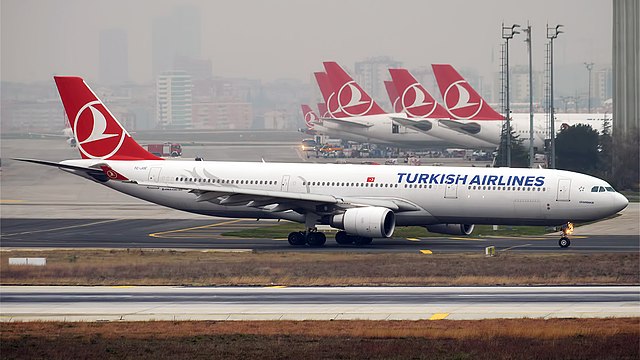

- Angola’s US$3.85bn Airport Faces Fresh Test as Turkish Airlines Ends Luanda Flights
Angola’s multibillion-dollar aviation ambitions are facing a fresh test after Turkish Airlines permanently removed Luanda from its future schedule, adding to concerns over whether the country can generate enough passenger traffic to justify one of Africa’s largest recent airport investments.
The Istanbul-based carrier has removed Luanda alongside Juba, Kinshasa, Libreville and Lusaka after initially suspending the five African destinations through October 24, 2026. AeroRoutes said the routes have now been permanently removed from future schedules, although further network changes remain possible.
For Angola, the decision comes at a sensitive moment. Dr António Agostinho Neto International Airport, located about 45 kilometres from central Luanda, was inaugurated in November 2023 after years of construction and is designed to handle as many as 15 million passengers annually.
Yet the airport handled just 756,028 passengers during 2025, according to figures from temporary operator ATO cited by Euronews — barely 5% of its theoretical annual capacity. By February 24 this year, cumulative passenger traffic since domestic operations began in November 2024 had reached 1.09 million, including 444,212 international passengers.
That gap between installed capacity and actual usage lies at the centre of Angola’s aviation challenge.
The airport, built by Chinese state-owned AVIC, has been reported to cost about US$3.85 billion after earlier estimates approached US$5 billion. Angola envisaged the facility as a modern international gateway capable of supporting Luanda’s emergence as a regional aviation and logistics hub.
But physical infrastructure does not create an aviation market by itself.
Airlines ultimately deploy aircraft where passenger demand, fares, operating costs and connecting traffic generate commercially acceptable returns. Large terminals and long runways can provide the capacity for growth, but they cannot guarantee that airlines will fill them.
Turkish Airlines’ withdrawal is particularly significant because of the carrier’s extensive African network and Istanbul hub model. The airline has traditionally connected African cities to Europe, Asia and the Middle East through Istanbul, often serving destinations where direct long-haul connectivity is comparatively limited.
The Luanda service had been operated through Kinshasa rather than as a standalone nonstop route, giving passengers access to Turkish Airlines’ wider network through Istanbul. That service ended in early May as part of a broader round of route suspensions.
The carrier has not publicly provided a detailed explanation specific to the permanent Luanda removal. Earlier temporary suspensions were associated in reporting with rising fuel costs, but the latest schedule filing itself does not establish fuel prices as the sole reason behind the permanent decision.
That distinction matters because Luanda’s challenge extends beyond the economics of one airline.
Brussels Airlines ended its Luanda operation in March 2025 as part of a wider Lufthansa Group restructuring, redirecting passengers through Lufthansa’s Frankfurt service. TAAG Angola Airlines had earlier suspended Madrid flights, while Iberia’s direct Luanda services had already been absent for years, leaving its relationship with the market dependent on codesharing arrangements.
The picture, however, is not one of wholesale abandonment. Luanda continues to be served by international airlines including TAP Air Portugal, Air France, Lufthansa, Royal Air Maroc, Ethiopian Airlines, Qatar Airways and Airlink, alongside national carrier TAAG. Compagnie Africaine d’Aviation has also added Kinshasa–Luanda services in 2026.
The more fundamental issue is whether Angola can build enough traffic to turn airport capacity into a sustainable hub.
That requires more than attracting airlines individually. Successful hubs depend on a combination of strong origin-and-destination demand, connecting passengers, competitive airport charges, efficient transfers, visa policies, tourism, business activity and a home carrier capable of feeding passengers into the network.
The full transfer of commercial services from Luanda’s older Quatro de Fevereiro International Airport to the new facility was completed only in March 2026, more than two years after the new airport was formally inaugurated. ATO has said it expects roughly 4 million passengers in 2026.
Even if achieved, that would still leave the facility operating well below its designed capacity.
That does not necessarily make the investment uneconomic in its early years. Large airports are long-lived infrastructure assets and are commonly built with spare capacity intended to accommodate traffic growth over decades.
But the larger the investment, the greater the pressure to convert that capacity into economic activity.
For Angola, the potential benefits extend beyond passenger numbers. A successful hub could support tourism, cargo, trade, hospitality and business services while strengthening Luanda’s role as a gateway between Southern and Central Africa and markets in Europe, the Middle East and Asia.
The challenge is that airline networks are increasingly disciplined by profitability.
Turkish Airlines’ latest changes extend beyond Africa. AeroRoutes says the airline has permanently removed 11 destinations from future schedules, including Billund, Ferghana, Kirkuk, Leipzig/Halle, Najaf and Turkistan alongside the five African cities. This suggests a wider process of network rationalisation rather than a decision aimed exclusively at Angola.
Yet Africa has borne a substantial share of the cuts. Earlier in 2026, Turkish Airlines suspended 18 international destinations, including Bissau, Freetown, Monrovia, Pointe-Noire and several of the five cities now permanently removed. Accra service itself remained unchanged when the proposed Accra–Monrovia continuation was withdrawn.
For African governments, the experience offers a broader infrastructure lesson.
Airports can be catalysts for economic development, but investment in capacity must be accompanied by policies that generate traffic. Tourism promotion, regional connectivity, competitive aviation taxes, efficient ground services and stronger local airlines can be just as important as terminals and runways.
Angola’s new airport is therefore entering the more difficult stage of its development.
The construction challenge has largely been solved. The commercial challenge has not.
Turkish Airlines’ departure does not determine the future of Luanda as an aviation hub, particularly while several major international carriers continue to serve the capital. But it provides a reminder that the economic value of a US$3.85 billion airport will ultimately be measured not by the scale of its infrastructure, but by how many passengers, airlines, businesses and trade flows it can sustainably attract.

