


- Accra Emerges Among Top Destinations as Brussels Airlines Links Flights with German High-Speed Rail
Accra has emerged as one of the three most popular destinations booked through a new rail-air partnership between Brussels Airlines and Deutsche Bahn, as Brussels Airport reconnects directly to Europe’s international high-speed rail network for the first time in more than a decade.
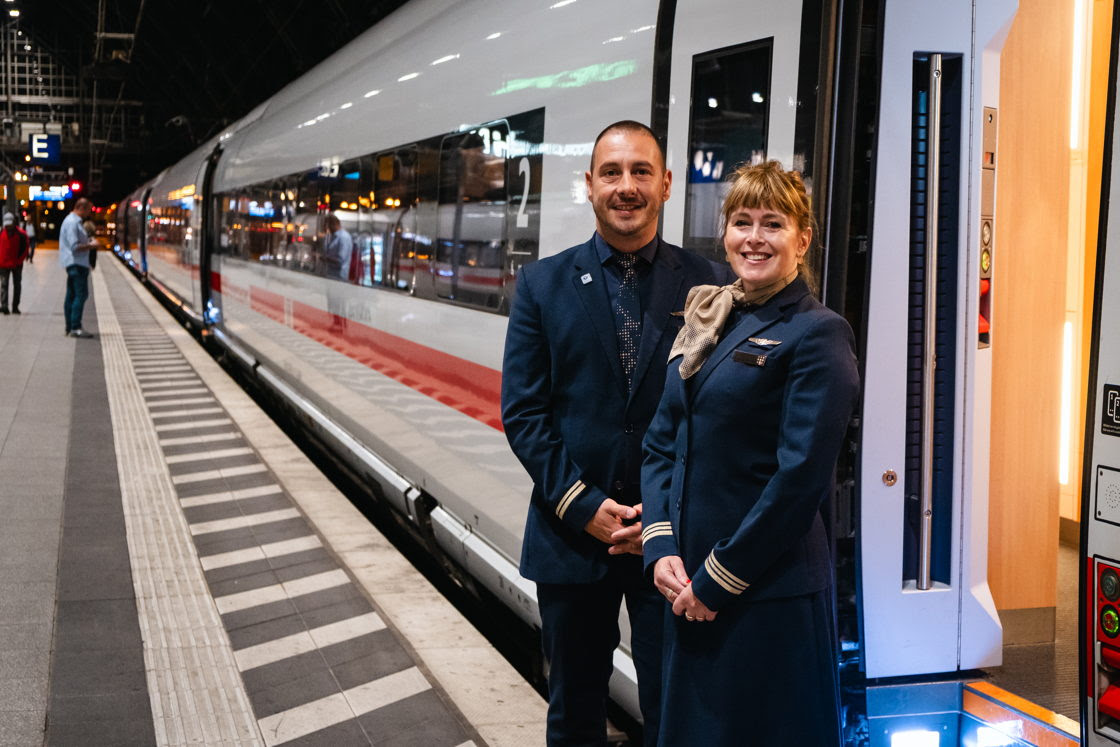
The first Deutsche Bahn ICE high-speed train from Cologne arrived at Brussels Airport on September 7, restoring a direct high-speed rail connection to the airport for the first time since 2015. Travellers from western Germany flying with Brussels Airlines can now combine their train journey and flight within a single booking.
The service is particularly notable for Ghana because Accra has already ranked alongside New York and Alicante as one of the most popular destinations booked under the intermodal product. More than 1,000 combined rail-air tickets have been sold since the Brussels Airlines-Deutsche Bahn partnership was announced in February.
That early demand suggests the new arrangement could strengthen Brussels Airlines’ ability to draw Ghana-bound passengers from beyond the immediate Belgian market. Travellers in western Germany can reach Brussels Airport by high-speed train and connect to the airline’s international network without having to make separate rail and flight bookings.
The inaugural ICE service departed Cologne at 6:11 a.m., stopped at Aachen, Liège and Leuven, and reached Brussels Airport at 8:29 a.m. before continuing roughly five minutes later to Antwerpen-Centraal. The route effectively places Brussels Airport more directly within the rail catchment area of western Germany while also providing arriving air passengers with onward access towards Cologne.
For Ghana’s aviation market, the significance lies in the expansion of the effective origin market feeding flights to Accra. Instead of depending solely on passengers beginning their journey in Belgium, Brussels Airlines can potentially attract travellers from German cities connected to Cologne and the wider Deutsche Bahn network.
The single-ticket arrangement also removes part of the friction associated with self-connecting journeys. Passengers using the partnership benefit from a guaranteed connection in the event of delays and can earn miles under the Lufthansa Group’s Miles & More programme, reducing some of the risks normally associated with independently combining rail and air tickets.
The economics of such partnerships are becoming increasingly important for European airlines as they seek to broaden access to airports without adding short-haul feeder flights. Nina Öwerdieck, Chief Financial Officer of Brussels Airlines, said the arrangement allowed the carrier to attract additional passengers to its network “without the need of adding flights”.
That model could be particularly useful for long-haul and Africa-focused routes. If rail can substitute for part of the short-distance feeder journey, airlines may be able to expand the geographic reach of their hubs while concentrating aircraft capacity on longer routes where aviation has a stronger comparative advantage.
For Brussels Airport, the strategy is also about strengthening its position as an intermodal transport hub rather than simply an aviation facility. Chief Executive Arnaud Feist said the high-speed rail connection would give passengers more sustainable options for cross-border travel while connecting them to more than 180 destinations in the airport’s wider network.
There are two return services each day between Cologne and Antwerp. Trains from Cologne call at Brussels Airport at 8:29 a.m. and 4:28 p.m., while services travelling from Antwerp towards Cologne stop at the airport at 11:29 a.m. and 2:29 p.m.
The trains are operated by Deutsche Bahn in cooperation with Belgian rail operator NMBS, which provides drivers for the service. Deutsche Bahn described the route as a link between two major transport hubs: Cologne for international long-distance rail and Brussels Airport for onward air travel.
For Accra, being among the strongest early destinations is commercially significant because it indicates that demand for Ghana travel extends beyond traditional point-to-point markets. The intermodal arrangement potentially gives business travellers, tourists and members of the Ghanaian diaspora in western Germany another route into the Accra market without first taking a separate connecting flight.
It could also sharpen competition between European hubs for West African traffic. Airlines serving Accra increasingly compete not only on airfares and flight frequencies but also on the convenience of the entire journey, including ground access, connection protection and the ease with which passengers can move across countries before boarding their long-haul flight.
The railway connection should not, however, be interpreted as automatically translating into higher passenger volumes to Ghana. The source provides early booking demand but does not disclose how many of the more than 1,000 tickets sold are specifically for Accra or whether the service has produced incremental traffic rather than shifted passengers from other connecting options.
Its significance is nevertheless clear.
The return of high-speed rail to Brussels Airport expands the airport’s practical catchment area, while the integrated booking system reduces some of the barriers involved in combining train and air travel.
For Ghana, the fact that Accra is already one of the three most popular destinations under the new product suggests that the route could benefit disproportionately if intermodal travel gains wider acceptance.
The development therefore extends beyond European railway infrastructure. It is also about how African destinations such as Accra are being plugged into a broader transport ecosystem in which the journey to Ghana can begin not at an airport, but at a railway station hundreds of kilometres away.

