


- AfDB, UNICEF Commit US$58 million to Restore Port Sudan’s Water System
The African Development Bank and UNICEF have launched a US$58 million emergency intervention to restore water and sanitation services in Port Sudan, where conflict-related displacement has pushed essential infrastructure close to collapse.
The initiative, financed through the African Development Fund, is aimed at rehabilitating critical water systems and expanding sanitation services in Sudan’s main Red Sea city, which has become a major refuge for people fleeing violence in other parts of the country.
Of the total package, US$54.80 million will go into restoring water supply infrastructure, repairing distribution systems and strengthening sanitation services in Port Sudan and selected vulnerable communities.
The intervention comes at a time when the city’s water supply is meeting less than 40.00% of demand, raising serious concerns about public health, urban resilience and the capacity of host communities to absorb the growing number of internally displaced persons.
The project is expected to provide safe water access to as many as 750,000 people. This includes about 600,000 residents of Port Sudan as well as a large population of displaced people who have moved into the city as Sudan’s conflict continues to disrupt lives, livelihoods and basic services elsewhere.
Sanitation services are also expected to reach an additional 200,000 people, with support extending to vulnerable communities in conflict-affected areas of North and South Kordofan.
For Port Sudan, the intervention is both humanitarian and strategic.
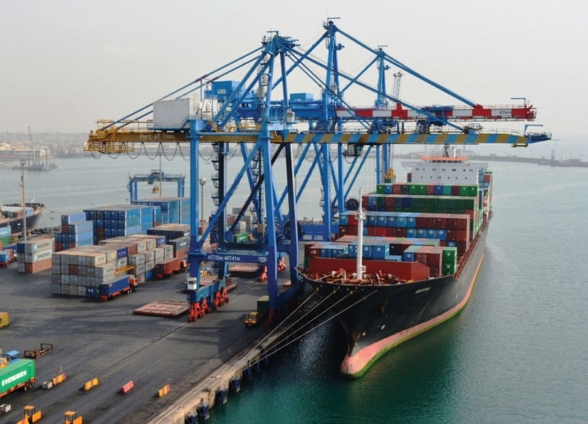
The city has become one of Sudan’s most important administrative, commercial and humanitarian centres since the outbreak of conflict. Its port remains critical to trade, aid delivery and logistics, while its population has expanded rapidly as displaced families seek safety.
That population pressure has placed enormous strain on water networks, sanitation facilities, health systems and local authorities.
In many fragile and conflict-affected settings, water infrastructure is among the first systems to fail under sudden population growth. Pipes, pumps, reservoirs and distribution networks built for one population size are forced to serve many more people, often without adequate maintenance, spare parts or financing.
The result is rationing, unreliable supply, unsafe water use and rising public health risks.
The AfDB-UNICEF intervention seeks to address both the immediate emergency and the longer-term weakness of the system.
Investments will focus on repairing water sources, pipelines and distribution networks, while also improving sanitation services and strengthening the capacity of local water authorities.
This dual approach is important.
Emergency water trucking or temporary supply points can help in the short term, but Sudan’s crisis requires more durable infrastructure solutions. Without system rehabilitation, Port Sudan risks remaining trapped in a cycle of shortages, breakdowns and disease threats.
UNICEF, which will oversee implementation, has warned that limited access to clean water increases the risk of disease outbreaks, especially among children.
That warning is particularly significant because water and sanitation failures often become public health crises before they become infrastructure debates.
When clean water is unavailable, households may turn to unsafe sources. Poor sanitation then increases the risk of diarrhoeal diseases, cholera and other waterborne infections. Children, displaced families, pregnant women and the elderly are often the most vulnerable.
In that context, restoring reliable water and sanitation systems is not simply a matter of urban service delivery. It is a life-saving intervention.
The project also reflects a changing approach to development financing in fragile states.
Development institutions are increasingly being drawn into the space between humanitarian response and long-term infrastructure investment. In conflict-affected countries, the urgent need is often to keep essential systems functioning while also building resilience for future recovery.
The AfDB’s support through the African Development Fund shows how concessional finance can be used to respond to crisis conditions without abandoning longer-term development objectives.
By working with UNICEF, the bank is also relying on an implementation partner with strong humanitarian field experience and operational reach in vulnerable communities.
That partnership model is critical in Sudan’s current context, where conflict, displacement and institutional stress make conventional infrastructure delivery difficult.
The programme’s focus on strengthening local water authorities is equally important.
Infrastructure repair alone will not solve Port Sudan’s water crisis if local institutions lack the technical, financial and operational capacity to maintain systems, manage demand and respond to future shocks.
A resilient water system requires functioning institutions, trained personnel, reliable maintenance, proper monitoring and financing mechanisms that can support continuous service delivery.
The Port Sudan intervention also underlines the link between conflict and urban infrastructure failure.
As people flee violence, safer cities become pressure points. Host communities are asked to share already limited services with displaced populations. If infrastructure is not expanded quickly, tension can rise between residents and displaced families.
By increasing access to safe water and sanitation, the project could help reduce social pressure while protecting public health.
The inclusion of North and South Kordofan also shows that the intervention is not limited to Port Sudan alone.
Communities in those conflict-affected regions face severe vulnerabilities, and sanitation support could help reduce disease risks in areas where public services have been badly weakened.
The broader lesson is that water security is now central to crisis response.
In fragile states, the collapse of water and sanitation systems can deepen humanitarian emergencies, fuel displacement, increase disease outbreaks and undermine recovery prospects.
For Sudan, where conflict has already damaged institutions and disrupted economic life, restoring basic services is a necessary foundation for stability.
The AfDB and UNICEF intervention will not by itself resolve Sudan’s humanitarian crisis. But it can help prevent conditions in Port Sudan from deteriorating further.
It can also provide a model for combining emergency relief with infrastructure rehabilitation in fragile urban centres facing rapid displacement.
The success of the project will depend on speed, coordination and effective implementation.
Communities need water now. But they also need systems that can continue functioning after the immediate emergency phase.
That is why the project’s emphasis on both rehabilitation and institutional strengthening matters.
Port Sudan’s water crisis is a warning about what happens when conflict, displacement and weak infrastructure collide.
The US$58 million intervention is an attempt to stop that warning from becoming a wider public health disaster.

