


- Afram Plains Emerges as New Agribusiness Frontier as President Mahama Promises Bridge Connectivity
President John Dramani Mahama’s call for Ghanaian investors to turn their attention to the Afram Plains is more than a regional development appeal. It is a test of whether Ghana can use infrastructure to unlock one of its most promising but long-neglected agricultural corridors.
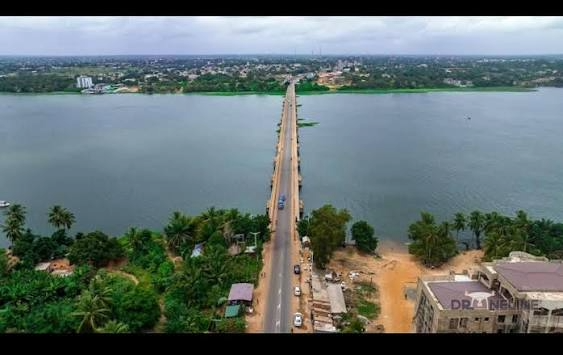
Addressing members of the Kwahu Business Advocacy Group, the President described the planned bridge over the Afram River at Ekye Amanfrom as a “game changer” that could transform the Afram Plains from an isolated production zone into a competitive investment destination for agriculture, agro-processing and tourism.
The message was direct: infrastructure is coming, and Ghanaian investors should not wait until foreign capital has taken the most attractive opportunities.
For decades, the Afram Plains has been known for its agricultural potential but constrained by weak connectivity. The area has fertile land, water resources, and the possibility of large-scale production, but transport bottlenecks have limited commercial farming, raised logistics costs and weakened access to markets. In agriculture, distance is not measured only in kilometres. It is measured in how long it takes to move produce, how much it costs to transport inputs, how quickly goods can reach processors, and how much value is lost between the farmgate and the final market.
A bridge over the Afram River would not merely connect two points. It would change the economics of the entire area. By reducing travel constraints, easing movement of goods and people, and improving access to markets, the project could make farming, processing, storage, logistics and tourism more viable.
The President wants domestic investors to move early into rice cultivation and milling, cashew processing, palm oil production, rubber plantations and other agricultural value chains. These are not random sectors. They are areas where Ghana already has demand, import-substitution potential, export opportunity or industrial linkages.
Rice is particularly important. Ghana continues to spend heavily on rice imports despite having land and water resources that could support domestic production. If the Afram Plains can support large-scale rice farming and milling, it could help reduce import dependence, create rural jobs and strengthen food security.
But rice production alone will not be enough. The real value lies in the full chain: irrigation, mechanisation, seed systems, storage, milling, packaging, branding and market distribution. If investors treat the Afram Plains only as a raw production zone, the country will miss the larger opportunity. The region must be developed as an integrated agribusiness corridor.
That means farms must be linked to processors. Processors must be linked to markets. Roads must connect to storage facilities. Storage must reduce post-harvest losses. Financing must reach both large investors and smaller outgrower farmers. The bridge can open the door, but it cannot build the entire ecosystem by itself.
This is where Ghana’s agricultural policy often faces its hardest test.
The country has no shortage of fertile land or political speeches about agriculture. What has often been missing is execution discipline. Many regions have been described as future food baskets, but weak infrastructure, poor land administration, unreliable financing, limited irrigation, inadequate processing capacity and policy inconsistency have prevented full transformation.
The Afram Plains must not become another promise trapped in speeches.
For the President’s vision to work, the bridge must be accompanied by a serious investment framework. Government must clarify land access arrangements, protect community interests, support feeder roads, improve electricity supply, expand irrigation infrastructure, promote storage and warehousing, and create incentives for agro-processing firms to locate close to production areas.
Investors also need certainty. Agribusiness is capital-intensive and often exposed to climate, price, logistics and policy risks. A serious investor considering rice, cashew, palm oil or rubber will ask practical questions: Who owns the land? How secure are leases? What is the road condition beyond the bridge? Is there reliable power? Is water access guaranteed? Can produce reach Tema, Accra, Kumasi or export markets efficiently? Are there skilled workers? Are local communities supportive?
If these questions are not answered clearly, the bridge may improve access without automatically triggering investment at the scale envisioned.
Mahama’s warning that Ghanaian investors should move before foreign firms dominate the opportunities is also politically and economically significant. Ghana has often watched strategic sectors become attractive only after foreign investors enter with capital, technology and patience. Domestic capital then complains about exclusion, even though it hesitated when risks were higher.
Local investors understand Ghana’s market, food demand, consumer behaviour, labour environment and political economy better than most foreign investors. They can build agribusinesses that are rooted in local supply chains and community relationships. But they must also be willing to take long-term positions, not merely wait for quick returns.
Agriculture rewards patience, scale and discipline. It is not a speculative sector for investors looking for immediate margins. Building rice farms, processing plants, plantations and logistics systems takes time. It requires capital, professional management and a willingness to work with local farmers.
If Ghanaian investors enter the Afram Plains seriously, they should not do so by displacing smallholders. They should build models that include them. Outgrower schemes, aggregation centres, mechanisation services, contract farming and shared processing facilities could allow communities to benefit from large-scale investment rather than become spectators on their own land.
Agricultural transformation must not be measured only by the number of hectares cultivated or the size of private investments announced. It must also be measured by rural incomes, jobs created, farmer productivity, local ownership, women’s participation, youth employment and the ability of communities to move from subsistence to commercial value chains.
The Afram Plains has the potential to become a model for inclusive agribusiness if government and investors get the structure right.
Beyond agriculture, Mahama’s tourism argument deserves attention. The Volta Lake remains one of Ghana’s most underutilised economic assets. Lakeside resorts, marinas, hospitality infrastructure, water transport, eco-tourism and conference facilities could broaden the Afram Plains economy beyond farming.
This matters because successful regional development cannot depend on a single sector. Tourism can create jobs in hospitality, transport, food services, crafts, entertainment and local supply chains. Combined with agriculture, it could create a more diversified local economy.
But tourism will also require infrastructure, environmental protection, security, sanitation, skilled service workers and credible destination planning. Resorts and marinas cannot thrive where access is poor, waste management is weak or communities are excluded from benefits.
The bigger idea behind the President’s pitch is that infrastructure should serve as a trigger for private-sector activity. This is the right logic. Roads, bridges, ports, power lines and digital networks do not create transformation by their mere existence. They create transformation when private capital, skills and enterprise respond to the access they provide.
That is why the Afram Plains bridge should be understood as an economic platform, not just a physical project.
If it is completed and properly integrated into a broader development plan, it could change land values, reduce transport costs, attract agribusiness firms, support agro-processing, expand tourism, create jobs and improve market access for farmers. If poorly coordinated, it could simply make it easier to extract raw produce without building local value.
Ghana must avoid a familiar development trap: building infrastructure first and thinking about the economic ecosystem later. The investment strategy must move ahead of the bridge’s completion. Government, local authorities, traditional leaders, private investors, financial institutions and farmer groups should begin aligning around priority value chains, land-use planning, processing zones and investment incentives.
There should also be safeguards. Large-scale investment in fertile agricultural land can create conflict if communities feel excluded or displaced. The Afram Plains development agenda must therefore be transparent, consultative and fair. Land must not become the next source of tension. Investors must respect local rights, compensate fairly where necessary and build partnerships that communities can trust.
For Ghana’s broader economy, the opportunity is clear. The country needs to reduce food imports, raise agricultural productivity, create jobs outside Accra and Kumasi, and build regional economies that can support industrialisation. The Afram Plains can contribute meaningfully to that agenda if its potential is matched with execution.
Mahama’s pitch is therefore timely. It challenges Ghanaian investors to stop seeing agriculture as a political slogan and start seeing it as a serious commercial opportunity. It also challenges government to prove that infrastructure promises can be converted into productive investment.
The planned Ekye Amanfrom bridge may indeed be a “game changer.” But bridges do not transform economies alone. They only make transformation possible.

