

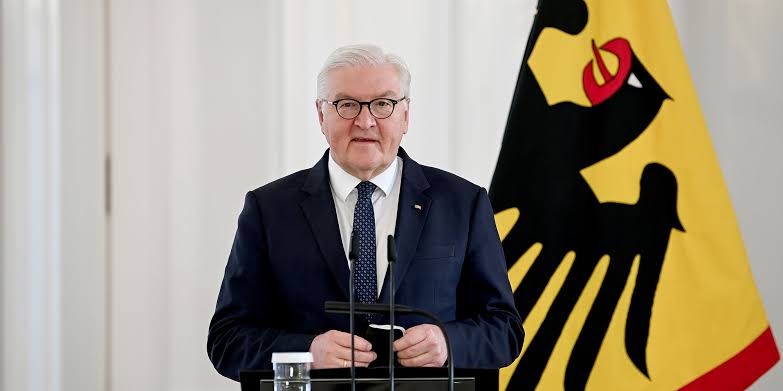

- Africa Must Remove Trade Barriers to Unlock Investment and Industrial Growth — German President
German President Frank-Walter Steinmeier has urged African governments to accelerate economic reforms, dismantle barriers to cross-border commerce and open new trade routes, warning that the continent’s considerable economic potential will remain constrained without deeper regional integration and more predictable investment conditions.
Speaking at the sixth German-African Business Summit in Accra on Tuesday, November 24, 2026, Steinmeier identified the African Continental Free Trade Area (AfCFTA) as a critical instrument for expanding trade, attracting investment and creating employment opportunities for Africa’s rapidly growing population.
His intervention comes as Germany seeks to diversify its international economic partnerships amid increasing uncertainty in traditional export markets, particularly North America and China, while African countries attempt to translate their continental trade agreement into functioning regional supply chains.
The German President challenged African leaders to sustain reforms that would make it easier for businesses to move goods, services and capital across national borders.
“Please do not waver in your endeavours to implement necessary reforms and create ways to facilitate trade on your continent and open up new trade routes.”
The remarks reflect a growing recognition that Africa’s economic transformation will depend not simply on attracting foreign capital but on creating an integrated market capable of supporting industrial production, investment and sustained commercial activity.
Steinmeier argued that removing trade obstacles would create opportunities for businesses operating both within Africa and between the continent and Germany.
He described the AfCFTA as an important foundation for that transformation, expressing optimism about its potential to unlock markets that remain fragmented despite geographical proximity and shared economic interests.
The economic significance of the German President’s call becomes clearer when measured against Africa’s existing trading patterns.
Recent data referenced by the United Nations Economic Commission for Africa indicate that intra-African trade reached approximately US$217.80 billion in 2025, an increase of 7.00% from the preceding year.
Despite the improvement, trade between African countries remains comparatively limited relative to the continent’s overall commercial engagement with international markets.
The African Development Bank estimates that intra-African trade accounted for approximately 13.20% of total African goods trade in 2024, compared with about 38.00% in Asia.
The figures illustrate the scale of Africa’s integration challenge and the substantial opportunity associated with reducing barriers between neighbouring economies.
They also demonstrate why tariff reductions alone may be insufficient to deliver the full economic benefits of the AfCFTA.
Transport infrastructure, border administration, customs procedures, product standards and the availability of trade finance all influence whether businesses can access markets beyond their home countries.
For many African enterprises, these barriers can be more consequential than the tariffs formally imposed on goods.
The World Bank’s August 2026 report, Integrating Africa: From Threads to Hubs, identified the need to connect regional production networks, strengthen transport and logistics systems, and reduce regulatory obstacles that prevent African economies from trading more effectively with one another.
The report estimates that deeper liberalisation of transport, telecommunications, financial and professional services could increase trade in services within the AfCFTA area by approximately 60.00%–64.00% by 2035.
These are modelled potential gains rather than guaranteed outcomes, but they reinforce the economic argument for moving beyond trade agreements towards practical implementation.
For African manufacturers, improved regional integration could create access to larger consumer markets and allow production activities to be distributed across different countries according to their competitive advantages.
Agricultural producers could benefit from improved access to neighbouring food markets, while transport and logistics companies could gain from higher commercial volumes.
However, achieving these benefits will require sustained investments in infrastructure and credible coordination among participating governments.
Steinmeier’s appeal also reflects changing priorities within Germany’s international economic strategy.
The German economy has historically depended heavily on exports of manufactured goods, industrial machinery, vehicles, chemicals and advanced technologies.
That dependence has made its companies sensitive to changes in global demand, trade restrictions and geopolitical tensions affecting established markets.
As uncertainty increases in North America and China, African markets are attracting renewed attention as potential destinations for investment, industrial partnerships and commercial expansion.
The German President disclosed that trade between Germany and African countries increased by approximately 10.00% in 2025, reaching a record level.
Nevertheless, he acknowledged that considerable opportunities remain unrealised.
He encouraged German companies to become more willing to explore African markets and accept the commercial risks associated with entering new investment destinations.
His message was directed not only at African governments but also at German businesses, which he urged to demonstrate greater ambition in their engagement with the continent.
The German-African Business Summit, taking place from November 23 to 25 at the Kempinski Hotel Gold Coast City in Accra, brings together business executives, investors and policymakers to examine opportunities involving industrialisation, energy, mining, digital technologies, mobility and trade finance.
The gathering is jointly organised by the Sub-Saharan Africa Initiative of German Business and the Delegation of German Industry and Commerce in Ghana.
For Ghana, hosting the summit carries considerable economic significance.
The country hosts the AfCFTA Secretariat and has positioned itself as a potential gateway for international businesses seeking access to the wider African market.
However, that ambition depends on whether Ghana can offer efficient logistics infrastructure, predictable regulatory arrangements and competitive production costs.
Improving the efficiency of Tema and Takoradi ports, strengthening road and rail connections to neighbouring countries and reducing delays associated with customs clearance would be important steps towards translating the country’s geographical advantages into commercial gains.
The opportunity is particularly relevant for Ghana’s trading relationships with Burkina Faso, Mali, Côte d’Ivoire and Togo, where transport connectivity and border procedures influence the cost and reliability of regional commerce.
Stronger trade corridors could support the movement of agricultural commodities, manufactured products and industrial inputs, improving opportunities for Ghanaian exporters and logistics companies.
Yet Ghana’s strategic location will provide limited competitive advantage if businesses face high transport costs, fragmented documentation requirements or administrative delays.
The German President’s intervention therefore presents a practical challenge to Ghana and other African economies seeking to benefit from the AfCFTA.
It also raises questions about the nature of Africa’s relationship with major industrial economies.
Historically, much of the continent’s international trade has involved exporting raw materials and importing manufactured products.
A deeper partnership with Germany could provide opportunities for technology transfer, vocational training, industrial investment and the development of local suppliers.
However, those benefits cannot be assumed simply because bilateral trade increases.
African governments will need to establish investment frameworks that encourage domestic value addition and allow local enterprises to participate meaningfully in international production networks.
President John Dramani Mahama similarly used the summit to emphasise industrial development and the importance of converting international partnerships into productive investment.
He called for greater policy consistency and stronger institutions to support investor confidence and ensure that economic cooperation contributes to employment and shared prosperity.
For Ghanaian businesses, the AfCFTA creates opportunities to diversify export markets beyond traditional destinations in Europe, Asia and North America.
Companies involved in processed foods, pharmaceuticals, textiles, construction materials and other manufactured products could benefit from access to larger regional markets.
However, businesses will need to meet product quality requirements, establish reliable distribution systems and demonstrate their capacity to fulfil contracts across borders.
Small and medium-sized enterprises are particularly exposed to these challenges because they often lack the financing and technical resources available to larger exporters.
The United Nations Economic Commission for Africa has consequently emphasised practical support for businesses navigating trade licences, certificates of origin and product conformity requirements.
Such interventions are essential because trade agreements generate little commercial benefit when businesses cannot comply with the procedures needed to use them.
The central economic question raised by Steinmeier’s remarks is whether African governments are prepared to implement the domestic reforms required to make continental trade integration commercially meaningful.
The AfCFTA provides a framework for reducing barriers, but its effectiveness will depend on the decisions governments take on infrastructure, customs administration, competition, investment and regional cooperation.
For Germany, deeper integration could create access to expanding markets and support diversification of international trade relationships.
For Ghana, it offers an opportunity to strengthen the country’s position as a regional logistics, investment and industrial hub.
And for African businesses, successful implementation could reduce the costs of reaching customers across borders while encouraging investment in production and supply chains.
Steinmeier’s message ultimately places responsibility on both sides of the relationship.
African governments must create the conditions for investment and trade, while German businesses must demonstrate a willingness to invest in the continent’s productive capacity rather than view Africa solely as a source of commodities or a destination for finished products.
With intra-African commerce already exceeding US$217 billion annually, the opportunity for expansion is substantial.
Whether that potential is realised will depend less on additional declarations of economic cooperation than on the practical removal of the barriers that continue to separate African businesses from African markets.

