


- Africa Sports Alliance Pushes Youth Empowerment Through Sport
Africa Sports Alliance is deepening its push to use tennis as a vehicle for youth empowerment, education and social transformation, as the organisation expands efforts to create opportunities for young people beyond the classroom.
Founded eight years ago, the non-governmental organisation has built its work around a simple but powerful idea: sport can be more than recreation. It can be a tool for discipline, leadership, confidence, cognitive development and economic opportunity.
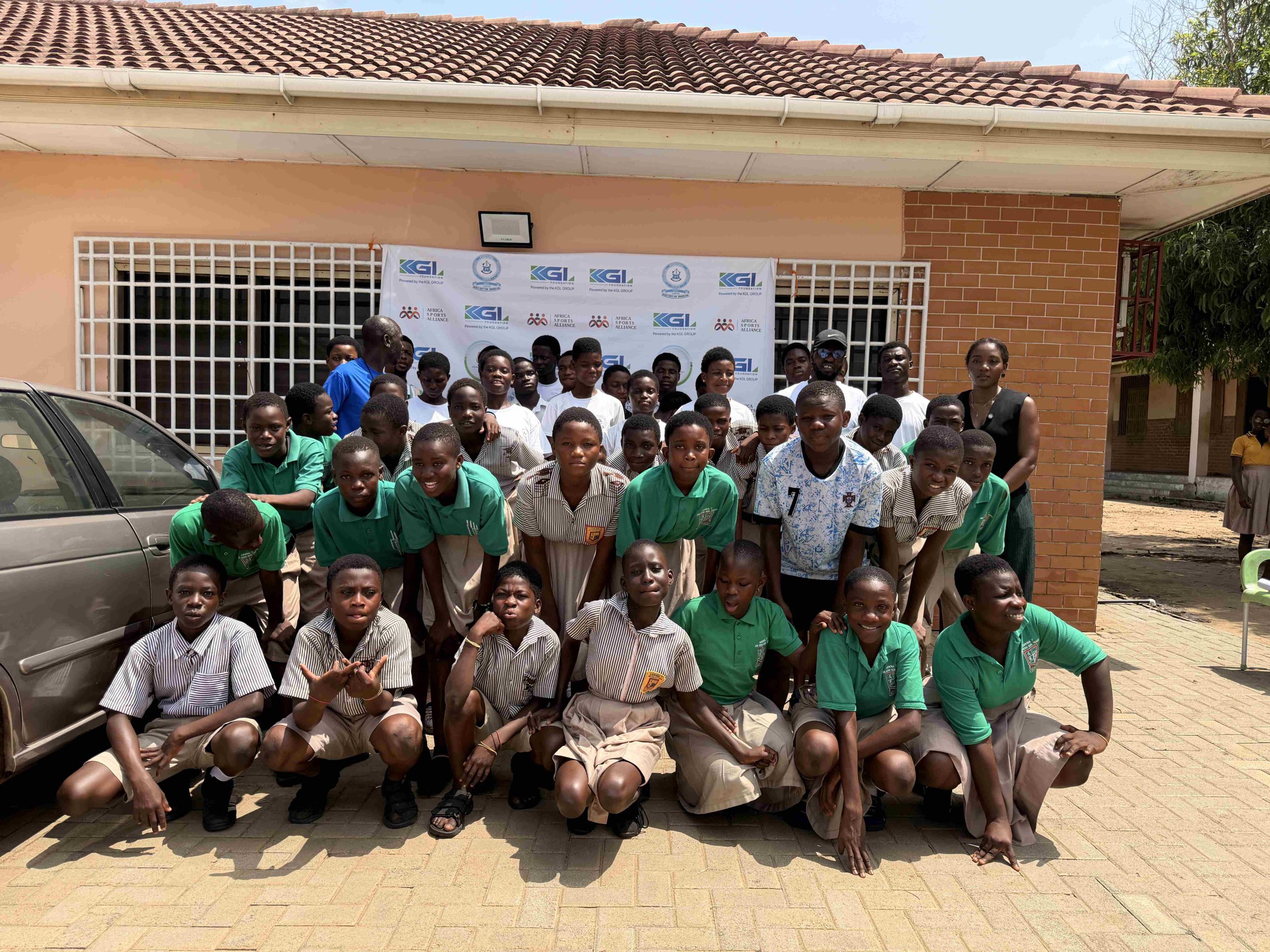
That mission was brought to life during a recent outreach programme at Teshie Lekma 1 Junior High School, organised in partnership with the KGL Foundation.
The initiative engaged 20 beneficiaries through mentorship, interaction and practical exposure to the transformative power of sport, particularly tennis.
For Africa Sports Alliance, the tennis court is not merely a place where children learn how to hit a ball. It is a space where they learn focus, resilience, teamwork, problem-solving and self-belief.
Speaking during the event, Founder of Africa Sports Alliance, Naa Shika Adu, a former professional women’s tennis player, encouraged the students to see sport as a pathway to personal growth and future opportunity.
Drawing from her own journey as an athlete, she challenged the long-held misconception that sportsmen and women are not intellectually grounded or that sports should be seen as separate from education.
According to her, sport has both practical and theoretical dimensions and contributes meaningfully to intellectual development by sharpening critical thinking, improving discipline and strengthening cognitive ability.
“Being an athlete requires immense hard work and dedication,” she said. “Training the human body is one of the most demanding tasks, and excellence in sports demands persistence and resilience.”
She urged the students to embrace leadership, remain curious and keep learning both on and off the field while pursuing their dreams.
“I encourage you all to embrace leadership roles, to remain curious, and to continue learning both on and off the field while chasing your dreams,” she added.
Her message was particularly important in a country where many young people with sporting talent often lack structured pathways to develop their abilities, access mentorship or convert passion into professional opportunity.
The organisation believes that every child who steps onto the court with a racquet is also stepping into a learning environment that builds life skills. Discipline, patience, concentration, emotional control and respect for rules are all part of the sporting experience.
These values, the organisation says, can help young people succeed not only in sport, but also in school, work and society.
Beyond mentorship, Africa Sports Alliance is also creating employment pathways through structured programmes in volunteerism, coaching, player development, sports science and athlete support services.
These initiatives are designed to expose young people to career opportunities within the sports ecosystem while equipping them with practical skills.
So far, 20 young beneficiaries have participated in ASA’s youth employment programme, gaining hands-on training and exposure to areas that could support future careers in sport and recreation.
This aspect of ASA’s work is important because Ghana’s sports sector is often viewed narrowly through the lens of elite competition.
Yet modern sport creates opportunities in coaching, event management, fitness training, sports medicine, performance analysis, facility management, media, athlete welfare, sponsorship and community development.
By helping young people understand these pathways, ASA is contributing to a broader conversation about sport as an economic and social development tool.
The partnership with KGL Foundation also highlights the role corporate and development partners can play in supporting community-based sports initiatives.
For many schools and communities, access to structured sports programmes remains limited. Equipment, coaching, safe playing spaces and mentorship are often unavailable, especially for children from less privileged backgrounds.
ASA’s work seeks to bridge that gap by bringing opportunities directly to young people and showing them that sport can expand their imagination of what is possible.
As the organisation scales its impact, Naa Shika Adu is calling on corporate organisations, national sports associations, the Youth Employment Agency, development partners, government agencies and individuals to support ASA’s mission.
She believes stronger partnerships can help create more opportunities for young people, promote education through sport and build a more inclusive future.
Ghana has a youthful population, but many young people continue to face limited access to mentorship, employment pathways and structured personal development opportunities.
Sport can help fill part of that gap, especially when combined with education, skills training and institutional support.
For ASA, the goal is not simply to produce tennis players. It is to produce confident, disciplined and opportunity-ready young people who can become leaders on and off the court.
The outreach at Teshie Lekma 1 Junior High School therefore represents more than a one-day event.
It is part of a wider effort to show that when children are given access, encouragement and guidance, sport can become a doorway to education, confidence and future employment.
As Africa Sports Alliance continues to expand its work, its message remains clear: a racquet in the hands of a child can be more than sporting equipment. It can be the beginning of purpose, discipline and opportunity.

