

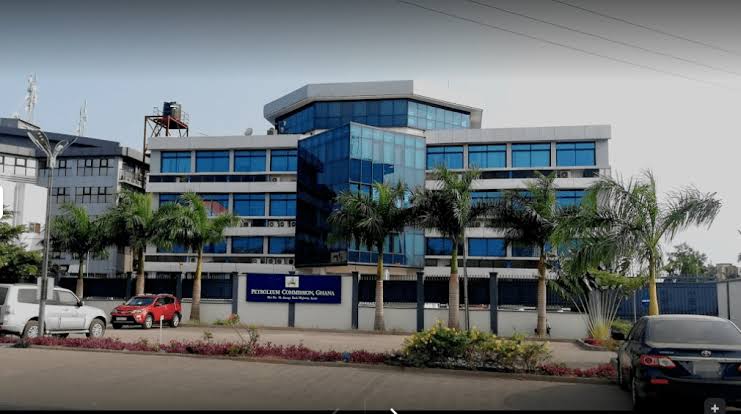

- African Oil Regulators Push Closer Ties as Ghana and Uganda Target Stronger Local-Content Outcomes
Ghana and Uganda are deepening cooperation between their petroleum regulators as both countries confront different stages of the same economic challenge: how to convert oil reserves into investment, industrial capability and long-term domestic value. The engagement between Ghana’s Petroleum Commission and Uganda’s Petroleum Authority reflects a growing recognition that petroleum competitiveness depends not only on geology, but also on the quality of the institutions governing exploration, production and local participation.
The two regulators are exchanging practical experience on upstream operations, petroleum regulation and local-content development, while Ghana is also looking to Uganda for lessons in onshore resource management, environmental protection and community engagement. The relationship is therefore reciprocal rather than a one-way transfer of expertise from an established producer to an emerging one.
Uganda is approaching a defining moment in its petroleum development, with commercial production expected before the end of 2026. The country has estimated recoverable reserves of about 1.65 billion barrels, with peak production projected at approximately 230,000 barrels per day, making the transition from development to production one of the most consequential economic projects in its recent history.
For Kampala, Ghana offers practical experience in what happens after discovery, from licensing and regulatory oversight to local participation and the management of expectations surrounding petroleum wealth. Ghana has already experienced the transition from exploration into production and now faces the more mature challenge of attracting fresh capital into an upstream sector shaped by ageing fields, higher development costs and growing competition for global energy investment.
That makes regulatory cooperation an economic issue rather than merely an institutional exercise. Oil companies commit large amounts of capital years before production begins, meaning fiscal terms, licensing certainty, regulatory competence and the predictability of local-content rules can matter almost as much as the quality of the resource itself.
Ghana’s Petroleum Commission has increasingly positioned regulatory reform, investor engagement and regional cooperation as part of the country’s effort to remain competitive for upstream capital. The Commission says it wants to create an enabling investment environment through transparent regulation, competitive fiscal terms and greater collaboration with other petroleum jurisdictions.
That agenda has gained urgency as Ghana seeks a new cycle of upstream investment. Shell and Chevron have signed a non-binding preliminary agreement with Ghana relating to potential production rights in the South Deepwater Tano Cape Three Points block, while government undertakes a broader review of the oil and gas sector.
The policy challenge is therefore to preserve the regulatory credibility built during Ghana’s first decade as an oil producer while making the country sufficiently attractive for another generation of capital. An oil jurisdiction can possess commercially viable reserves and still struggle to attract investment if investors believe fiscal conditions, approval processes or regulatory expectations are too uncertain.
Uganda faces almost the opposite problem. It is preparing for first oil and therefore has an opportunity to learn from countries that have already experienced the institutional pressures associated with moving from exploration and development into commercial production.
That timing matters because some of the most expensive petroleum-governance mistakes are made early, when governments are negotiating with operators, creating regulatory systems and designing the rules that determine how communities and local companies participate. Uganda’s decision to draw on Ghana’s experience could allow it to avoid institutional weaknesses before production reaches scale.
The exchange is equally useful for Ghana because Accra is examining greater onshore petroleum potential, including resources associated with the Voltaian Basin. Uganda’s experience with onshore operations, where wells, roads, pipelines and other infrastructure interact directly with communities and ecosystems, therefore offers Ghana lessons that its predominantly offshore petroleum history does not fully provide.
Onshore development can create more complex questions around compensation, land access, environmental monitoring, benefit-sharing and community participation. Those issues can determine whether a petroleum project retains social legitimacy or becomes a source of conflict, making early institutional preparation particularly important.
Local content may be the most economically consequential part of the Ghana-Uganda relationship. African petroleum producers have often exported crude while continuing to import much of the equipment, technology, finance and technical expertise required to produce it, limiting the domestic development impact of hydrocarbon wealth.
Ghana has spent years trying to increase local participation in upstream procurement, services and employment and has also engaged regulators in countries including Nigeria and Kenya. The more ambitious objective should be to build African companies capable of acquiring expertise in one market and then competing across other petroleum jurisdictions rather than remaining permanently dependent on protected domestic contracts.
That approach could transform local content from a national procurement policy into a regional industrial strategy. Ghanaian engineers and service companies that develop capabilities through domestic upstream projects and later compete successfully in Uganda, Nigeria or Senegal would create significantly greater economic value than businesses that survive only because of local preferences.
The broader pattern also points to a form of African regulatory diplomacy. Ghana’s Petroleum Commission has pursued peer-learning and institutional engagement with Kenya and regulators from countries including Niger and Somalia, suggesting that petroleum-producing states are increasingly looking within Africa for technical knowledge rather than repeatedly rebuilding regulatory expertise from scratch.
That cooperation could become more important as global investors become increasingly selective. African oil projects compete not only with each other but with opportunities in the Middle East, Latin America and other producing regions, making regulatory competence and institutional predictability part of the investment proposition rather than simply administrative considerations.
The risk is that regulatory cooperation remains ceremonial, producing meetings, memoranda and workshops without changing how petroleum projects are governed. The greater opportunity is to translate the relationship into permanent technical cooperation, regulatory benchmarking, joint training, local-content partnerships and shared approaches to environmental and community management.
For Ghana, the relationship creates an opportunity to export regulatory experience while absorbing lessons from Uganda’s onshore petroleum model. For Uganda, it provides an institutional shortcut as the country moves into commercial oil production, reducing the need to learn every lesson through its own costly experience.
The larger African test is not simply how many barrels Ghana, Uganda or other producers can bring to market. It is whether regulators can build systems strong enough to convert petroleum into investment, jobs, industrial capabilities and sustainable economic value rather than allowing another commodity boom to pass through national economies with limited structural transformation.

