


- Africa’s Green Transition Must Support Jobs and Industrial Growth – Jinapor
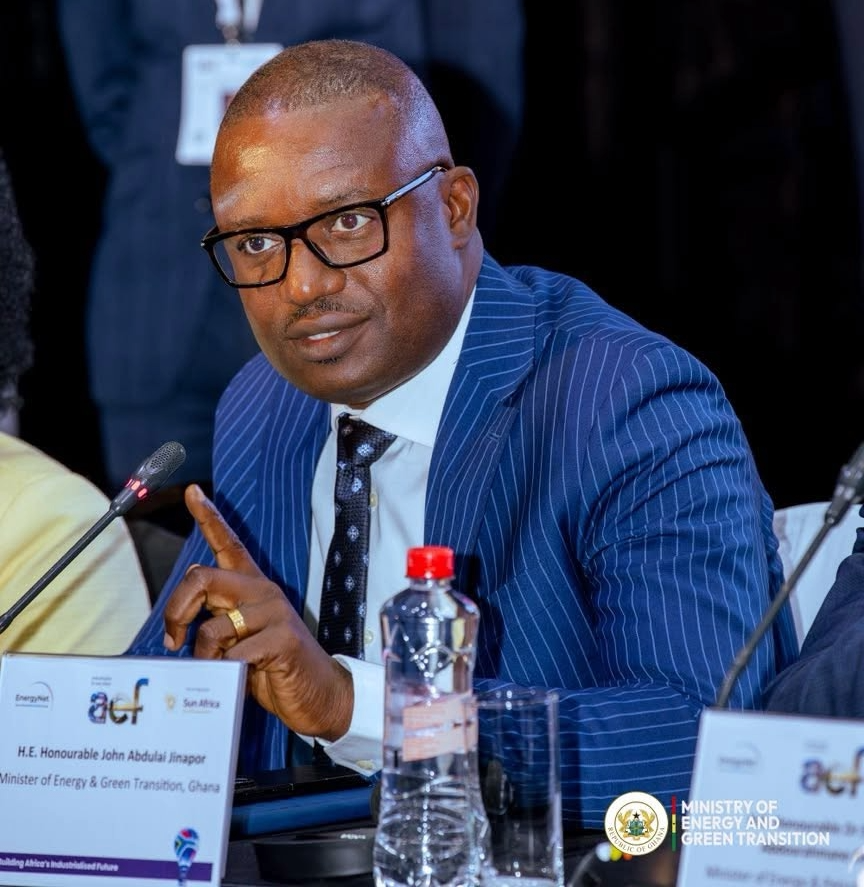
Ghana’s Minister for Energy and Green Transition, John Abdulai Jinapor, has urged African countries to pursue a just energy transition shaped by the continent’s own development needs rather than externally imposed models that ignore energy poverty, industrialisation and job creation.
Speaking during a panel discussion on “What Does a Just Energy Transition Mean for Africa?” at the Africa Energy Forum, Mr Jinapor said Africa’s pathway to cleaner energy must balance climate responsibility with the urgent need to expand access to reliable electricity and support economic transformation.
“Africa must pursue a just energy transition on its own terms, one that expands access to reliable energy, supports industrial growth, promotes clean cooking solutions, addresses energy poverty and delivers a sustainable future without leaving anyone behind,” he said.
His comments reflect a growing position among African policymakers that the continent’s energy transition cannot be framed only around emissions reduction. For countries still struggling with power deficits, limited grid access, low industrial electricity consumption and heavy dependence on biomass for cooking, the transition must also be about development.
Mr Jinapor said Africa’s energy future must be built on access, affordability and reliability, adding that the continent cannot pursue sustainability in a manner that constrains growth or deepens poverty.
The minister argued that industrial development requires dependable and affordable power, especially for manufacturing, agro-processing, mining services, technology, transport and other productive sectors.
Without reliable electricity, he said, African economies will struggle to build industries, create decent jobs and compete in regional and global markets.
The message is particularly relevant at a time when African countries are being urged to reduce fossil fuel dependence while still facing huge energy access gaps.
Millions of people across the continent remain without electricity, while many more rely on unstable power supply that raises the cost of doing business and limits household welfare.
For Ghana and other developing economies, the challenge is to expand energy supply while gradually reducing the carbon intensity of the system.
Mr Jinapor said Ghana’s approach is to scale up renewable energy while recognising the role of natural gas as a transition fuel.
He noted that Ghana’s renewable energy push includes large-scale solar deployment, energy storage systems, home solar installations and the development of electric vehicle charging infrastructure.
That mix reflects the practical realities of energy planning in developing economies.
Solar power can help diversify supply and reduce long-term emissions, but storage, grid stability and baseload power remain critical. Natural gas, therefore, continues to play an important role in providing reliable power while renewable capacity is expanded.
The minister’s position also speaks to the broader debate over climate finance and global fairness.
African countries contribute the least to global emissions, yet they face some of the most severe effects of climate change. At the same time, they are being asked to transition away from fuels that advanced economies used extensively to build their industries.
For many African leaders, a just transition must therefore include finance, technology transfer, policy flexibility and recognition of the continent’s right to development.
Mr Jinapor also stressed that policy credibility is critical to attracting investment into Africa’s energy sector.
This point is important because the scale of capital required for power generation, transmission, distribution, storage and clean cooking is far beyond what public budgets can provide.
Investors need regulatory certainty, financially viable utilities, transparent procurement, bankable power purchase agreements and credible tariff systems before they commit long-term capital.
Ghana has been seeking to position itself as a renewable energy investment hub while strengthening the financial sustainability of its energy sector.
Recent government messaging has focused on improving utility payments, reducing legacy sector arrears, strengthening infrastructure and restoring investor confidence.
These reforms are essential because energy transition ambitions cannot be delivered if the power sector remains financially weak.
The minister’s emphasis on clean cooking is also significant.
In many African countries, the energy transition debate focuses heavily on electricity generation, yet clean cooking remains one of the most urgent development and health challenges.
Dependence on firewood and charcoal contributes to deforestation, household air pollution, respiratory illness and gendered time burdens, especially for women and girls.
A truly just transition must therefore include clean cooking technologies, LPG access, electric cooking where feasible, improved stoves and financing models that make safer options affordable for low-income households.
Mr Jinapor’s intervention suggests that Africa’s transition must be broad enough to include electricity access, industrial power, clean cooking, transport electrification and climate resilience.
It must also avoid leaving vulnerable communities behind.
That warning is important because poorly designed energy policies can raise costs for households, hurt small businesses or leave rural communities without practical alternatives.
The transition must therefore be gradual, inclusive and anchored in each country’s development stage.
For Ghana, the task is to turn this vision into implementation.
The country must scale renewable energy investment, expand storage, strengthen transmission infrastructure, improve utility finances and support productive power use.
It must also ensure that gas investments are managed carefully, so that they support reliability without locking the country into stranded assets.
Africa’s energy transition will not succeed if it is reduced to slogans.
It requires finance, technology, credible policy, regional power trade, stronger utilities and practical solutions to energy poverty.
Mr Jinapor’s message at the Africa Energy Forum was therefore clear: Africa supports the move toward cleaner energy, but the pathway must be fair, developmental and realistic.
The continent cannot be asked to choose between climate action and economic transformation.
A just transition must deliver both.

