
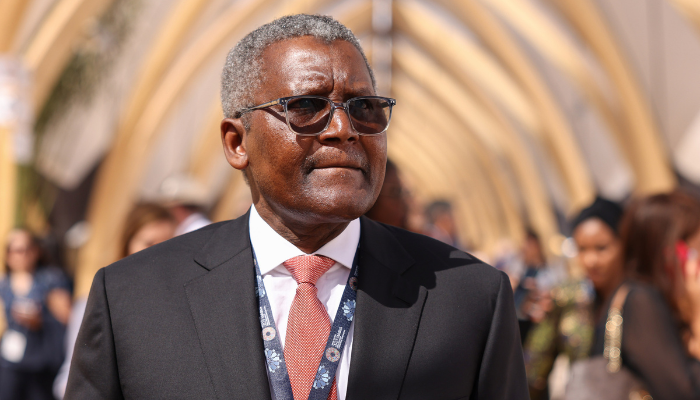

Aliko Dangote raises alarm over oil price hikes endangering African aviation and farming sectors
Africa’s richest man, Aliko Dangote, has warned that surging oil prices linked to tensions around the Strait of Hormuz could severely disrupt key sectors across the continent, including aviation and agriculture.
Speaking at the Semafor World Economy Summit, Dangote said the volatility in global oil markets is already placing African airlines under acute financial pressure.
“The majority of African airlines won’t be able to survive,” he said, pointing to sharp intraday price swings of up to $10 per barrel, which he described as unprecedented.
The warning comes as Nigerian carriers consider suspending operations in response to rising aviation fuel costs, underscoring the fragility of the continent’s aviation sector, which is heavily reliant on imported fuel and vulnerable to currency fluctuations.
Dangote also highlighted a parallel crisis in agriculture, driven by a steep rise in fertiliser prices. He noted that fertiliser costs have more than doubled in recent months, climbing from about $400 to $850 per tonne. This increase, he said, threatens to disrupt the upcoming planting season unless governments intervene. “This farming season the governments have to actually give subsidies,” he said.
The combined impact of higher fuel and fertiliser costs risks feeding into broader inflationary pressures, particularly in food prices, across African economies that are already grappling with supply chain constraints.
Dangote suggested that a diplomatic breakthrough between the United States and Iran could stabilise oil markets, but cautioned that even in a best-case scenario, normalisation would take several months due to lingering supply chain disruptions.
Separately, Letsetja Kganyago, governor of the South African Reserve Bank, signalled a more proactive monetary policy stance in response to the unfolding crisis. Breaking from the cautious approach adopted by major central banks such as the Federal Reserve, European Central Bank, and Bank of England, Kganyago said policymakers cannot afford to wait for inflationary pressures to fully materialise.
“It is important to anticipate any evidence” of second-round inflation effects, he said, warning that delaying action could allow price shocks to spread into wages and broader economic activity.
Kganyago described the current inflation environment as a “sequence of shocks”, with fuel prices affecting transport and logistics, and fertiliser costs influencing agricultural output. He stressed that beyond pricing, access to these inputs remains a critical concern.
The central bank has already held interest rates steady in recent months, signalling a hawkish stance and delaying expectations of rate cuts. It outlined scenarios in which prolonged conflict could keep oil prices near or above $100 per barrel and weaken the rand, potentially necessitating interest rate increases later this year.
With Africa’s economies exposed to both energy and agricultural shocks, policymakers face mounting pressure to contain inflation while supporting growth in an increasingly uncertain global environment.

