


- All Commercial Banks Clear Recapitalisation Hurdle as Dr Asiama Pushes Banks Beyond Balance-Sheet Repair
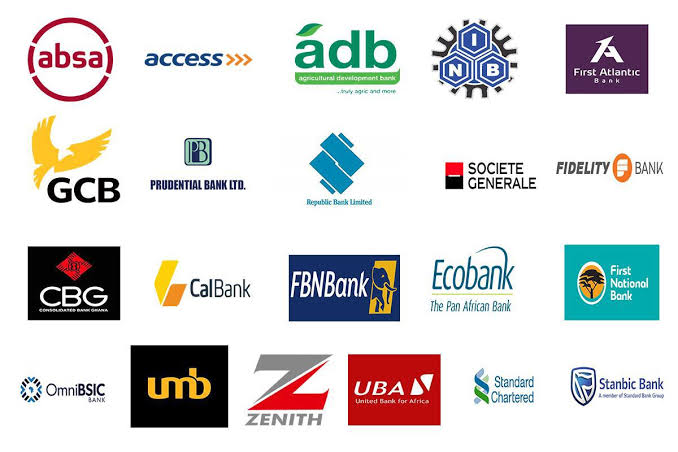
Ghana’s banking sector has completed one of the most important stages of its post-crisis repair, with all 23 universal banks now fully capitalised, giving lenders stronger buffers to absorb shocks and increasing pressure on the industry to translate financial stability into productive credit for businesses and households.
Dr Johnson Pandit Asiama, Governor of the Bank of Ghana, said the completion of recapitalisation had left the sector with sound capital and liquidity positions alongside improving asset quality, strengthening the foundations for the next phase of financial-sector growth.
Speaking at the 2026 CEOs Connect organised by the Canada-Ghana Chamber of Commerce, Dr Asiama said the immediate question was no longer whether the banking system could withstand stress, but how effectively that resilience could be converted into investment, enterprise expansion and job creation.
“The banking sector is also robust and resilient, with all banks now well capitalised. All 23 banks are now fully capitalised. Capital and liquidity positions remain sound, while the improvement in asset quality provides a stronger balance sheet,” he said.
The announcement marks a significant shift from the position earlier in the year, when two banks were still completing recapitalisation programmes following extensions granted by the central bank.
The final closure of those capital gaps removes one of the lingering consequences of Ghana’s domestic debt restructuring, which weakened portions of the financial sector by reducing the value and expected returns of government securities held on bank balance sheets.
For regulators, recapitalisation was necessary to restore confidence and ensure banks maintained sufficient loss-absorbing capacity.
The central policy challenge now is whether banks can deploy those restored balance sheets towards productive sectors without creating a new cycle of poor credit decisions and non-performing loans.
That tension is particularly important because credit growth has already begun to accelerate. Dr Asiama has indicated that private-sector credit growth increased sharply in June compared with the same period a year earlier, while falling interest rates have started to improve borrowing conditions.
The recovery in lending is encouraging because credit is one of the main channels through which monetary and financial stability reach the real economy.
Businesses require working capital, manufacturers need longer-term investment finance, exporters need trade facilities and households depend on credit for housing, education and consumption smoothing.
Yet the quality of that lending matters as much as the quantity. The banking sector’s non-performing loan ratio had fallen substantially from the elevated levels recorded a year earlier, but remained high enough for the central bank to maintain pressure on lenders to improve collections and credit discipline.
The BoG has directed regulated institutions to reduce NPL ratios to no more than 10% by the end of December 2026, making asset quality one of the defining tests of the sector’s recovery.
That creates a difficult balancing act. Banks that become too conservative in response to past losses may preserve capital but fail to support economic expansion. Banks that chase rapid loan-book growth, on the other hand, risk rebuilding the same asset-quality problems that recapitalisation was intended to resolve.
The objective must therefore be better lending rather than simply more lending. That means stronger credit appraisal, more reliable borrower data, improved collateral frameworks, better monitoring and a greater willingness to finance viable businesses with transparent cash flows.
For small and medium-sized enterprises, the stakes are particularly high. SMEs account for a substantial share of employment and commercial activity in Ghana, but many struggle to obtain affordable and appropriately structured credit because of limited collateral, incomplete financial records and the perception of elevated default risk.
A well-capitalised banking system should, in principle, be better positioned to take measured risks on such businesses.
But that will depend on whether banks can improve risk assessment sufficiently to distinguish genuinely viable firms from weak borrowers without defaulting to excessive collateral requirements.
The same challenge applies to manufacturing and export-oriented businesses. Ghana’s broader economic strategy increasingly depends on expanding domestic production and reducing excessive reliance on imports. That requires longer-term finance for machinery, factories, logistics and market expansion.
Conventional commercial banking, however, is often funded by relatively short-term deposits.
That creates a structural maturity mismatch between the liabilities banks use to fund themselves and the longer-duration capital businesses need.
Dr Asiama therefore urged banks to deepen their role in Ghana’s capital markets and explore a wider range of financing structures.
These include long-term debt and equity instruments, syndicated lending, trade finance, private equity, leasing, export finance, development finance and green or sustainability-linked funding.
The policy direction is important because Ghana cannot finance structural transformation through conventional bank loans alone.
Infrastructure projects, industrial expansion and large-scale export investment often require patient capital extending over several years.
A deeper capital market can provide that financing while also allowing banks to share or distribute risk rather than carrying entire exposures on their own balance sheets.
Pension funds and insurance companies are particularly important in this context because their long-term liabilities create natural demand for longer-duration financial assets.
If companies can issue credible bonds, equity and structured investment products, Ghana’s growing pool of domestic institutional savings can increasingly be channelled towards productive investment rather than remaining heavily concentrated in government securities.
That would also reduce the historic dependence of Ghanaian companies on bank financing.
The capitalisation of all 23 banks therefore has implications extending beyond prudential regulation.
A stronger banking system can become a bridge between macroeconomic stabilisation and private investment, but only if liquidity and capital are actually deployed into productive activity.
The central bank’s own monetary-policy transmission will depend partly on that process.
Lower policy and market rates only stimulate economic activity when financial institutions pass those changes through into lending rates, credit availability and investment decisions.
If banks remain excessively cautious or preserve large portions of liquidity in relatively safe financial assets, lower interest rates may have only a limited effect on businesses.
The improvement in asset quality is therefore encouraging because it can gradually create room for lenders to take more calculated risk.
Capital adequacy also provides an important cushion. With industry capital adequacy comfortably above regulatory minimums, banks have greater capacity to absorb unexpected losses without threatening financial stability.
That resilience is particularly valuable in an economy exposed to exchange-rate movements, commodity-price shocks and changes in global financial conditions.
But the next stage of Ghana’s banking recovery will be judged less by capital ratios than by outcomes in the real economy.
- Are viable businesses obtaining credit at more sustainable rates?
- Are manufacturers receiving longer-term financing?
- Are exporters receiving the trade facilities required to reach regional and international markets?
- Are SMEs able to grow without being excluded by excessive collateral requirements?
- And can banks expand lending while still driving NPLs towards the central bank’s 10.00% target?
Those questions will ultimately determine whether recapitalisation has produced economic value beyond the banking industry itself.
Recapitalised banks with stronger asset quality and lower funding costs should theoretically be capable of generating more sustainable profitability. But shareholders will increasingly expect management teams to find productive uses for capital rather than allowing excess balance-sheet strength to produce weak returns.
For Ghana, this means the banking sector is entering a different phase. The previous challenge was defensive: restore capital, stabilise balance sheets and protect depositors after a period of debt restructuring and macroeconomic instability.
The new challenge is developmental. Banks must now use that stronger foundation to support businesses capable of creating employment, expanding exports, raising productivity and diversifying the economy.
That task will require careful execution because stronger lending cannot come at the expense of credit quality.
But the completion of recapitalisation removes an important constraint. All 23 universal banks now have the regulatory capital required to compete, lend and invest from a stronger position.
The question for 2026 and beyond is what they do with it. If restored balance sheets translate into cheaper, longer-term and better-targeted financing for productive enterprises, recapitalisation will have achieved more than financial stability.
It will have helped turn Ghana’s banking recovery into part of the country’s broader economic recovery.

