


- Amazon Eyes Ghana for Satellite Broadband Partnership as Digital Race Intensifies
Amazon is considering Ghana as a potential partner in the expansion of its satellite broadband network across Africa, opening the prospect of faster internet access for rural and underserved communities while advancing Accra’s ambition to become a regional technology hub.
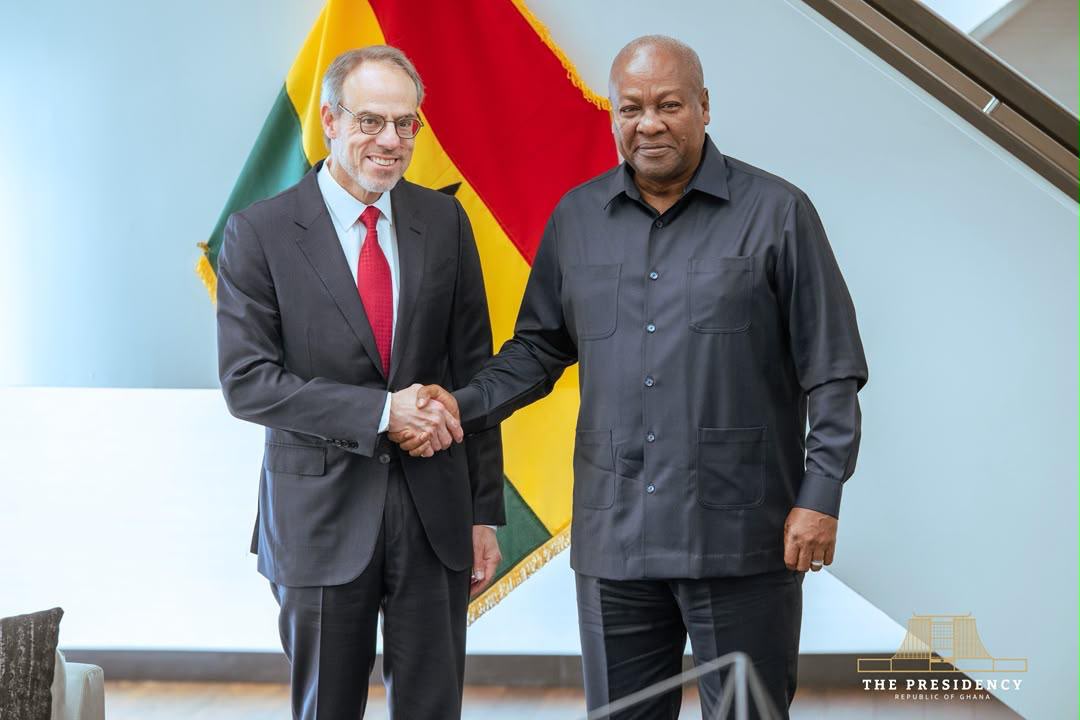
The discussions took place between President John Dramani Mahama and senior Amazon executives on the sidelines of the 81st United Nations General Assembly in New York.
David Zapolsky, Amazon’s Senior Vice-President and Chief Global Affairs and Legal Officer, described the meeting as productive and identified Ghana as a possible partner in the company’s efforts to expand broadband connectivity across West Africa and the wider continent.
“Amazon Leo, our low-Earth-orbit satellite network, can help bring fast, reliable internet to communities across West Africa and the continent,” Mr Zapolsky said following the meeting.
The engagement is at an exploratory stage, with no formal agreement, investment value, implementation timetable or coverage targets announced. But it places Ghana within an intensifying contest among global technology companies seeking a position in Africa’s fast-growing satellite internet market.
Amazon Leo — previously known as Project Kuiper — uses a constellation of satellites in low-Earth orbit to provide broadband services, particularly in locations where extending fibre-optic cables or conventional mobile infrastructure is difficult or commercially unattractive.
For Ghana, the potential partnership could help address one of the central contradictions in its digital transformation agenda: the country has developed a growing financial-technology, mobile-money and digital-services ecosystem, yet access to reliable and affordable high-speed internet remains uneven.
Accra and other large cities attract the majority of telecommunications investment, while many rural communities continue to contend with weak coverage, inconsistent speeds and relatively high data costs.
Satellite connectivity could narrow that divide by reaching areas where the economics of traditional terrestrial networks are less compelling. Improved broadband access could support digital education, telemedicine, financial inclusion, agricultural services, e-commerce and remote work.
But coverage alone will not guarantee meaningful inclusion. The eventual cost of devices, installation and monthly subscriptions will determine whether the service reaches low-income households and small businesses or becomes another premium product available principally to wealthier users and corporate clients.
The government must therefore ensure that any partnership is evaluated not only by the number of communities technically covered but also by the affordability and reliability of the service delivered.
The discussions with Amazon form part of President Mahama’s broader effort to redefine Ghana’s economic relationship with the US around trade, investment, technology, skills and job creation rather than conventional development assistance.
At a separate US–Ghana Presidential Roundtable in New York, Mr Mahama called for bilateral relations to be placed on a more commercially productive footing.
An Amazon partnership would fit that strategy, although its developmental value would depend on the depth of local participation. A satellite service that merely sells connectivity into Ghana would have a different economic impact from one that develops local distribution partners, trains engineers, creates technical jobs and supports Ghanaian digital enterprises.
The policy question is therefore not simply whether Amazon enters the market, but on what terms.
Ghana will need to consider licensing, spectrum use, competition, cybersecurity, consumer protection, taxation and the treatment of locally generated data. The government must also avoid structuring a partnership that weakens existing telecommunications operators or gives a new entrant an uneven regulatory advantage.
Competition could benefit consumers if it reduces prices and improves service quality. However, this will require transparent licensing and a technology-neutral regulatory framework that applies clear obligations to both satellite and terrestrial providers.
Data sovereignty will also be critical. Ghana is committing US$250mn towards national artificial-intelligence and computing infrastructure as part of a broader effort to provide researchers, universities and technology businesses with more affordable access to high-performance computing. The government has simultaneously acknowledged the risks associated with excessive dependence on foreign cloud providers.
A partnership with Amazon must consequently balance access to global technology with Ghana’s need to protect strategic data and develop domestic capability.
The company is already advancing its African connectivity strategy. In South Africa, Amazon Leo has agreed to work with fixed-internet provider Herotel on a satellite broadband service expected to launch commercially in 2027. The arrangement will use Herotel’s local footprint for installation, customer support and field operations.
That model offers a possible indication of how an eventual Ghanaian partnership could be structured: Amazon supplies the satellite technology while local companies handle distribution and customer-facing operations.
Ghana’s position as host of the African Continental Free Trade Area Secretariat could further strengthen its proposition. If supported by reliable connectivity, appropriate regulation and digital payment infrastructure, the country could serve as an entry point for international technology companies seeking access to a wider African market.
Yet Ghana’s aspiration to become a digital hub will not be secured by diplomatic meetings alone. It will depend on whether discussions with Amazon translate into a defined investment programme, affordable services, local skills development and measurable improvements in connectivity.
The Amazon engagement is therefore promising, but still preliminary. Its real significance will be determined by what follows the photographs and statements from New York.
A credible partnership would need to answer several questions: how much Amazon will invest, which communities will be prioritised, what consumers will pay, how Ghanaian businesses will participate and what safeguards will govern competition and data.
If those questions are resolved in Ghana’s favour, Amazon Leo could become more than another internet provider. It could help reduce the country’s digital divide and provide some of the infrastructure required for Ghanaian businesses and young people to participate more fully in the global digital economy.
If they are not, the partnership risks becoming another high-level technology announcement whose promise travels faster than its impact.

