


- Angola Trapped Between Fiscal Discipline and the Politics of Expensive Fuel
Angola could spend 3.8 trillion kwanzas, equivalent to US$4.16 billion, on fuel subsidies in 2026, nearly twice the amount initially projected and a stark illustration of how quickly an apparently protective policy can become a threat to public finances.
The original estimate was below 2 trillion kwanzas. The escalation has been driven by higher international energy prices arising from the Middle East conflict, which have increased the cost of keeping domestic fuel prices below market levels.
Angola exports crude, but domestic fuel subsidies expose the budget to movements in refined-product and international energy costs. Higher oil prices may strengthen export receipts, yet they simultaneously make the promise of cheap fuel considerably more expensive to maintain.
The result is a fiscal trap. The government can use public money to suppress prices and protect households temporarily, or release those resources for health, education, infrastructure and targeted social support. Removing subsidies, however, can raise transport costs, food prices and inflation almost immediately, with the heaviest burden.
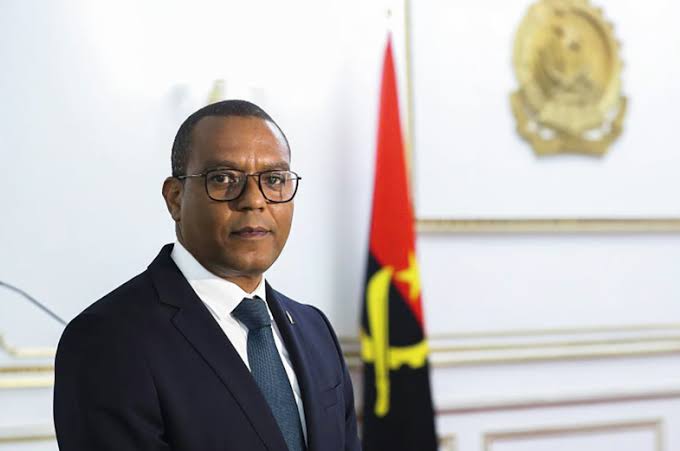
Ottoniel dos Santos, Angola’s secretary of state for finance and the treasury, acknowledged the dilemma during the IMF–World Bank Annual Meetings in Bangkok. The government began gradually withdrawing fuel subsidies in 2023, but fears of economic and social disruption have constrained the pace.
“We need to move not only with the subsidies removal, but also with the diversification of our economy,” he said.
That sentence captures the structural problem. Subsidy reform cannot succeed as a simple exercise in increasing pump prices. Unless citizens have access to reliable public transport, employment, affordable food and credible income support, the removal of cheap fuel becomes an immediate reduction in living standards rather than a reallocation of national resources.
Angola’s caution is grounded in experience. A diesel-price increase in 2025 triggered a minibus taxi strike, sharp fare increases, violent protests and reported deaths. A petrol-price adjustment in 2023 also provoked deadly unrest. These episodes demonstrate that the subsidy debate is not merely an accounting question; it is a test of the state’s social contract.
Dos Santos said the reductions were being approached slowly, although the government could move faster if an opportunity emerged and the impact on vulnerable citizens proved smaller than expected. That conditional approach is politically understandable, but delay also has a price.
The immediate increase is particularly striking when compared with Angola’s budget assumptions. The government used an oil reference price of US$61 per barrel for 2026 but now expects crude to average about US$90 by year-end.
That difference should generate additional petroleum revenue, providing a partial cushion. But it also exposes the volatility of a fiscal framework still heavily dependent on a single commodity. Windfall income can be consumed by the rising cost of subsidies, leaving the state richer from oil on one side of the budget and poorer from fuel on the other.
Angola expects crude production of 1.045 million barrels per day in 2027, unchanged from this year. Stable production means future revenue gains cannot rely indefinitely on pumping more oil. They will depend on prices, stronger non-oil taxation and productivity in other sectors.
The 2027 budget, due to be submitted by the end of October, will reveal how seriously the government intends to confront these trade-offs. Dos Santos indicated that its oil-price assumption would not differ significantly from the IMF’s forecast of US$71.50 per barrel.
A more conservative benchmark could protect the budget if prices retreat and create savings if they remain elevated. But credibility will depend on what happens to the surplus and whether subsidy costs are transparently recorded rather than allowed to accumulate through arrears or losses elsewhere in the public sector.
The pressure coincides with Angola’s renewed engagement with capital markets. A US$4 billion Eurobond issuance and other liability-management operations have covered most of the country’s 2026 financing needs. Decisions on further external borrowing will depend on the next budget.
Borrowing while spending more than US$4 billion to hold down fuel prices presents an uncomfortable signal to investors. Creditors may ask whether new debt is financing productive assets and economic transformation or indirectly preserving a consumption subsidy that remains vulnerable to global shocks.
At the same time, abrupt subsidy withdrawal could damage growth, intensify inflation and generate instability, outcomes that would also concern bondholders. The financially credible path is therefore neither indefinite delay nor overnight removal, but a transparent and sequenced transition.
That transition requires several elements: publishing the subsidy’s full cost; establishing a predictable price-adjustment formula; expanding targeted cash transfers before prices rise; protecting public transport; communicating how savings will be used; and independently tracking whether promised social investments are delivered.
Trust is central. Citizens are more likely to accept higher fuel prices if they can see improvements in buses, clinics, schools and household support. Without visible benefits, reform appears to transfer the cost of fiscal adjustment from the state to families while leaving public waste untouched.
Angola is also opening its domestic government-bond market to foreign investors. Officials are trying to overcome perceptions that the capital account remains closed or that investors will struggle to withdraw funds. Greater foreign participation could diversify financing and deepen the market, but it also raises the premium on policy consistency, liquidity and currency stability.
The subsidy surge therefore links Angola’s domestic political economy with its international financing strategy. Investors want reform and fiscal predictability; citizens want affordability and protection. The government must demonstrate that these demands can be reconciled rather than choosing one constituency at the expense of the other.
The US$4.16 billion projection should be treated as a warning. High oil prices may provide Angola with revenue, but they also expose the cost of an economy where public finances, foreign exchange and household welfare remain tied to petroleum.
Removing subsidies without diversification would create pain without resilience. Keeping them without reform would consume resources needed to build that resilience. Angola’s real challenge is to use today’s oil windfall to finance the economic and social alternatives that will make tomorrow’s subsidy removal both credible and politically sustainable.

