

- Asante Gold Bibiani, Golden Star Wassa Lead Mining Safety Awards as Fatalities Decline
Ghana’s mining industry has recognised top-performing companies and safety professionals after recording a sharp decline in fatalities in 2025, even as industry leaders warned that the sector must not become complacent in its pursuit of zero harm.
At the 2025 Mine Performance Awards and the launch of the 2026 Inter-Mines First Aid and Safety Competition, Asante Gold Bibiani Ltd was adjudged the Best Mine Based on Occupational Injury Statistics, followed by Asanko Gold Mine Ltd in second place and Ghana Manganese Company Ltd in third.
The awards come after Ghana’s mining sector reduced fatalities from seven in 2024 to three in 2025, a performance the Ghana Chamber of Mines described as progress but not success, given that any loss of life remains unacceptable.
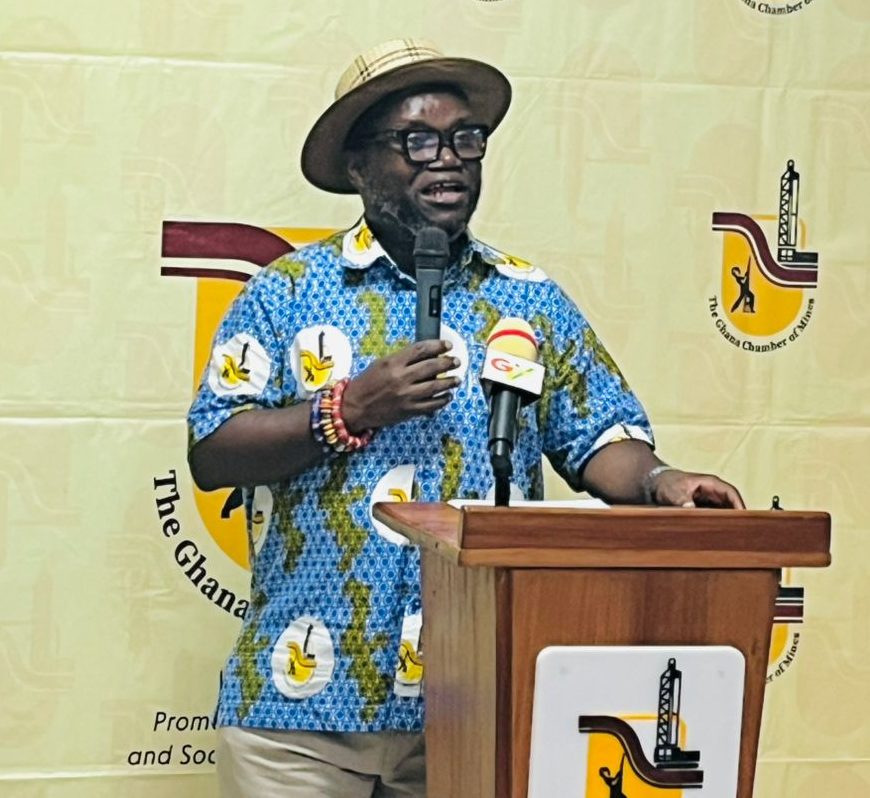
Chief Executive Officer of the Ghana Chamber of Mines, Ing. Dr Kenneth Ashigbey, said safety must remain the foundation of responsible mining and should never be compromised in pursuit of production targets.
“No production target, operational milestone, or business objective is worth the loss of a single life,” he said.
The Chamber’s caution is reinforced by the sector’s broader safety record. Although fatalities declined, the industry still recorded 34 serious accidents and 210 first-aid incidents in 2025, underlining the continuing risks faced by mineworkers, contractors and host communities.
Ghana Manganese Company Ltd was named Best Improved Mine, ahead of Asante Gold Bibiani Ltd and AngloGold Ashanti Obuasi Mine. The award highlights the importance of measurable improvement in safety systems, especially in an industry where operational risk remains high.
Abosso Goldfields Limited emerged as the Best Safe Mine Based on Mine Safety, Health and Environmental Audit, with AngloGold Ashanti Iduapriem Ltd placing second and Golden Star Wassa Ltd taking third position.
Golden Star Wassa Ltd also stood out strongly in the first aid and team-based categories. It won Best Mine Team Based on Safety and First Aid, ahead of Asanko Gold Mine Ltd and AngloGold Ashanti Iduapriem Ltd.
Asanko Gold Mine Ltd was recognised for community-level preparedness, winning Best Community Team Based on Safety and First Aid. Abosso Goldfields Limited placed second, while AngloGold Ashanti Obuasi Mine came third.
The individual awards were dominated by Golden Star Wassa Ltd. James German received the Safety Manager Award, Samuel Kojo Ansah won the Team Manager Award, while Evans Newman was honoured with the Trainer Award. Golden Star Wassa Ltd also received a Three-Time Winner Recognition, underscoring its consistency in mine safety and first-aid performance.
For the Chamber of Mines, the awards are not merely ceremonial. They are intended to reinforce a culture in which safety performance is measured, rewarded and institutionalised across mining operations.
Dr Ashigbey also raised concern over contractor safety, urging mining companies to ensure that contractors operate under the same rigorous safety standards as the principal mining firms.
The issue is increasingly important because contractors perform critical and often high-risk functions across mining operations, including haulage, maintenance, drilling, construction and support services. Any gap between contractor safety practices and company safety systems can expose workers to preventable accidents.
The Chamber also stressed the importance of Community Safety Teams, noting that emergency preparedness should not stop at the mine gate. In mining communities, where operations often intersect with local livelihoods, roads, settlements and informal activity, safety must be treated as a shared responsibility between companies and communities.
The 2026 Inter-Mines First Aid and Safety Competition is expected to be enhanced to improve participation, relevance and impact as the industry responds to evolving emergency response and occupational safety needs.
The latest awards therefore present a dual message. Ghana’s mining industry is making measurable progress, with fatalities falling sharply and companies investing in stronger safety systems. But serious accidents and first-aid incidents show that the sector remains exposed to operational risk.
For a country whose economic recovery is increasingly supported by gold exports, mining safety cannot be treated as a compliance exercise. It must be part of the industry’s licence to operate.
The Chamber’s zero-fatality ambition is therefore both a moral and operational benchmark: production matters, but no ounce of gold, manganese or mineral output should come at the cost of a human life.

