

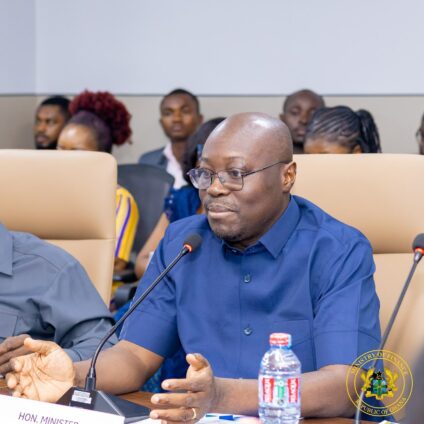

- Ato Forson Puts Jobs and Livelihoods at Centre of Ghana’s US$10bn 2027 Budget Push
Finance Minister Dr Cassiel Ato Forson says the interests of Ghanaians will remain the government’s overriding consideration as it finalises preparations for the 2027 Budget, which is expected to unveil the administration’s proposed US$10bn New Economy programme.
His comments come as budget hearings involving ministries, departments and agencies conclude this week, bringing the government closer to defining the spending priorities and policy interventions that will shape the next fiscal year.
“Through every hearing and every decision, one principle remains non-negotiable: the interest of the Ghanaian people comes first,” Dr Forson said.
The hearings are intended to scrutinise the spending plans of state institutions and align them with the government’s broader economic agenda, including employment creation, productive investment and infrastructure.
The process will also determine which programmes receive priority within the fiscal space available to government.
The 2027 Budget is expected to be particularly consequential because it will provide the first detailed policy architecture for the New Economy programme. President John Dramani Mahama has said the initiative will involve about US$10bn in investment across key sectors, with the full programme scheduled to be presented in the Budget in November. The government describes the programme as the next phase of its economic strategy after efforts to restore macroeconomic stability.
Dr Forson has argued that stabilisation should serve as a platform for deeper structural transformation rather than become an end in itself.
“Through the New Economy agenda that we will unveil, we will build an economy that does not merely withstand shocks but creates jobs, generates wealth and grows on the strength of what Ghana produces,” he said earlier this month.
The programme is expected to place increased production, productivity, private-sector growth and sustainable employment at the centre of economic policy.
The government has been holding consultations with key institutions ahead of the Budget, including the Ministry of Trade, Agribusiness and Industry and the National Development Planning Commission.
The NDPC is expected to play a monitoring role, tracking whether New Economy interventions translate into measurable outcomes after implementation begins.
That places increased emphasis on linking budget allocations to clearly defined development targets rather than treating expenditure alone as evidence of progress.
The critical test will be how the government reconciles ambitious investment plans with fiscal discipline and competing demands on public resources.
A US$10bn transformation programme will require clarity on financing, sequencing and the contribution expected from government, development partners and the private sector. The 2027 Budget will therefore need to show not only what the government intends to spend, but how proposed investments will generate jobs, raise productivity and strengthen Ghana’s capacity to sustain growth.
For Dr Forson, the political message ahead of the Budget is that those choices must ultimately be judged by their impact on households and businesses.
As the hearings close and the Ministry of Finance moves towards finalising the fiscal framework, expectations will increasingly shift from the scale of the New Economy programme to its detailed financing and implementation.
The November Budget will provide the first major test of how the government intends to turn its promise of moving Ghana beyond stabilisation into measurable economic opportunity.

